Representative Joseph Warren Ray
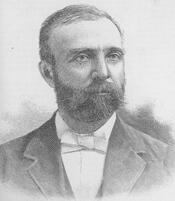
Here you will find contact information for Representative Joseph Warren Ray, including email address, phone number, and mailing address.
| Name | Joseph Warren Ray |
| Position | Representative |
| State | Pennsylvania |
| District | 24 |
| Party | Republican |
| Status | Former Representative |
| Term Start | December 2, 1889 |
| Term End | March 3, 1891 |
| Terms Served | 1 |
| Born | May 25, 1849 |
| Gender | Male |
| Bioguide ID | R000078 |
About Representative Joseph Warren Ray
Joseph Warren Ray (May 25, 1849 – September 15, 1928) was a Republican member of the U.S. House of Representatives from Pennsylvania who served one term in Congress from 1889 to 1891. Over the course of a long career in law and public service, he was active in both federal and state institutions, ultimately becoming president judge of the thirteenth judicial district of Pennsylvania.
Ray was born on May 25, 1849, near Nineveh, Greene County, Pennsylvania, a rural community in the southwestern part of the state. He was educated in the local common schools, reflecting the typical educational path of mid-19th-century rural Pennsylvania youth. Demonstrating early academic promise, he pursued higher education at Waynesburg College in Waynesburg, Pennsylvania, an institution closely associated with the Cumberland Presbyterian Church and known for training professionals and civic leaders in the region.
In 1874 Ray was graduated from Waynesburg College, and he soon turned to the study of law. He read law in the traditional manner of the time and was admitted to the bar in 1876. That same year he commenced the practice of law in Waynesburg, Pennsylvania. His legal practice placed him at the center of civic and commercial affairs in Greene County, and his growing professional reputation and involvement in Republican Party politics laid the groundwork for his later entry into elective office.
Ray’s congressional career began with his election as a Republican to the Fifty-first Congress. He was elected as a Representative from Pennsylvania and served in the United States House of Representatives from March 4, 1889, to March 3, 1891. A member of the Republican Party during a period of significant national debate over tariffs, veterans’ pensions, and economic policy, Joseph Warren Ray contributed to the legislative process during his single term in office and participated in the democratic process on behalf of his constituents. He sought to continue his service in Congress but was an unsuccessful candidate for renomination in 1890.
After leaving Congress, Ray resumed the practice of law in Waynesburg, returning to the profession that had first established his public standing. He remained a prominent figure in local civic life and maintained a close relationship with his alma mater. Beginning in 1902, he served as a trustee of Waynesburg College, a position he held continuously until his death, contributing to the governance and development of the institution over more than two decades.
Ray’s judicial career marked the culmination of his public service. In 1915 he was elected president judge of the thirteenth judicial district of Pennsylvania, which included Greene County. In this capacity he presided over the courts of the district, overseeing both civil and criminal matters, and brought to the bench the experience of many years in private practice and legislative service. He served as president judge from 1915 until 1926. At the conclusion of his term, he declined to be a candidate for reelection, choosing instead to retire from the judiciary and again resume the practice of law in Waynesburg.
Joseph Warren Ray continued to live and work in Waynesburg during his final years. He died there on September 15, 1928. His long association with the community was reflected in his burial in Greenmont Cemetery in Waynesburg, Pennsylvania. His career, spanning legal practice, a term in the U.S. House of Representatives, college trusteeship, and more than a decade on the state bench, exemplified the trajectory of a late 19th- and early 20th-century Pennsylvania lawyer who combined professional accomplishment with sustained public service.