Representative Joseph Lafayette Rhinock
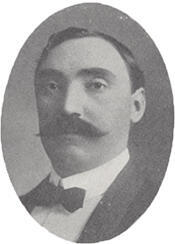
Here you will find contact information for Representative Joseph Lafayette Rhinock, including email address, phone number, and mailing address.
| Name | Joseph Lafayette Rhinock |
| Position | Representative |
| State | Kentucky |
| District | 6 |
| Party | Democratic |
| Status | Former Representative |
| Term Start | December 4, 1905 |
| Term End | March 3, 1911 |
| Terms Served | 3 |
| Born | January 4, 1863 |
| Gender | Male |
| Bioguide ID | R000185 |
About Representative Joseph Lafayette Rhinock
Joseph Lafayette Rhinock (January 4, 1863 – September 20, 1926) was a U.S. Representative from Kentucky, businessman, and mayor whose public career spanned local, state, and national arenas during the late nineteenth and early twentieth centuries. He was born in Owenton, Owen County, Kentucky, on January 4, 1863. During his childhood his family moved to Covington, Kentucky, where he attended the public schools. This early relocation to Covington placed him in one of northern Kentucky’s principal urban centers, a setting that would shape his later involvement in municipal affairs, business, and politics.
After completing his public school education in Covington, Rhinock entered the oil refinery industry, beginning a business career that preceded and paralleled his life in public office. His work in this sector reflected the broader industrial growth of the period and provided him with managerial and administrative experience. In addition to his business pursuits, he became active in local civic life. He served as president of the Covington Public Library Board for two terms, a role that underscored his interest in public institutions and community improvement and helped establish his reputation as a local leader.
Rhinock’s formal political career began at the municipal level in Covington. He first served as a member of the Covington city council, participating in the governance of a rapidly developing city. Building on this experience, he was elected mayor of Covington and held that office from 1893 to 1900. His seven-year tenure as mayor coincided with a period of urban expansion and modernization, during which he oversaw aspects of city administration, public services, and local infrastructure. His service as mayor enhanced his standing within the Democratic Party and provided a platform for his subsequent entry into national politics.
A member of the Democratic Party, Rhinock was elected to the United States House of Representatives from Kentucky and served three consecutive terms. He was elected to the Fifty-ninth, Sixtieth, and Sixty-first Congresses, serving from March 4, 1905, to March 3, 1911. During these years he represented the interests of his Kentucky constituents in Washington, D.C., participating in the legislative process at a time marked by significant national debates over economic regulation, progressive reforms, and federal authority. His service in Congress occurred during a significant period in American history, and as a member of the House of Representatives he took part in the democratic process and contributed to the work of the national legislature. Rhinock chose not to be a candidate for renomination in 1910, thereby concluding his congressional career after three terms.
Following his departure from Congress, Rhinock devoted himself primarily to business and the entertainment industry. For approximately twenty-two years he was connected with the theater business in New York City and Cincinnati, Ohio. He held several senior executive positions with the Shubert Organization, one of the leading theatrical companies of the era, serving at various times as vice president, secretary, and treasurer. He also served as vice president of the Loews Theater enterprise, further solidifying his role in the management and expansion of major theatrical and motion picture venues. In addition to his theater interests, Rhinock became actively involved in horse racing and racetrack corporations, reflecting both a business interest and participation in a prominent form of American sport and leisure in the early twentieth century.
In his later years, Rhinock resided in New Rochelle, in Westchester County, New York. He died at his home in the Bonnie Crest neighborhood of New Rochelle on September 20, 1926, at the age of sixty-three. His body was returned to Kentucky, and he was interred in Highland Cemetery in Covington, the city where he had received his education, launched his public career, and first rose to prominence in business and politics.