Representative Joseph Augustine Scranton
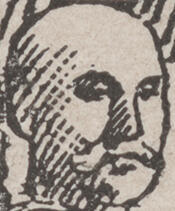
Here you will find contact information for Representative Joseph Augustine Scranton, including email address, phone number, and mailing address.
| Name | Joseph Augustine Scranton |
| Position | Representative |
| State | Pennsylvania |
| District | 11 |
| Party | Republican |
| Status | Former Representative |
| Term Start | December 5, 1881 |
| Term End | March 3, 1897 |
| Terms Served | 5 |
| Born | July 26, 1838 |
| Gender | Male |
| Bioguide ID | S000192 |
About Representative Joseph Augustine Scranton
Joseph Augustine Scranton (July 26, 1838 – October 12, 1908) was a Republican politician and newspaper publisher who represented Pennsylvania in the United States House of Representatives from 1881 to 1883, 1885 to 1887, 1889 to 1891, and 1893 to 1897. Over the course of five nonconsecutive terms in Congress, he participated actively in the legislative process and represented the interests of his northeastern Pennsylvania constituents during a period of significant industrial and political change in the United States.
Scranton was born in Madison, New Haven County, Connecticut, on July 26, 1838. When he was a boy, his family moved to Pennsylvania and settled in the Lackawanna Valley in the northeastern part of the state. This region developed rapidly as a center of anthracite coal mining and iron production and became the site of the city of Scranton, which was named for members of the Scranton family, including his relatives who were prominent in local industry and development. Growing up in this environment, Scranton was closely connected to the emerging industrial economy that would shape both his business and political careers.
Scranton received his early education at Phillips Academy in Andover, Massachusetts, one of the leading preparatory schools in the country. He later attended Yale University from 1857 to 1861, where he pursued a classical collegiate education that prepared him for public service and business. Although he did not enter the legal profession, his Yale training and family connections positioned him to move quickly into federal administrative and political roles during and after the Civil War era.
After completing his studies at Yale, Scranton entered federal service as collector of internal revenue, a position he held from 1862 until 1866. This post, which was a political patronage appointment, placed him at the center of wartime and postwar revenue collection, an important function as the federal government expanded its tax system to finance the Civil War and Reconstruction. In 1867, he turned to journalism and founded the Scranton Daily Republican newspaper, which became an influential Republican organ in northeastern Pennsylvania. His prominence in party affairs grew, and he served as a delegate to the Republican National Convention in 1872. He was appointed postmaster of Scranton, serving as the city’s United States postmaster from March 19, 1874, to May 5, 1881, further solidifying his role as a leading local Republican figure.
Scranton’s personal life was closely tied to other prominent Pennsylvania families. He married Ada Meylert, daughter of General Amos N. Meylert, one of the most prominent citizens of northern Pennsylvania in his day. Ada’s grandfather, Secku Meylert, was a native of Cassel, Prussia, who had been associated in banking operations with the Rothschilds, was educated in Paris, and became acquainted with Napoleon Bonaparte before emigrating to the United States after Napoleon’s defeat. Secku Meylert purchased a large tract of land in Pennsylvania and settled at Montrose, where he married Abigail Nichols, daughter of a deacon of the local Baptist church. Their eldest son, Amos N. Meylert, married Anna Dennis and later moved his family to Butler, Pennsylvania, where he became involved in railroad construction and the development of coal, iron, and other natural resources, amassing a considerable fortune. Ada Meylert attended the Greenwood Institute at New Brighton, Pennsylvania, and later moved with her family to Scranton, where she met Joseph A. Scranton, a member of the old Scranton family of Connecticut. Joseph and Ada Scranton had one daughter, who married Lieutenant D. L. Tate, and one son, Robert Meylert Scranton, who married Helen L. Sperry in 1890.
Scranton first entered national elective office in 1880, when he was elected as a Republican to the Forty-seventh Congress, serving from March 4, 1881, to March 3, 1883. Although he was defeated for reelection in 1882, he remained a significant figure in Pennsylvania Republican politics and returned to the House after winning election again in 1884, serving in the Forty-ninth Congress from 1885 to 1887. Defeated once more in 1886, he regained his seat in 1888 and served in the Fifty-first Congress from 1889 to 1891. He ran again in 1890 but was defeated, after which he resumed his work in the newspaper business. Scranton was subsequently elected to two additional consecutive terms in 1892 and 1894, serving in the Fifty-third and Fifty-fourth Congresses from 1893 to 1897. Over these five terms in office, he contributed to the legislative process during a transformative era marked by industrial expansion, labor unrest, and debates over tariffs, currency, and federal regulation, and he consistently represented the interests of his industrial and mining-region constituents as a loyal member of the Republican Party.
After choosing not to run for reelection in 1896, Scranton returned full-time to journalism and publishing. He re-entered the newspaper business as editor and publisher of the Scranton Daily Republican, using the paper as a platform for Republican policies and local civic development. His public career was not entirely concluded, however. He re-entered political life at the county level and was elected Treasurer of Lackawanna County, serving from 1901 to 1903. In this capacity he oversaw county finances at a time when the region continued to grow as a center of coal production and manufacturing.
Scranton’s family connections extended across several generations of public and industrial leadership. He was a second cousin of industrialist George W. Scranton, a founder of the Lackawanna Iron & Coal Company and a key figure in the establishment and growth of the city of Scranton. His grandnephew, William Warren Scranton, was later elected Governor of Pennsylvania, serving from 1963 to 1967, and also served as United States Ambassador to the United Nations. His great-grandnephew, William Scranton III, served as Lieutenant Governor of Pennsylvania. Joseph Augustine Scranton died in Scranton, Lackawanna County, Pennsylvania, on October 12, 1908, closing a life that combined journalism, public administration, and repeated service in the United States Congress.