Representative Joseph Crockett Shaffer
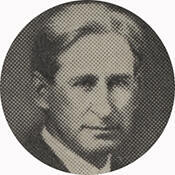
Here you will find contact information for Representative Joseph Crockett Shaffer, including email address, phone number, and mailing address.
| Name | Joseph Crockett Shaffer |
| Position | Representative |
| State | Virginia |
| District | 9 |
| Party | Republican |
| Status | Former Representative |
| Term Start | April 15, 1929 |
| Term End | March 3, 1931 |
| Terms Served | 1 |
| Born | January 19, 1880 |
| Gender | Male |
| Bioguide ID | S000278 |
About Representative Joseph Crockett Shaffer
Joseph Crockett Shaffer (January 19, 1880 – October 19, 1958) was a Republican U.S. Representative from Virginia who served one term in the United States Congress from 1929 to 1931. Born near Wytheville, Wythe County, Virginia, he was raised in the region he would later represent and spent much of his life closely connected to its civic and professional life. He attended the public schools in Wytheville, receiving his early education in the local system that served the town and surrounding rural community.
Shaffer pursued higher education at Plummer College in Wytheville, from which he was graduated in 1902. He then studied law at the University of Virginia, earning his degree from the law department in 1904. That same year he was admitted to the bar and immediately commenced the practice of law in Wytheville, establishing himself as an attorney in his home area. His legal training and early practice laid the foundation for a career that would combine law, public prosecution, and federal service.
Shaffer’s public career began at the local level when he was elected Commonwealth’s Attorney of Wythe County, serving from 1908 to 1912. In this capacity he was responsible for prosecuting criminal cases on behalf of the state, gaining experience in courtroom advocacy and public administration. After several years in private practice, he entered federal service as assistant United States district attorney, a position he held from 1920 to 1924. He was then appointed United States Attorney for the Western District of Virginia, serving from 1924 to 1929. In that role he oversaw federal prosecutions and represented the United States in civil and criminal matters in the western part of the state during a period that included the later years of Prohibition.
Building on his legal and prosecutorial record, Shaffer was elected as a Republican to the Seventy-first Congress and served as a Representative from Virginia from March 4, 1929, to March 3, 1931. His single term in the House of Representatives coincided with a significant period in American history, including the onset of the Great Depression following the stock market crash of 1929. As a member of the House, he participated in the legislative process and represented the interests of his constituents in Virginia, contributing to debates and decisions during a time of growing economic crisis. His service in Congress reflected the presence of the Republican Party in a state that was otherwise dominated by Democrats during much of the early twentieth century.
Shaffer was an unsuccessful candidate for reelection in 1930 to the Seventy-second Congress and left the House at the conclusion of his term in March 1931. Shortly thereafter, he returned to federal legal service when he was reappointed United States Attorney for the Western District of Virginia, serving from 1931 until his resignation in 1932. After stepping down from that post, he resumed the private practice of law, continuing his long professional association with the legal community in western Virginia.
In addition to his legal and political work, Shaffer was active in local business and party affairs. He was a stockholder and officer in the Wythe County National Bank, reflecting his involvement in the financial life of his community. He also remained engaged in Republican Party politics and served as a delegate to the Republican National Convention in 1940, participating in the national party’s deliberations at the outset of World War II.
Joseph Crockett Shaffer died in Abingdon, Virginia, on October 19, 1958. He was interred in St. John’s Church Cemetery in Wytheville, returning in death to the community where he had been educated, begun his legal career, and maintained enduring personal and professional ties.