Representative Joseph Crocker Sibley
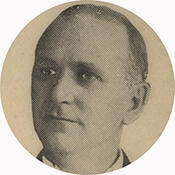
Here you will find contact information for Representative Joseph Crocker Sibley, including email address, phone number, and mailing address.
| Name | Joseph Crocker Sibley |
| Position | Representative |
| State | Pennsylvania |
| District | 28 |
| Party | Republican |
| Status | Former Representative |
| Term Start | August 7, 1893 |
| Term End | March 3, 1907 |
| Terms Served | 5 |
| Born | February 18, 1850 |
| Gender | Male |
| Bioguide ID | S000398 |
About Representative Joseph Crocker Sibley
Joseph Crocker “Joe” Sibley, Jr. (February 18, 1850 – May 19, 1926) was an American livestock breeder, farmer, oil manufacturer, and politician who represented northwestern Pennsylvania in the United States House of Representatives for five terms. A prominent figure in both business and public life, he served as a Representative from Pennsylvania in Congress from 1893 to 1907, contributing to the legislative process during a significant period in American history. Over the course of his career he was successively aligned with the Prohibition, Democratic, and Republican parties, ultimately serving in Congress as a Republican and chairing the House Committee on Manufactures.
Sibley was born in Friendship, Allegany County, New York, on February 18, 1850, the son of Joseph Crocker Sibley, Sr., a medical doctor, and Lucy Elvira (Babcock) Sibley, a former schoolteacher. His parents encouraged intellectual curiosity and a love of reading, and he was known as a precocious reader from about the age of six, quickly moving beyond the standard texts for children. In 1859 the family moved to Boston, a small town in Erie County, New York. There he attended county schools and local academies in the New York communities of Springville and Friendship. The death of his father in 1866 brought his formal schooling to an early close a year or two later, compelling him to seek work while still a young man.
In his youth Sibley briefly followed his mother’s profession, teaching school for about a year before deciding that classroom work did not suit him. He then took employment as a clerk in a dry goods store, using his spare time to study medical books with the intention of becoming a physician. Although he seriously considered a medical career and hoped to attend college, he ultimately abandoned this plan and turned instead to business. On March 1870 he married Metta Evalina Babcock, also of Friendship, New York. The couple remained married for more than four decades, raised two daughters, and shared in his early business and political endeavors until her death on July 26, 1911.
Sibley determined to enter the oil-refining business during the rapid expansion of the petroleum industry in western Pennsylvania. By 1873 he had developed a specialized railway signal oil with superior illuminating properties compared to the lighting oils then in common use. To manufacture and market this product he established the Signal Oil Works, which became the foundation of his fortune. He continued to innovate in petroleum refining and later developed a successful oil for valve lubrication. In 1882 he entered the livestock breeding business with his brother-in-law, Charles Miller, forming the firm of Miller & Sibley. Operating near Franklin, Pennsylvania, the company gained recognition for high-quality horses and cattle, particularly race trotters; at its peak Miller & Sibley owned as many as 250 head of horses, some valued at thousands of dollars. In 1902 Sibley and Miller organized the Galena-Signal Oil Company, which prospered and made both men wealthy. Galena Oil later became part of the Standard Oil combine and, through subsequent corporate evolutions, part of the enterprises now known as Texaco and Valvoline.
Sibley’s political career began at the local level. Having established himself as a successful businessman and civic leader in Venango County, Pennsylvania, he was elected mayor of Franklin, Pennsylvania, in 1879 at the age of twenty-nine. His first bid for national office came in the election of 1892, when he was nominated for Congress by the Prohibition Party in Pennsylvania’s 26th Congressional District. The Democratic Party, and the People’s Party as well, soon followed with their own nominations of Sibley, making him a fusion candidate. Although not a strict abstainer from alcohol, he won the respect of Prohibitionists and Democrats alike by refusing to drink at a private banquet hosted by local brewers, declaring that he would not betray the confidence of those who had entrusted him with their nomination “not even in secret and not even as the price of a seat in the House of Representatives.” An energetic and effective campaigner, he sometimes delivered as many as six speeches in a single day. Contemporary observers praised him as a reasoner, wit, and orator, and the 1892 election results showed that he had overcome a substantial initial partisan disadvantage, winning by a plurality of 3,387 votes over his principal opponent.
Sibley’s upset victory in November 1892 secured him a seat in the Fifty-third Congress, marking his entrance onto the national political stage. During this first term he emerged as a leading critic of the gold standard and an advocate of the unlimited coinage of silver, aligning himself with the free silver movement that was then reshaping national politics. He also urged that tariff policy be removed as a partisan issue and was an early proponent of a constitutional amendment limiting the President of the United States to a single six-year term. He published at least one speech from this period, “Speech of Hon. Joseph C. Sibley, of Pennsylvania, in the House of Representatives, August 18, 1893,” which reflected his economic and monetary views. Running as the candidate of the Democratic and People’s Parties, he was an unsuccessful candidate for reelection in 1894 and again failed to regain his seat in the 1896 election.
Sibley returned to Congress following the election of November 1898, winning his second of five terms as a Democrat and taking his seat in the Fifty-sixth Congress. In 1900 he shifted his political allegiance to the Republican Party, reflecting both changes in his district’s political alignment and the evolving national debate over currency and economic policy. That same year he was elected as a Republican to the Fifty-seventh Congress and subsequently reelected in 1902 and 1904 to the Fifty-eighth and Fifty-ninth Congresses, respectively. In all, he served continuously from 1899 to 1907, and together with his earlier term beginning in 1893, his congressional service extended over five terms. During the Fifty-eighth and Fifty-ninth Congresses he served as chairman of the House Committee on Manufactures, a position that drew upon his extensive experience in industry and agriculture. He declined renomination in 1906, choosing to leave Congress at the close of his term in March 1907 and return to private life.
After leaving Congress, Sibley resumed his manufacturing and agricultural pursuits, devoting particular attention to his well-known estate, River Ridge Farm, near Franklin, Pennsylvania. There he conducted extensive experiments in breeding and crop production, including work with the mammoth French white Jerusalem artichoke, which he documented in a later publication, “Observations and Experiments with the Mammoth French White Jerusalem Artichoke to Date of April 1, 1924: River Ridge Farm, Joseph C. Sibley, proprietor.” Widowed in 1911, he married again in December 1913, taking as his second wife Ida Rew of Franklin. A return to national politics was contemplated in 1910, when he accepted a new nomination for Congress and sought what would have been a sixth term in the House of Representatives. His plans were abruptly halted by a severe heart attack that year, which left him unable to campaign and forced him to resign the nomination, effectively ending his active political career.
In his final years Sibley continued to oversee operations at River Ridge Farm, but his health steadily declined. He suffered a stroke in 1925, followed by a massive heart attack on the morning of May 19, 1926, at 9:10 a.m., while at his home on the estate. He died instantly from this cardiac event at the age of seventy-six. A large funeral service was held at the First Baptist Church of Franklin, with four ministers officiating and a local newspaper publisher delivering the eulogy in accordance with Sibley’s specific wishes. His body was interred in Franklin Cemetery. His life and career, spanning local office, five terms in Congress, and significant achievements in the oil and livestock industries, were later the subject of biographical study, including Jack Mays’s work “Destiny’s Gentleman.”