Representative Joseph Taggart
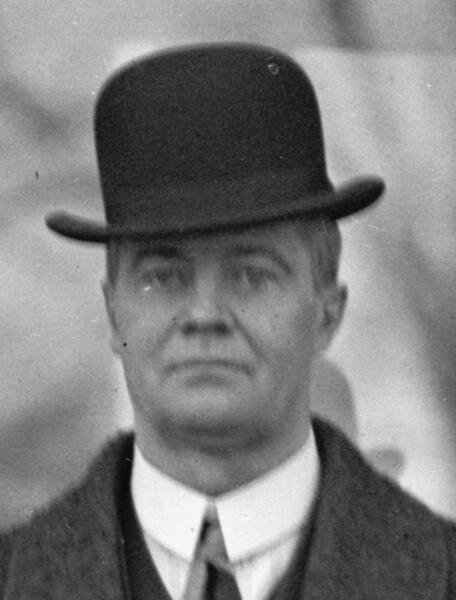
Here you will find contact information for Representative Joseph Taggart, including email address, phone number, and mailing address.
| Name | Joseph Taggart |
| Position | Representative |
| State | Kansas |
| District | 2 |
| Party | Democratic |
| Status | Former Representative |
| Term Start | April 4, 1911 |
| Term End | March 3, 1917 |
| Terms Served | 3 |
| Born | June 15, 1867 |
| Gender | Male |
| Bioguide ID | T000011 |
About Representative Joseph Taggart
Joseph Taggart served as a Representative from Kansas in the United States Congress from 1911 to 1917. A member of the Democratic Party, Joseph Taggart contributed to the legislative process during 3 terms in office.
Joseph Taggart’s service in Congress occurred during a significant period in American history. As a member of the House of Representatives, Joseph Taggart participated in the democratic process and represented the interests of constituents.
Joseph Taggart (June 15, 1867 – December 3, 1938) was a lawyer and a Democratic member of the U.S. House of Representatives, representing the 2nd Congressional District of Kansas from November 7, 1911, to March 3, 1917. He was born near Waukon, Iowa, the son of John and Bridget (née McDavitt) Taggart. His mother died when he was an infant. He moved with his father to Saline County, Kansas in 1885, and attended Salina Normal University in Salina, graduating in 1890. He taught school in nearby Bavaria in 1892 and 1893, studying law during his evenings and vacations. He was admitted to the bar in 1893, and practiced law in Salina for several years before moving to Kansas City, Kansas in 1900. Four years later he was the Democratic nominee for Wyandotte County, losing in a close election. He won the office two years later, and was re-elected in 1908 and 1910. He was elected in 1911 to the U.S. House of Representatives, filling a vacancy caused by the death of Alexander C. Mitchell, and was reelected twice. He served in the Quartermaster Corps of the United States Army during World War I, then resumed his law practice in Kansas City. He was appointed judge of the controversial Kansas Court of Industrial Relations in 1924, serving during its last year of existence.