Senator Joseph Meriwether Terrell
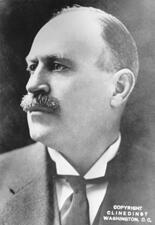
Here you will find contact information for Senator Joseph Meriwether Terrell, including email address, phone number, and mailing address.
| Name | Joseph Meriwether Terrell |
| Position | Senator |
| State | Georgia |
| Party | Democratic |
| Status | Former Representative |
| Term Start | November 17, 1910 |
| Term End | July 14, 1911 |
| Terms Served | 1 |
| Born | June 6, 1861 |
| Gender | Male |
| Bioguide ID | T000131 |
About Senator Joseph Meriwether Terrell
Joseph Meriwether Terrell (June 6, 1861 – November 17, 1912) was a United States Senator from Georgia and the 57th Governor of Georgia. A member of the Democratic Party, he served one term in the United States Senate from 1910 to 1911 and played a prominent role in Georgia state politics at the turn of the twentieth century. His public career spanned service in the Georgia House of Representatives, the Georgia Senate, the office of state attorney general, and the governorship before his brief tenure in the federal legislature.
Terrell was born on June 6, 1861, in Greenville, Meriwether County, Georgia, the son of Dr. Joel Edgar Green Terrell and Sarah Rebecca (née Anthony) Terrell. Of English ancestry and partial Norman descent, he was raised in rural west-central Georgia during and after the Civil War. He attended the common schools of the area, reflecting the limited but growing educational opportunities in Reconstruction-era Georgia. Demonstrating an early interest in the law, he pursued legal studies and was admitted to the bar in 1882, commencing the practice of law in his hometown of Greenville. On October 19, 1886, he married Jessie Lee Spivey; the couple had no children. Throughout his life, Terrell described himself as an “uncompromising friend of common school education,” a theme that would recur in his public service.
Terrell’s political career began in the Georgia General Assembly. He was elected to the Georgia House of Representatives, serving from 1884 to 1887, where he gained experience in state-level legislative affairs during a period when the Democratic Party dominated Southern politics. In 1890 he advanced to the Georgia Senate, further solidifying his reputation as a capable legislator. His work in the state legislature helped position him for higher office and brought him into the circle of influential Democratic leaders who shaped Georgia’s political and legal framework in the late nineteenth century.
In 1892 Terrell was elected attorney general of Georgia, an office he held for a decade, from 1892 to 1902. As state attorney general, he was the chief legal officer of Georgia, responsible for representing the state in significant legal matters and advising state officials. His long tenure in this position reflected both his legal acumen and his political standing within the Democratic Party. In 1902 he was elected Governor of Georgia, becoming the state’s 57th governor. He served as governor from 1902 to 1907, a period marked by efforts to improve public education and modernize aspects of state administration, consistent with his advocacy for common schools. His governorship, however, was marred by the Atlanta race riot of 1906, a violent episode that underscored the racial tensions and injustices of the era and cast a shadow over his administration.
After leaving the governorship in 1907, Terrell resumed the practice of law, this time in Atlanta, the state’s rapidly growing capital and commercial center. His legal practice in Atlanta kept him closely connected to the state’s political and business communities. This prominence led to his selection for federal office when a vacancy arose in Georgia’s representation in the United States Senate. Following the death of Senator Alexander S. Clay, Terrell was appointed as a Democrat to fill the vacant seat.
Terrell’s service in the United States Senate began on November 17, 1910. As a Senator from Georgia, he participated in the legislative process during a significant period in American history, representing the interests of his constituents in the upper chamber of Congress. His tenure coincided with the Progressive Era, when issues such as economic regulation, political reform, and social policy were at the forefront of national debate. Although his time in Washington was brief, he contributed to the work of the Senate during his one term in office. In February 1911 he suffered a stroke, which severely affected his health and capacity to serve. As a result of his declining condition, he resigned his Senate seat on July 14, 1911, ending his formal congressional service after less than a year.
Following his resignation from the Senate, Terrell again returned to the practice of law in Atlanta, despite his poor health. He continued to reside there until his death from Bright’s disease on November 17, 1912, exactly two years after the date on which he had entered the Senate. He was survived by his wife, Jessie Lee Spivey Terrell. His body was returned to his hometown, and he was interred in the City Cemetery in Greenville, Georgia, underscoring his lifelong connection to the community where he had been born and first established his legal and political career.
Terrell’s legacy in Georgia has been commemorated in several ways. During World War II, the Liberty ship SS Joseph M. Terrell was named in his honor, reflecting recognition of his service to the state and nation. In the realm of education, Terrell Hall on the campus of Georgia College and State University in Milledgeville was also named for him, a fitting tribute to a public official who had styled himself an unwavering advocate of common school education and who played a central role in Georgia’s political life at the dawn of the twentieth century.