Senator Joseph Davies Tydings
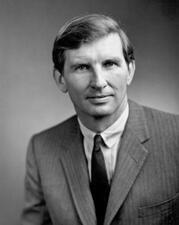
Here you will find contact information for Senator Joseph Davies Tydings, including email address, phone number, and mailing address.
| Name | Joseph Davies Tydings |
| Position | Senator |
| State | Maryland |
| Party | Democratic |
| Status | Former Representative |
| Term Start | January 4, 1965 |
| Term End | January 3, 1971 |
| Terms Served | 1 |
| Born | May 4, 1928 |
| Gender | Male |
| Bioguide ID | T000445 |
About Senator Joseph Davies Tydings
Joseph Davies Tydings (né Cheesborough; May 4, 1928 – October 8, 2018) was an American lawyer and Democratic politician from Maryland who served as a United States Senator from 1965 to 1971. Born in Asheville, North Carolina, he was the biological son of Millard Preston Cheesborough and Eleanor Davies Cheesborough. After his parents’ divorce, his mother married U.S. Senator Millard E. Tydings of Maryland, who adopted him; he thereafter took the Tydings name. Raised in a politically active family, he spent much of his youth in Maryland, where exposure to his stepfather’s public career helped shape his own interest in law and politics.
Tydings attended the McDonogh School in Owings Mills, Maryland, and later the University of Maryland, College Park. His education was interrupted by service in the United States Army during the post–World War II period, after which he returned to complete his studies. He went on to earn a law degree from the University of Maryland School of Law in Baltimore. Admitted to the bar, he began practicing law in Maryland, quickly gaining a reputation as a capable attorney and an advocate for reform, particularly in the areas of criminal justice and public integrity.
Tydings’s early career in public service began at the state level. He served in the Maryland House of Delegates, where he worked on issues of government reform and modernization. In 1961, President John F. Kennedy appointed him United States Attorney for the District of Maryland. In that role, Tydings pursued an aggressive agenda against organized crime and public corruption, enhancing his profile as a reform-minded prosecutor. His tenure as U.S. Attorney established his statewide reputation and laid the groundwork for his subsequent bid for federal office.
In 1964, Tydings was elected as a Democrat to the United States Senate from Maryland, serving one term from January 3, 1965, to January 3, 1971. His service in Congress occurred during a significant period in American history marked by the civil rights movement, the Vietnam War, and major social and political change. As a member of the Senate, Joseph Davies Tydings participated in the democratic process and represented the interests of his Maryland constituents while engaging in national debates on civil rights, crime control, and social policy. He was associated with the liberal wing of the Democratic Party and supported Great Society legislation, including measures aimed at expanding civil rights protections and social welfare programs.
During his Senate tenure, Tydings became particularly known for his work on judicial and legal issues. He served on key committees and took an active role in debates over crime legislation and judicial reform, often advocating for a balance between effective law enforcement and the protection of civil liberties. His positions, especially on gun control and crime, sometimes put him at odds with more conservative elements in Maryland politics. In the 1970 election, amid a shifting political climate and growing backlash against liberal policies, he was defeated for reelection, concluding his single term in the Senate in January 1971.
After leaving Congress, Tydings returned to the practice of law, resuming his career as a prominent attorney in Maryland and Washington, D.C. He remained engaged in public affairs and continued to influence national policy through his legal work and advocacy. Notably, Tydings argued the landmark Supreme Court case Eisenstadt v. Baird, decided in 1972, in which the Court held that unmarried individuals had the same right to access birth control as married couples. The decision, grounded in principles of equal protection and privacy, has been described as among the most influential Supreme Court decisions of the 20th century and significantly expanded reproductive rights in the United States.
In his later years, Tydings remained active in civic and legal circles, writing and speaking on issues of law, politics, and public policy, and maintaining his longstanding interest in reform and civil liberties. He died on October 8, 2018, in Washington, D.C., at the age of 90. His career spanned state and federal office, high-profile legal advocacy, and a period of profound transformation in American political life, and he is remembered for his single term in the United States Senate from Maryland and his consequential role in advancing individual rights through the courts.