Representative Joseph Henry Walker
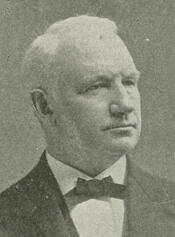
Here you will find contact information for Representative Joseph Henry Walker, including email address, phone number, and mailing address.
| Name | Joseph Henry Walker |
| Position | Representative |
| State | Massachusetts |
| District | 3 |
| Party | Republican |
| Status | Former Representative |
| Term Start | December 2, 1889 |
| Term End | March 3, 1899 |
| Terms Served | 5 |
| Born | December 21, 1829 |
| Gender | Male |
| Bioguide ID | W000062 |
About Representative Joseph Henry Walker
Joseph Henry Walker (December 21, 1829 – April 3, 1907) was an American manufacturer, local and state legislator, and Republican member of the United States House of Representatives from Worcester, Massachusetts. He represented Massachusetts in Congress for five consecutive terms from March 4, 1889, to March 3, 1899, during a significant period in American political and economic history.
Walker was born in Boston, Massachusetts, on December 21, 1829. In his youth he moved with his parents first to Hopkinton and later to Worcester, Massachusetts, where he was raised. He attended the public schools, receiving a basic formal education typical of the period, and entered the workforce at an early age. He initially engaged in the manufacture of boots and shoes, a major New England industry in the mid-nineteenth century, gaining practical experience in commerce and manufacturing that would shape his later business and political career.
Walker’s public life began in municipal government in Worcester. He served as a member of the Worcester common council from 1852 to 1854, participating in the administration and development of the growing industrial city. After his early involvement in local affairs, he continued to build his business interests. In 1868 he established a leather manufacturing business in Chicago, Illinois, expanding his activities beyond Massachusetts and into one of the nation’s most important commercial centers. His work in manufacturing and trade provided him with a detailed understanding of banking, currency, and industrial finance that later informed his legislative focus.
In addition to his municipal service, Walker served in the Massachusetts House of Representatives, furthering his experience in legislative affairs at the state level. A member of the Republican Party, he was subsequently elected to the United States House of Representatives from Worcester as a Republican to the Fifty-first and to the four succeeding Congresses, serving from March 4, 1889, to March 3, 1899. During his decade in Congress, he contributed to the legislative process at a time marked by debates over tariffs, monetary policy, and the regulation of banking and industry. He represented the interests of his Worcester and Massachusetts constituents while participating in the broader national deliberations of the Gilded Age.
Walker’s most prominent congressional role came through his work on financial legislation. He served as chairman of the Committee on Banking and Currency during the Fifty-fourth and Fifty-fifth Congresses, placing him at the center of discussions over the nation’s monetary and banking systems. In that capacity he helped shape policy on banking regulation and currency issues during a period of economic change and recurring financial instability. Despite his seniority and leadership, he was an unsuccessful candidate for reelection in 1898 to the Fifty-sixth Congress, bringing his continuous service in the House to a close on March 3, 1899.
After leaving Congress, Walker resumed his former business pursuits, returning to the commercial activities that had underpinned his early career. He also maintained close ties to educational and civic institutions in Worcester. He was particularly associated with Worcester Academy, where he served for 35 years as the second president of the board of trustees and as a devoted benefactor. In recognition of his long service and philanthropy, Walker Hall at Worcester Academy was named in his honor. The Academy preserves a large portrait of Walker by American portrait painter Edwin Tryon Billings, which hangs in Walker Hall, as well as a marble bust of Walker by noted American sculptor Randolph Rogers, displayed in the Academy’s Alumni House.
Joseph Henry Walker died in Worcester, Massachusetts, on April 3, 1907. He was interred in Rural Cemetery in Worcester. His career as a manufacturer, local and state legislator, and five-term Republican Representative from Massachusetts, together with his leadership on banking and currency issues and his longstanding service to Worcester Academy, left a lasting imprint on both his community and the institutions with which he was associated.