Representative Joseph Edwin Washington
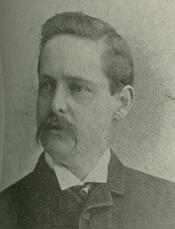
Here you will find contact information for Representative Joseph Edwin Washington, including email address, phone number, and mailing address.
| Name | Joseph Edwin Washington |
| Position | Representative |
| State | Tennessee |
| District | 6 |
| Party | Democratic |
| Status | Former Representative |
| Term Start | December 5, 1887 |
| Term End | March 3, 1897 |
| Terms Served | 5 |
| Born | November 10, 1851 |
| Gender | Male |
| Bioguide ID | W000181 |
About Representative Joseph Edwin Washington
Joseph Edwin Washington (November 10, 1851 – August 28, 1915) was an American politician and a member of the United States House of Representatives for the 6th congressional district of Tennessee. A Democrat, he served five consecutive terms in Congress from 1887 to 1897, representing his constituents during a significant period in American political and economic development and contributing to the legislative process over the course of a decade in the House of Representatives.
Washington was born on November 10, 1851, on his family’s tobacco plantation, Wessyngton, near Cedar Hill in Robertson County, Tennessee. He was the son of George Augustine Washington, a prominent planter and major slaveholder who became a director of the Louisville and Nashville Railroad and the Nashville and Chattanooga Railroad, and who served in the Tennessee General Assembly from 1873 to 1875. Raised in this environment of agricultural enterprise and public engagement, Joseph Edwin Washington received his early instruction at home on the family estate, which would remain central to his life and career.
For his formal education, Washington attended Georgetown College in Washington, D.C., from which he graduated on June 26, 1873. He then pursued legal studies as part of the first law class organized at Vanderbilt University in Nashville, Tennessee, in 1874. Although he was admitted to the bar, he never engaged in the active practice of law. Instead, he returned to Robertson County, where he assumed management of the Wessyngton Plantation, overseeing its extensive tobacco operations and establishing himself as a leading agricultural figure in the region while beginning to enter public life.
Washington’s political career began at the state level. From 1877 to 1879, he served as a member of the Tennessee House of Representatives, where he gained legislative experience and developed a reputation as a capable Democratic lawmaker. His work in the state legislature helped prepare him for national office and positioned him within the Democratic Party at a time when Tennessee and the South were navigating the post–Civil War and Reconstruction eras.
In 1886, Washington was elected as a Democrat to the Fiftieth United States Congress from Tennessee’s 6th congressional district and was subsequently re-elected to the four succeeding Congresses. He served in the U.S. House of Representatives from March 4, 1887, to March 3, 1897. During these five terms in office, he participated actively in the legislative process and represented the interests of his constituents in a period marked by industrial expansion, debates over tariffs and currency, and evolving federal policy toward western territories. Notably, during the Fifty-second Congress he served as chairman of the United States House Committee on Territories, a position that placed him at the center of deliberations over the governance and development of U.S. territorial holdings. He chose not to be a candidate for renomination in 1896, thereby concluding his congressional service at the end of his fifth term.
After leaving Congress, Washington returned to Tennessee and resumed agricultural pursuits, again taking charge of the management of the Wessyngton Plantation in Robertson County. He also continued his involvement in public affairs at the local level, serving as a road commissioner with responsibility for road construction work in Robertson County. His expertise and family connections in rail transportation led to his service as a director of the Nashville, Chattanooga & St. Louis Railroad and the Nashville & Decatur Railroad, extending the Washington family’s longstanding association with regional rail development. In addition, he was a member of the Board of Trustees of Vanderbilt University, contributing to the governance and advancement of higher education in Tennessee.
Washington married Mary Bolling Kemp, and the couple had four children: George, Anne, Joseph, and Elizabeth. The family continued to reside at Wessyngton, maintaining the estate as both a working plantation and a family home. Washington remained active in agricultural, educational, and transportation affairs until his death.
Joseph Edwin Washington died on August 28, 1915, at the age of 63, on the family estate at Wessyngton in Robertson County, Tennessee. He was interred in the family burying ground on the estate, closing a life closely tied to the land, politics, and public service in Tennessee.