Representative Joshua Eilberg
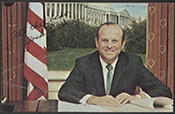
Here you will find contact information for Representative Joshua Eilberg, including email address, phone number, and mailing address.
| Name | Joshua Eilberg |
| Position | Representative |
| State | Pennsylvania |
| District | 4 |
| Party | Democratic |
| Status | Former Representative |
| Term Start | January 10, 1967 |
| Term End | January 3, 1979 |
| Terms Served | 6 |
| Born | February 12, 1921 |
| Gender | Male |
| Bioguide ID | E000096 |
About Representative Joshua Eilberg
Joshua Eilberg (February 12, 1921 – March 24, 2004) was a Democratic member of the U.S. House of Representatives from Pennsylvania who served six consecutive terms in Congress from 1967 to 1979. A lifelong Philadelphian, he played a prominent role in both state and national politics during a significant period in American history, representing the interests of his constituents while participating actively in the legislative process.
Eilberg was born on February 12, 1921, in Philadelphia, Pennsylvania. He was educated in the city’s public schools and graduated from Central High School in Philadelphia. He went on to attend the Wharton School of the University of Pennsylvania, where he received his undergraduate education, and later earned a law degree from Temple University School of Law, also in Philadelphia. This combination of business and legal training provided the foundation for his subsequent career in law and public service.
During World War II, Eilberg entered the United States Naval Reserve. After his military service, he embarked on a legal career in private practice in Philadelphia. His work as an attorney led to his appointment as an assistant district attorney for the city of Philadelphia, a position he held from 1952 to 1954. In that role, he gained experience in criminal law and public administration, further establishing his credentials as a public servant and legal professional.
Eilberg’s formal political career began in the Pennsylvania House of Representatives, to which he was elected in 1954. He served in the state legislature from 1954 to 1966 and rose to a leadership position as majority leader in 1965–1966. In addition to his legislative duties in Harrisburg, he was active in party politics, serving as the Democratic ward leader for the fifty-fourth ward of Philadelphia. He was also a delegate to the Democratic National Conventions in 1960, 1964, and 1968, reflecting his growing influence within the Democratic Party at both the state and national levels.
In 1966, Eilberg was elected as a Democrat to the 90th Congress and was subsequently reelected to the five succeeding Congresses, serving in the U.S. House of Representatives from January 3, 1967, to January 3, 1979. His tenure in Congress coincided with a transformative era in American politics, encompassing the Vietnam War, the civil rights movement, and significant changes in federal domestic policy. While in the House of Representatives, he served as chairman of the Judiciary Subcommittee on Immigration, Citizenship, and International Law. In that capacity, he played a central role in immigration policy, including leading a legislative veto to override the Attorney General’s suspension of deportation for Jagdish Rai Chadha and five others under the Immigration and Nationality Act. The Supreme Court later held that type of legislative veto unconstitutional in INS v. Chadha, 462 U.S. 919 (1983), a landmark separation-of-powers decision that traced in part to actions taken by Eilberg’s subcommittee.
Eilberg’s congressional career also intersected with notable political figures and contests. In 1974, he defeated Chris Matthews—later known as the host of MSNBC’s “Hardball with Chris Matthews”—in the Democratic primary. In 1978, he again prevailed in the Democratic primary, defeating state legislator Mark B. Cohen, but subsequently lost the general election to Republican Charles F. Dougherty. His defeat in 1978 came amid controversy surrounding his involvement with a federal grant to Hahnemann University Hospital in Philadelphia. That year, U.S. Attorney David W. Marston opened an investigation into money Eilberg received in connection with the grant. Eilberg contacted the Carter White House, and Marston was later dismissed from his post. Three months after losing his 1978 reelection bid, Eilberg pleaded guilty to conflict of interest charges arising from the matter and was sentenced to five years of probation and a $10,000 fine.
In his personal life, Eilberg was married to Gladys, a social worker. They had two children: a daughter, Amy Eilberg, who became the first female rabbi ordained in Conservative Judaism, and a son, William. His family life and his identity as a Jewish American placed him among the notable Jewish members of the United States Congress, and his daughter’s pioneering role in the rabbinate added a distinct dimension to the family’s public legacy.
Joshua Eilberg died in Philadelphia on March 24, 2004, of complications of Parkinson’s disease. His career in public life, spanning local legal service, state legislative leadership, and a dozen years in the U.S. House of Representatives, left a complex legacy that included significant involvement in immigration law and a later federal conviction that placed him among American federal politicians convicted of crimes and within the broader history of federal political scandals in the United States.