Representative Joshua Seney
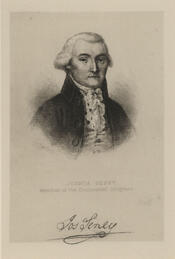
Here you will find contact information for Representative Joshua Seney, including email address, phone number, and mailing address.
| Name | Joshua Seney |
| Position | Representative |
| State | Maryland |
| District | 2 |
| Party | Unknown |
| Status | Former Representative |
| Term Start | March 4, 1789 |
| Term End | March 3, 1793 |
| Terms Served | 2 |
| Born | March 4, 1756 |
| Gender | Male |
| Bioguide ID | S000242 |
About Representative Joshua Seney
Joshua Seney (March 4, 1756 – October 20, 1798) was an American farmer, lawyer, and statesman from Queen Anne’s County, Maryland, who served in both the Continental Congress and the United States House of Representatives. Born in colonial Maryland, he came of age during the turbulent years leading up to the American Revolution. His family background and early life were rooted in the agrarian society of the Eastern Shore, where landholding and local civic involvement formed the basis of social and political influence. These circumstances helped shape his later career as a public servant representing the interests of his region at the national level.
Seney received his early education in Maryland and pursued the study of law, preparing for a professional life that combined legal practice with the management of agricultural interests. As a farmer and lawyer in Queen Anne’s County, he became well acquainted with the economic and legal concerns of his neighbors, gaining experience that would inform his later legislative work. His legal training and standing in the community positioned him to participate in the emerging political institutions of the new nation.
Seney’s public career began in the revolutionary era, when he represented Maryland in the Continental Congress. In that capacity, he took part in the national deliberations that guided the United States through the final stages of the Revolutionary War and the early years under the Articles of Confederation. His service in the Continental Congress established him as a figure of statewide prominence and connected him to the broader political currents that would lead to the framing and adoption of the federal Constitution.
With the establishment of the new federal government under the Constitution, Seney was elected as a Representative from Maryland to the United States Congress. He served in the House of Representatives from 1789 to 1793, representing Maryland’s second district during the First and Second Congresses. A member of the emerging Anti-Administration faction that opposed certain policies of the Washington administration, he was aligned with what would later be recognized as the Jeffersonian Republican, or Democratic-Republican, tendency, though the existing record here lists his party as unknown. During his two terms in office, he contributed to the legislative process at a formative moment in American history, participating in debates over the organization of the federal government, fiscal policy, and the rights and interests of his constituents in Maryland.
Seney’s congressional service coincided with the critical early years of the republic, when precedents were being set for the functioning of the legislative branch and the balance of power between the federal government and the states. As a member of the House of Representatives, he took part in the democratic process by representing the concerns of his district’s largely rural population, which included farmers and small landholders whose economic fortunes were closely tied to trade, credit, and land policy. His experience as both a farmer and lawyer gave him insight into these issues, and he worked within the new federal framework to advance the interests of his constituents.
After leaving Congress in 1793, Seney returned to his legal and agricultural pursuits in Queen Anne’s County. He continued to be regarded as a respected figure in local affairs, drawing on his national experience and professional background. His family life also extended his legacy into the next generation. His son, Joshua Seney Jr. (1793–1854), married Ann Ebert (1803–1879); they were the parents of Judge Henry William Seney, thereby continuing the family’s involvement in the legal profession and public life.
Joshua Seney died at home on October 20, 1798, on his farm near Church Hill in Queen Anne’s County, Maryland. He was originally buried in a family plot on his farm. In later years, his remains were moved, and his grave can now be found in the churchyard of St. Luke’s Church. His career as a farmer, lawyer, delegate to the Continental Congress, and Representative in the early United States Congress places him among the generation of Maryland leaders who helped guide the transition from colony to independent republic and contributed to the establishment of the nation’s constitutional government.