Representative Joshua Frederick Cockey Talbott
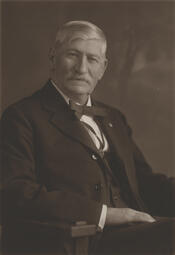
Here you will find contact information for Representative Joshua Frederick Cockey Talbott, including email address, phone number, and mailing address.
| Name | Joshua Frederick Cockey Talbott |
| Position | Representative |
| State | Maryland |
| District | 2 |
| Party | Democratic |
| Status | Former Representative |
| Term Start | March 18, 1879 |
| Term End | March 3, 1919 |
| Terms Served | 12 |
| Born | July 29, 1843 |
| Gender | Male |
| Bioguide ID | T000021 |
About Representative Joshua Frederick Cockey Talbott
Joshua Frederick Cockey Talbott (July 29, 1843 – October 5, 1918) was an American lawyer, Civil War veteran, and Democratic politician who represented Maryland’s second congressional district in the United States House of Representatives. Serving from 1879 to 1919, he held office for 12 terms during a transformative period in American history, participating in the legislative process through the late Reconstruction era, the Gilded Age, the Progressive Era, and the First World War. Over the course of his long tenure, he became one of Maryland’s most enduring congressional figures and a recognized voice for his constituents.
Talbott was born on July 29, 1843, in Lutherville, Baltimore County, Maryland, into a family long established in the region. He grew up in a community closely tied to the commercial and political life of Baltimore and its surrounding counties. His early years were shaped by the sectional tensions that preceded the Civil War, and by the time he reached young adulthood, the nation had entered into open conflict. These formative experiences in mid-nineteenth-century Maryland, a border state with divided loyalties, influenced his later public service and his understanding of national unity and federal authority.
Talbott received his education in local schools in Baltimore County, where he pursued a course of study typical of young men preparing for professional life in law or public affairs. After completing his basic schooling, he studied law and was admitted to the bar, beginning a legal career in Maryland. His legal training provided him with a foundation in constitutional and statutory interpretation that would later inform his work in Congress. The combination of his local upbringing, legal education, and early exposure to the political issues of his time prepared him for a life in public service.
During the American Civil War, Talbott served in the Confederate Army, reflecting the divided sympathies of many Maryland families. His wartime experience gave him firsthand knowledge of military affairs and the human cost of conflict. After the war, he resumed civilian life in Maryland and established himself as a practicing attorney. In the postwar years, he became increasingly active in Democratic Party politics, aligning with a political organization that sought to shape the course of Reconstruction and the reintegration of former Confederate states and sympathizers into the national political framework.
Talbott was first elected as a Democrat to the United States House of Representatives in the Forty-sixth Congress, taking office on March 4, 1879, as the representative of Maryland’s second congressional district. He would go on to serve multiple nonconsecutive and consecutive terms, remaining in Congress until his death in 1918 and thereby contributing to the legislative process during 12 terms in office. His service spanned debates over civil service reform, tariff policy, industrial regulation, naval expansion, and America’s emerging role on the world stage. As a member of the House of Representatives, Joshua Frederick Cockey Talbott participated in the democratic process and represented the interests of constituents from a district that included both urban and rural communities in and around Baltimore.
Over the course of his congressional career, Talbott became particularly associated with questions of naval policy and maritime defense, reflecting Maryland’s historic ties to seafaring and commerce. His interest in naval affairs and his long service in Congress led to his recognition in later naval historical works, and his name appears in the public domain Dictionary of American Naval Fighting Ships, underscoring his connection to the development of the United States Navy during a period of modernization and expansion. His legislative work coincided with the transformation of the U.S. Navy from a modest post–Civil War force into a modern fleet capable of projecting American power abroad.
Talbott remained in office through the early years of World War I, witnessing the nation’s transition from neutrality to active participation in the conflict. He continued to represent Maryland’s second district until his death on October 5, 1918, while still a sitting member of Congress. His passing brought to a close nearly four decades of intermittent but cumulatively extensive service in the House of Representatives. In recognition of his long tenure and influence, contemporary accounts, including memorial tributes and later reference works such as the Biographical Directory of the United States Congress, recorded his career as emblematic of sustained Democratic representation from Maryland during a critical era in the nation’s political and military development.