Senator Josiah William Bailey
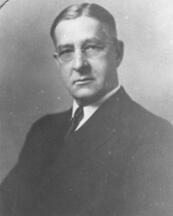
Here you will find contact information for Senator Josiah William Bailey, including email address, phone number, and mailing address.
| Name | Josiah William Bailey |
| Position | Senator |
| State | North Carolina |
| Party | Democratic |
| Status | Former Representative |
| Term Start | December 7, 1931 |
| Term End | January 3, 1947 |
| Terms Served | 3 |
| Born | September 14, 1873 |
| Gender | Male |
| Bioguide ID | B000046 |
About Senator Josiah William Bailey
Josiah William Bailey (September 14, 1873 – December 15, 1946) was an American politician and lawyer who represented North Carolina in the United States Senate from 1931 to 1946. A member of the Democratic Party, he served three terms in the Senate and played a prominent role in national debates over the New Deal, foreign policy, and labor relations during a transformative period in American history. His congressional service, which extended from the early years of the Great Depression through the end of World War II, was marked by both reformist impulses and later conservative leadership within the Southern Democratic bloc.
Bailey was born in Warrenton, Warren County, North Carolina, on September 14, 1873. He spent part of his youth in Tennessee, where his family moved for a time, before returning to North Carolina. His early life in the post-Reconstruction South exposed him to the economic and social challenges of the region, experiences that later informed his interest in public education, economic development, and political reform. Raised in a Baptist household, he developed a strong religious orientation that would later influence both his public rhetoric and his long association with religious journalism.
Bailey pursued higher education at Wake Forest College (now Wake Forest University) in North Carolina, where he studied law. He graduated in 1893 and was admitted to the bar, beginning the legal career that would underpin his later political work. In addition to his legal training, he cultivated interests in history, public affairs, and religious thought, which led him to writing and editorial work. His education and early professional experiences positioned him as part of a rising generation of Southern progressives who sought to modernize their region while maintaining traditional social and political structures.
Before entering the Senate, Bailey built a statewide reputation as a reform-minded Democrat and public intellectual. In the 1910s he emerged as a leading reformer in North Carolina, promoting improvements in public education and supporting the progressive, Wilsonian programs of the era. He was closely associated with the Baptist community and for many years served as editor of the Biblical Recorder, the newspaper of the North Carolina Baptist State Convention, where he wrote extensively on religious, social, and political issues. Through his editorial work and public advocacy, he championed educational expansion, good-government reforms, and a more active role for the state in addressing economic and social problems, aligning himself with the broader progressive movement of the early twentieth century.
Bailey was elected as a Democrat to the United States Senate in 1930 and took office on March 4, 1931, representing North Carolina during a period of profound national crisis. His tenure in Congress, which lasted until his death in 1946, coincided with the Great Depression, the New Deal, and World War II. In his early years in the Senate he supported many of President Franklin D. Roosevelt’s New Deal initiatives, reflecting both his progressive background and the urgent need for federal action to address economic collapse. He participated actively in the legislative process, representing the interests of his North Carolina constituents in matters ranging from agriculture and industry to banking and public works, and helped secure federal assistance for his state during the depths of the Depression.
By the late 1930s, however, Bailey had become a central figure in the conservative reaction against aspects of the New Deal. By 1938 he was widely recognized as a leader of the anti–New Deal faction of Southern Democrats, concerned about what he viewed as excessive federal intervention in the economy, growing regulatory power in Washington, and the influence of organized labor. He was closely associated with efforts to articulate a more conservative economic philosophy within the Democratic Party, emphasizing balanced budgets, reduced federal spending, and encouragement of private enterprise. Even as he opposed further domestic expansion of the New Deal, he remained an influential voice in Senate debates over economic policy, taxation, and regulatory legislation.
As international tensions mounted in the late 1930s, Bailey’s focus shifted toward foreign affairs. When war loomed in 1939, he moved to support President Roosevelt’s increasingly interventionist foreign policy, breaking with isolationist sentiment that was strong in parts of the South and within his own party. During World War II he backed Roosevelt’s wartime domestic program aimed at mobilizing the nation’s resources for victory, while continuing to express skepticism toward and opposition to the growing power of labor unions. This combination of support for robust national defense and wartime mobilization, coupled with domestic economic conservatism and anti-union positions, made him a key figure in shaping the conservative Democratic response to mid-century liberalism.
Bailey remained in office until his death, continuing to represent North Carolina in the Senate through the closing months of World War II and the initial stages of postwar adjustment. He died in office on December 15, 1946, in Raleigh, North Carolina, bringing to a close more than fifteen years of continuous service in the United States Congress. His career, spanning early progressive reform, support for the early New Deal, later conservative leadership, and strong backing of interventionist foreign policy during World War II, reflected the broader ideological shifts within the Democratic Party and the South in the first half of the twentieth century.