Representative Josiah Quincy
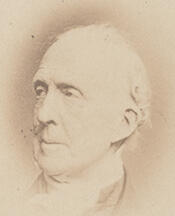
Here you will find contact information for Representative Josiah Quincy, including email address, phone number, and mailing address.
| Name | Josiah Quincy |
| Position | Representative |
| State | Massachusetts |
| District | 1 |
| Party | Federalist |
| Status | Former Representative |
| Term Start | December 2, 1805 |
| Term End | March 3, 1813 |
| Terms Served | 4 |
| Born | February 4, 1772 |
| Gender | Male |
| Bioguide ID | Q000015 |
About Representative Josiah Quincy
Josiah Quincy III (February 4, 1772 – July 1, 1864) was an American educator, lawyer, and political figure who served as a Representative from Massachusetts in the United States Congress from 1805 to 1813. A prominent member of the Federalist Party, he later became mayor of Boston from 1823 to 1828 and President of Harvard University from 1829 to 1845. The historic Quincy Market in downtown Boston is named in his honor, and in a 1993 survey of historians, political scientists, and urban experts, he was ranked among the ten best American big-city mayors to have served between 1820 and 1993.
Quincy was born on February 4, 1772, in Boston, Massachusetts, on the part of present-day Washington Street then known as Marlborough Street. He was the son of Josiah Quincy II and Abigail Phillips and was a descendant of the Rev. George Phillips of Watertown, the progenitor of the New England Phillips family in America. His father, an ardent supporter of the Patriot cause, traveled to England in 1774 partly for his health but chiefly as an agent of the American colonists to confer with their friends in London. Josiah Quincy II died off the coast of Gloucester, England, on April 26, 1775, when his son was a little over three years old, leaving the future congressman to be raised in a prominent but fatherless household shaped by Revolutionary-era politics and New England mercantile culture.
Quincy’s formal education began when he entered Phillips Academy in Andover, Massachusetts, in 1778, the year the school opened. He later matriculated at Harvard University, from which he graduated in 1790. After Harvard, he read law for three years under the tutelage of William Tudor in Boston and was admitted to the bar in 1793. Although he practiced law, he never became a particularly prominent courtroom advocate, and his talents soon found fuller expression in public life and civic leadership. In 1797, Quincy married Eliza Susan Morton of New York City, the younger sister of Jacob Morton. The couple had seven children: Eliza Susan Quincy, Josiah Quincy Jr., Abigail Phillips Quincy, Maria Sophia Quincy, Margaret Morton Quincy, Edmund Quincy, and Anna Cabot Lowell Quincy, thereby linking the Quincy family to other influential New England and New York families.
Quincy’s early public career developed in Boston municipal affairs and Massachusetts state politics. In 1798, he was appointed Boston’s Town Orator by the Board of Selectmen, a position that called on him to deliver formal addresses on public occasions. In 1800 he was elected to the Boston School Committee, marking the beginning of his long involvement with educational governance. A rising leader of the Federalist Party in Massachusetts, he was an unsuccessful candidate for the United States House of Representatives in 1800. He was elected a Fellow of the American Academy of Arts and Sciences in 1803, reflecting his growing intellectual and civic stature. Quincy served in the Massachusetts Senate from 1804 to 1805, where he solidified his reputation as a principled and articulate Federalist spokesman.
From 1805 to 1813, Josiah Quincy served four terms as a Representative from Massachusetts in the United States House of Representatives, sitting as part of a small Federalist minority during a turbulent period in American history. His congressional service coincided with the Jefferson and Madison administrations, the Embargo Act, and the approach of the War of 1812. During these years he participated actively in the legislative process and represented the interests of his New England constituents. In the dark days of the Embargo during President Thomas Jefferson’s second term, Quincy was an outspoken critic of administration policy and went so far as to suggest Jefferson’s impeachment. He attempted to secure the exemption of fishing vessels from the Embargo Act, urged the strengthening of the United States Navy, and vigorously opposed the admission of Louisiana as a state in 1811. In that debate he declared his “deliberate opinion, that if this bill passes, the bonds of this Union are virtually dissolved; that the States that compose it are free from their moral obligations; and that, as it will be the right of all, so it will be the duty of some, to prepare definitely for a separation, amicably if they can, violently if they must.” This statement is often cited as one of the earliest explicit assertions of a right of secession on the floor of Congress. Disheartened by the futility of Federalist opposition at the national level, Quincy left Congress in 1813. In 1812, during his congressional years, he was also a founding member of the American Antiquarian Society, underscoring his interest in American history and letters.
After his departure from the national legislature, Quincy resumed state and local public service in Massachusetts. He returned to the Massachusetts Senate, serving there until 1820, and then sat in the Massachusetts House of Representatives in 1821 and 1822, where he was chosen Speaker of the House. He resigned from the legislature to accept appointment as a judge of the municipal court of Boston, further extending his experience in public administration and law. Quincy was a candidate for mayor of Boston in the city’s first election under its new charter on April 8, 1822. The vote was evenly split between Quincy and fellow Federalist Harrison Gray Otis, with a few votes going to others; because neither secured a majority, neither was elected. Both men withdrew, and John Phillips was chosen as Boston’s first mayor. In 1823, Quincy was elected the second mayor of Boston and went on to serve six one-year terms from 1823 to 1828. As mayor, he oversaw the construction of Quincy Market, a major commercial and architectural project that modernized the city’s central marketplace and later took his name. He reorganized the fire and police departments and systematized the city’s care of the poor, contributing to the professionalization of Boston’s municipal services. At the same time, he led the shutdown of the Boston High School for Girls in 1826. The school, opened in 1825 after the city council appropriated $2,000 for its establishment, had become so popular that demand for admission and the need for expanded accommodations and expenditures alarmed city officials. Under Quincy’s leadership, the school committee abolished the school and pronounced it a failure, and for twenty-three years no attempt was made to revive a public high school for girls in Boston. Despite this controversial action, his broader record of urban reform and infrastructure development led scholars in 1993 to rank him as the tenth-best American big-city mayor serving between 1820 and 1993.
Quincy’s long association with Harvard University culminated in his election as President of Harvard in 1829, a post he held until 1845. He had been an overseer of the university since 1810, when the Board of Overseers was reorganized, and his selection as president was notable because, at a time when college presidents were typically chosen for scholarly distinction, Quincy was primarily a seasoned politician and administrator rather than an academic. He has been called “the great organizer of the university” for his extensive institutional reforms. He gave the elective, or “voluntary,” system an elaborate trial, allowing students more choice in their studies; introduced a formal system of marking on a scale of eight, which provided a more rigorous basis for assigning college rank and honors; and was the first to employ courts of law to punish students who destroyed or damaged college property, thereby reinforcing institutional discipline. Quincy also helped to reform Harvard’s finances and oversaw significant expansions of its physical plant, including the dedication of Dane Hall for the law school, the construction of Gore Hall as the college library, and the equipping of the Astronomical Observatory. His contributions to Harvard’s development are commemorated in Quincy House, one of the university’s twelve upperclass residential houses. In 1829, the same year he assumed the Harvard presidency, he was elected a member of the American Philosophical Society, reflecting his national standing in intellectual and educational circles.
In addition to his public offices, Quincy was an active author and commentator on history, education, agriculture, and politics. His works included A Municipal History of the Town and City of Boston During Two Centuries from September 17, 1630 to September 17, 1830 (Boston, 1852); History of Harvard University (Cambridge, 1840); The History of the Boston Athenæum, with Biographical Notices of its Deceased Founders (Cambridge, 1851); Essay on the Soiling of Cattle (1852); Address Illustrative of the Nature and Power of the Slave States and the Duties of the Free States (Boston, 1856); and The Duty of Conservative Whigs in the Present Crisis: A Letter to the Hon. Rufus Choate (Boston, 1856). In 1856 he delivered a notable address on the impending presidential election, endorsing Republican candidate John C. Frémont and denouncing the long-standing political dominance of the slaveholding states, declaring that “for more than fifty years, the Slave States have subjugated the Free States.” This speech was later cited by historian Garry Wills in his study Negro President: Jefferson and the Slave Power, highlighting Quincy’s continued engagement with national issues well into his eighties.
In his later years, Quincy withdrew from active public office but remained an influential elder statesman and commentator. He spent much of his final period on his farm in Quincy, Massachusetts, maintaining his interest in agriculture and letters and continuing to write and speak on public questions. He died there on July 1, 1864, at the age of ninety-two. His long life spanned from the Revolutionary era through the Civil War, and his legacy is reflected in the institutions he helped shape—most notably the city of Boston and Harvard University—as well as in the enduring landmark of Quincy Market and the commemorative statue of Josiah Quincy III in Boston.