Representative Juanita Millender-McDonald
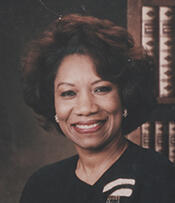
Here you will find contact information for Representative Juanita Millender-McDonald, including email address, phone number, and mailing address.
| Name | Juanita Millender-McDonald |
| Position | Representative |
| State | California |
| District | 37 |
| Party | Democratic |
| Status | Former Representative |
| Term Start | March 26, 1996 |
| Term End | April 22, 2007 |
| Terms Served | 7 |
| Born | September 7, 1938 |
| Gender | Female |
| Bioguide ID | M000714 |
About Representative Juanita Millender-McDonald
Juanita Millender-McDonald (September 7, 1938 – April 22, 2007) was an American politician who served as a member of the United States House of Representatives from 1996 until her death in 2007, representing California’s 37th congressional district. A member of the Democratic Party, she served seven terms in Congress and represented a district that included most of South Central Los Angeles and the city of Long Beach, California. Over the course of her career, she became known for her advocacy on human rights, gender equity, and election administration, and she was a prominent member of both the Congressional Black Caucus and the New Democrat Coalition.
Millender-McDonald was born in Birmingham, Alabama, on September 7, 1938. She later moved to California, where she pursued higher education while building a career in public service and community advocacy. She attended Los Angeles Harbor College and went on to the University of Redlands, from which she received a business degree. She continued her education at California State University, Los Angeles, earning a master’s degree in educational administration, and later completed a doctorate in public administration at the University of Southern California. She was also a member of Alpha Kappa Alpha sorority, reflecting her engagement with African-American professional and civic networks.
Before entering elective office, Millender-McDonald worked as a teacher and as a textbook editor, gaining experience in education and publishing that informed her later legislative interests. She also served as director of a nonprofit organization focused on gender issues, underscoring her long-standing commitment to women’s rights and equality. These early professional roles helped establish her reputation as an advocate for underserved communities and positioned her for leadership in local and state government.
Millender-McDonald’s political career began at the local level in Carson, California, where she served on the City Council. She then advanced to state office as a member of the California State Assembly. In 1992, following reapportionment that placed two incumbent Democrats into the same Carson-based Assembly district, she successfully challenged and defeated both, securing the Democratic nomination and the Assembly seat. Her tenure in the Assembly further elevated her profile and provided a platform from which she would later seek federal office.
She was first elected to the U.S. House of Representatives in a March 1996 special election to replace Congressman Walter Tucker, who had resigned amid corruption charges and was later sentenced to 27 months in prison. In that initial race, she prevailed in a difficult nine-candidate primary, in which fellow Assembly member Willard Murray finished a close second. After winning the special election, she consolidated her position in the district and did not face serious opposition in any of her subsequent reelection campaigns. Her service in Congress occurred during a significant period in American history, and she consistently participated in the legislative and democratic processes on behalf of her constituents in California’s 37th district.
During her congressional tenure from 1996 to 2007, Millender-McDonald developed a reputation for her commitment to protecting international human rights and vulnerable populations. She worked to aid victims of genocide and human trafficking and was active in efforts to bring global human rights abuses to the attention of Congress. In 1996, she led an inquiry into allegations that the Central Intelligence Agency had worked with cocaine traffickers to fund Contra rebels in Nicaragua, reflecting her willingness to scrutinize executive-branch activities and intelligence operations. Within the House, she was a member of the Congressional Black Caucus and the New Democrat Coalition, and she was regarded as a front-runner for the position of Secretary of Transportation had Senator John Kerry been elected president in 2004.
On December 19, 2006, Millender-McDonald was named Chairwoman of the House Committee on House Administration for the 110th Congress, becoming the first African-American woman to lead that committee. In this role, she oversaw matters related to the administration of the House of Representatives, including federal election oversight, congressional operations, and certain aspects of legislative branch management. Her appointment reflected both her seniority and the confidence of her colleagues in her leadership abilities. Her chairmanship capped more than a decade of service in the House, during which she consistently represented the interests of her urban, diverse district and contributed to the legislative process on a wide range of domestic and international issues.
Within a week of requesting a leave of absence from Congress to deal with illness, Millender-McDonald died in hospice care on April 22, 2007, at her home in Carson, California, succumbing to colon cancer at the age of 68. Her death brought an abrupt end to her service in Congress and left vacant a seat she had held for more than eleven years. She was survived by her husband, James McDonald Jr., and five adult children. Following her death, under California law, Governor Arnold Schwarzenegger called a special election for June 26, 2007. Because no candidate received more than 50 percent of the vote in that primary, the top vote-getters from each party advanced to an August 21 runoff. In the June primary, State Senator Jenny Oropeza lost to State Assemblywoman Laura Richardson, who then proceeded to the August special election and won the seat, defeating Republican John M. Kanaley, Libertarian Herb Peters, and Green Party candidate Daniel Brezenoff.