Senator Judah Dana
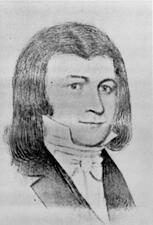
Here you will find contact information for Senator Judah Dana, including email address, phone number, and mailing address.
| Name | Judah Dana |
| Position | Senator |
| State | Maine |
| Party | Jackson |
| Status | Former Representative |
| Term Start | January 1, 1836 |
| Term End | December 31, 1837 |
| Terms Served | 1 |
| Born | April 25, 1772 |
| Gender | Male |
| Bioguide ID | D000022 |
About Senator Judah Dana
Judah Dana (April 25, 1772 – December 27, 1845) was an American lawyer, judge, and politician who served as a United States senator from Maine and as a judge of the Maine Court of Common Pleas during the early 1800s. Born in Pomfret, Vermont, he was the son of John Winchester Dana and Hannah (Putnam) Dana, and was the maternal grandson of American Revolutionary War General Israel Putnam. His family background and New England upbringing placed him in an environment closely connected to the emerging political and legal institutions of the new nation.
Dana pursued higher education at Dartmouth College, from which he graduated in 1795. Following his graduation, he studied law and prepared for a legal career at a time when Maine was still part of Massachusetts. In 1798, he was admitted to the bar and soon thereafter established his law practice in Fryeburg, in what is now Oxford County, Maine. Fryeburg would remain his home for the rest of his life and the center of his professional and public service activities.
Dana’s legal and judicial career developed steadily in the early decades of the nineteenth century. He served as district attorney for Oxford County from 1805 to 1811, representing the state in criminal matters during a period of growth and institutional formation in the region. In 1811, he was appointed judge of probate for Oxford County, a position he held until 1822, overseeing matters of estates and guardianships. Concurrently, from 1811 to 1823, he served as a judge of the Court of Common Pleas, and he also sat as a judge of the circuit court, roles in which he helped administer civil and criminal justice across a wide rural jurisdiction.
Dana played a notable part in the political development of Maine as it moved toward statehood. In 1819, he was a delegate to the convention that framed the state constitution of Maine, contributing to the foundational legal document that guided the new state after its separation from Massachusetts in 1820. He also served as a trustee of Bowdoin College from 1820 to 1843, reflecting his engagement with higher education and intellectual life in the region. In addition, he was elected a member of the Governor’s Council for Governor Samuel E. Smith in 1833 and served in that capacity in 1834, advising the executive branch on state affairs. Later, he was appointed a bank commissioner from 1836 to 1837, participating in the oversight of financial institutions during a period of economic expansion and volatility.
An adherent of the Jacksonian, or Jackson Party, Dana was aligned with the political movement that supported President Andrew Jackson and emphasized democratic participation and opposition to certain entrenched financial interests. Within this context, he advanced from state and judicial roles to national office. He was appointed to the United States Senate from Maine upon the resignation of Senator Ether Shepley, who left the Senate when he was appointed a judge of the Maine Supreme Judicial Court. Dana’s service in Congress occurred during a significant period in American history, marked by debates over banking, federal power, and the expansion of democracy. He served as a United States senator from December 21, 1836, to March 3, 1837, completing Shepley’s unexpired term. During this one term in office, he participated in the legislative process, took part in the democratic governance of the nation, and represented the interests of his Maine constituents as a member of the Senate.
Dana’s personal life was closely intertwined with his public career. In 1800, he married Elizabeth Ripley, with whom he had eight children: Caroline Elizabeth Dana, Maria Annette Dana, John Winchester Dana, Francis Putnaman Dana, Abigail Ripley Dana, Catherine Putnam Dana, Emily Wheelock Dana, and Sarah Malleville Dana. Their son John Winchester Dana later became Governor of Maine, extending the family’s political legacy into the next generation. After Elizabeth’s death in 1819, Judah Dana married Mehitable Osgood McMillan, further solidifying his family ties within the region he served.
Judah Dana spent his later years in Fryeburg, Oxford County, Maine, remaining a respected figure in legal, educational, and political circles. He died there on December 27, 1845, at the age of 73 years and 246 days. He was interred at Village Cemetery in Fryeburg, Maine. His life and career, spanning from the early years of the Republic through the Jacksonian era, reflected the evolution of Maine from a district of Massachusetts to a fully established state, and his contributions were noted in contemporary and later biographical accounts, including entries in Appletons’ Cyclopædia of American Biography and the Biographical Directory of the United States Congress.