Representative Judy Biggert
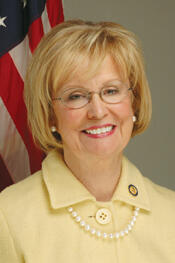
Here you will find contact information for Representative Judy Biggert, including email address, phone number, and mailing address.
| Name | Judy Biggert |
| Position | Representative |
| State | Illinois |
| District | 13 |
| Party | Republican |
| Status | Former Representative |
| Term Start | January 6, 1999 |
| Term End | January 3, 2013 |
| Terms Served | 7 |
| Born | August 15, 1937 |
| Gender | Female |
| Bioguide ID | B001232 |
About Representative Judy Biggert
Judith Gail Biggert (née Borg; born August 15, 1937) is an American politician and attorney who served as a Republican member of the United States House of Representatives from Illinois from 1999 to 2013. She represented Illinois’s 13th congressional district for seven consecutive terms and was a prominent moderate Republican voice in the House. Her tenure in Congress spanned a significant period in recent American history, during which she participated actively in the legislative process and represented the interests of her suburban Chicago constituents.
Biggert was born Judith Gail Borg in Chicago, Illinois, on August 15, 1937, the second of four children of Alvin Andrew Borg and Marjorie Virginia (Mailler) Borg. Her father worked for the Chicago-based Walgreen Co., the largest drugstore chain in the United States, for 41 years from 1928 to 1969, serving as its president from 1963 to 1969. He succeeded Charles R. Walgreen Jr. and was succeeded by Charles R. Walgreen III. Biggert’s paternal grandparents immigrated from Finland, and her maternal family is of English descent. She grew up in Wilmette, Illinois, a North Shore suburb of Chicago, where she attended local schools and graduated from New Trier High School in 1955.
Following high school, Biggert attended Stanford University, where she earned a Bachelor of Arts degree in international relations in 1959. After graduation, she worked for a year in a women’s apparel store before pursuing legal studies. She enrolled at Northwestern University School of Law, where she was an editor of the Northwestern University Law Review from 1961 to 1963. She received her Juris Doctor degree in 1963 and then clerked for Judge Luther Merritt Swygert of the United States Court of Appeals for the Seventh Circuit from 1963 to 1964. Biggert left her federal court clerkship to raise her children but later engaged in part-time legal work from home, focusing on wills, trusts, and real estate matters. In addition to her legal work, she served on numerous boards of voluntary and civic organizations, reflecting an early and sustained commitment to public service.
Biggert’s formal entry into public life began at the local level. In 1978, she was elected to the Hinsdale Township High School District 86 Board of Education, serving until 1985 and holding the position of board president from 1983 to 1985. She later served as chairman of the Hinsdale Plan Commission from 1989 to 1993. During these years she also became active in Chicago-area community organizations, serving as chair of the Visiting Nurses Association and as president of the Junior League. Her work in local education governance, municipal planning, and civic leadership helped establish her reputation as a pragmatic and engaged community leader and laid the groundwork for her subsequent state and national political career.
In 1992, Biggert was elected to the Illinois House of Representatives from the redrawn 81st District. She was re-elected in 1994 and 1996, serving in the Illinois House from 1993 to 1998. During her tenure in the state legislature, she developed a legislative record that emphasized education, fiscal issues, and suburban concerns, positioning herself as a centrist Republican with a focus on practical problem-solving. Her service in the Illinois House provided her with legislative experience and visibility that would prove instrumental when she sought federal office at the end of the decade.
In 1998, Biggert ran for and won election to the U.S. House of Representatives from Illinois’s 13th congressional district, taking office on January 3, 1999. She served seven terms in Congress, remaining in office until January 3, 2013. As a member of the House of Representatives, Judy Biggert participated in the democratic process and contributed to the legislative work of the chamber during a period marked by major national events, including the September 11 attacks, the wars in Afghanistan and Iraq, and the financial crisis of 2008. She served on several key committees: the Committee on Education and the Workforce, where she sat on the Subcommittee on Early Childhood, Elementary, and Secondary Education and the Subcommittee on Higher Education and Workforce Training; the Committee on Financial Services, where she served on the Subcommittee on Capital Markets, Insurance, and Government-Sponsored Enterprises and chaired the Subcommittee on Insurance, Housing and Community Opportunity; and the Committee on Science, Space and Technology, where she served on the Subcommittee on Energy and Environment and the Subcommittee on Technology and Innovation. She was also Co-Chair of the Congressional Caucus on Women’s Issues and a member of the Republican Main Street Partnership.
Ideologically, Biggert was widely regarded as a moderate Republican. She was a member of The Republican Main Street Partnership and Republicans for Choice. On social issues, she supported abortion rights and embryonic stem-cell research. Her voting record earned her a 50% rating from NARAL Pro-Choice America and a 67% rating from Planned Parenthood, both of which support legal abortion, as well as a 100% rating from Population Connection, an organization that supports voluntary family planning, and a 50% rating from the National Right to Life Committee, which opposes legal abortion. On fiscal and economic matters, she signed Grover Norquist’s Americans for Tax Reform Taxpayer Protection Pledge and supported making all of the Bush-era tax cuts permanent regardless of income. She backed proposals for partial privatization of Social Security, under which individuals could voluntarily divert 2% of their Social Security tax payments into individual private investment accounts that could be passed on to their heirs. Biggert supported the repeal or defunding of the 2010 Democratic health care reform law and its replacement with Republican health care proposals, and she opposed allowing individuals under age 65 to buy into Medicare. On immigration, she opposed comprehensive immigration reform that included a path to citizenship for individuals in the country illegally and supported efforts to curb illegal immigration. In the area of campaign finance, she opposed public financing of federal election campaigns and favored eliminating all limits on campaign contributions, coupled with immediate and full disclosure of contributions.
Biggert’s congressional career came to an end following redistricting after the 2010 census. In the 2012 election, she ran for re-election but was defeated by former U.S. Representative Bill Foster, a Democrat, in a newly drawn district. Her defeat marked the conclusion of her 14 years in the U.S. House. She was also notable as the last Republican woman elected to Congress from Illinois until the election of Mary Miller from Illinois’s 15th congressional district in 2020, underscoring her distinctive place in the state’s modern political history.
After leaving Congress in January 2013, Biggert continued her involvement in public affairs. She was appointed to serve on the Illinois Education Labor Relations Board, extending her long-standing engagement with education policy and labor issues in the state. Through her post-congressional service and earlier decades of work in law, local governance, state legislation, and national politics, Judy Biggert has maintained a sustained presence in Illinois public life as an attorney, legislator, and advocate for education, fiscal policy, and moderate Republican principles.