Representative Julian C. Dixon
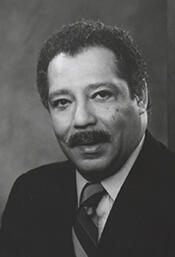
Here you will find contact information for Representative Julian C. Dixon, including email address, phone number, and mailing address.
| Name | Julian C. Dixon |
| Position | Representative |
| State | California |
| District | 32 |
| Party | Democratic |
| Status | Former Representative |
| Term Start | January 15, 1979 |
| Term End | January 3, 2001 |
| Terms Served | 11 |
| Born | August 8, 1934 |
| Gender | Male |
| Bioguide ID | D000373 |
About Representative Julian C. Dixon
Julian Carey Dixon (August 8, 1934 – December 8, 2000) was an American Democratic politician from California who served in the California State Assembly from 1973 to 1978 and as a member of the United States House of Representatives from 1979 until his death. A member of the aristocratic Syphax family, he was born in Washington, D.C., and later moved to California, where he attended Dorsey High School in Los Angeles. He served in the United States Army from 1957 to 1960, an experience that preceded and informed his later public service. After his military service, he pursued higher education and graduated from California State University, Los Angeles, in 1962. He was also an alumnus of Southwestern University School of Law, and during his early adulthood he became a member of the Alpha Phi Alpha fraternity.
Dixon began his political career in state government during a period of expanding representation for African Americans in California politics. He was elected to the California State Assembly as a Democrat in 1972 and served three terms, from 1973 to 1978. In the Assembly, he represented a Los Angeles–area district and built a reputation as a diligent legislator and consensus-builder, which helped lay the groundwork for his subsequent federal career. His work in Sacramento coincided with broader efforts to address urban issues, civil rights, and the needs of a diversifying electorate in California.
In 1978, Dixon was elected to the United States House of Representatives from California, beginning his service in Congress on January 3, 1979. A member of the Democratic Party, he served 11 consecutive terms, representing his constituents in Los Angeles and contributing to the legislative process during a significant period in American history. His tenure in the House extended from the late Cold War through the end of the 20th century, encompassing major debates over foreign policy, domestic spending, ethics in government, and civil rights. As a member of the House of Representatives, Julian C. Dixon participated actively in the democratic process and represented the interests of his constituents, becoming known for his careful, methodical approach to legislation and oversight.
Dixon held several important leadership roles in Congress. He chaired the House Committee on Standards of Official Conduct (the House Ethics Committee) from 1985 to 1991, overseeing investigations and enforcement of ethical rules for members of the House. In that capacity, he chaired the high-profile ethics probe into Speaker Jim Wright, which culminated in Wright’s resignation in 1989 and underscored Dixon’s reputation for fairness and integrity. He also played a visible role in national party affairs, chairing the rules committee at the 1984 Democratic National Convention, where he helped shape the procedures governing the nomination process and convention deliberations.
During his years in Congress, Dixon engaged in key foreign and domestic policy debates. In 1983, he joined with seven other members of the House of Representatives to sponsor a resolution to impeach President Ronald Reagan over the sudden and unexpected U.S. invasion of Grenada, reflecting his concern about the constitutional balance of war powers and executive authority. At the same time, he was deeply involved in issues affecting his Los Angeles district, including transportation, urban development, and access to federal resources. He played a significant role in securing federal funding for the development of the Los Angeles Metro Rail system, a contribution later commemorated in the naming of a major transit hub in his honor.
Dixon’s final years in Congress were marked by continued electoral support and sustained legislative activity. He won re-election to the 107th United States Congress in 2000, demonstrating the enduring confidence of his constituents in his representation. However, before he could begin that new term, he suffered a heart attack and died at a hospital in Marina del Rey, California, on December 8, 2000, at the age of 66. Since his death in 2000, he has been the last Black American man to represent the State of California in Congress. He was interred at Inglewood Park Cemetery in Inglewood, California.
Dixon’s legacy has been recognized through multiple honors and commemorations. In downtown Los Angeles, the busy 7th Street/Metro Center/Julian Dixon transfer station for the A Line, B Line, D Line, and E Line bears his name, with a plaque acknowledging his role in obtaining the federal funding that enabled construction of the Metro Rail system. His alma mater, Southwestern University School of Law, opened the Julian C. Dixon Courtroom and Advocacy Center in 2004 in the former Bullocks Wilshire building, reflecting his impact on the legal and legislative communities. The Culver City branch of the Los Angeles County Library is also named in his honor as the Culver City Julian Dixon Library, further cementing his association with public service and civic life in the region.
In the broader historical record of African American officeholders, Dixon occupies a notable place. The third revised edition of Black Americans in Congress, 1870–2007 (House Document 108-224, Serial Set v. 14904) is dedicated to his memory. On March 21, 2001, several of his colleagues delivered remarks on the House floor during consideration of House Concurrent Resolution 43 of the 107th Congress, which ordered the printing of the revised edition and formally recognized his contributions. His name also appears in lists of African-American United States representatives and of members of Congress who died in office. The establishment of the Julian C. Dixon Award for public service, first presented to Los Angeles City Council member Hal Bernson, further reflects the enduring influence of his example of ethical, dedicated, and community-focused public service.