Representative Julian Vaughan Gary
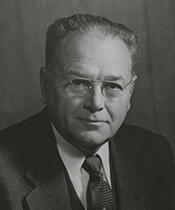
Here you will find contact information for Representative Julian Vaughan Gary, including email address, phone number, and mailing address.
| Name | Julian Vaughan Gary |
| Position | Representative |
| State | Virginia |
| District | 3 |
| Party | Democratic |
| Status | Former Representative |
| Term Start | January 3, 1945 |
| Term End | January 3, 1965 |
| Terms Served | 10 |
| Born | February 25, 1892 |
| Gender | Male |
| Bioguide ID | G000091 |
About Representative Julian Vaughan Gary
Julian Vaughan Gary (February 25, 1892 – September 6, 1973) was a Democratic U.S. Representative from Virginia who served ten consecutive terms in the United States House of Representatives from 1945 to 1965. His long tenure in Congress spanned a transformative period in American history, during which he participated in the legislative process and represented the interests of his Virginia constituents.
Gary was born in Richmond, Virginia, on February 25, 1892. He was educated in the local schools of Richmond before enrolling at the University of Richmond, where he received a Bachelor of Arts degree in 1912. He continued his studies at the same institution’s law school, earning an LL.B. in 1915. That same year he was admitted to the bar and commenced the practice of law in Richmond, establishing the professional foundation that would support his later public career.
During World War I, Gary served in the United States Army, contributing to the national war effort in uniform before returning to civilian life and the practice of law. After the war, he entered public service in state government, becoming counsel and executive assistant of the Virginia tax board, a position he held from 1919 to 1924. In this role he gained experience in public finance and administration, which further enhanced his reputation in Virginia legal and political circles.
Gary’s formal political career began in the Virginia General Assembly. From 1926 to 1933 he served in the Virginia House of Delegates, where he participated in state-level lawmaking during the late 1920s and early years of the Great Depression. In addition to his legislative work, he maintained close ties to his alma mater, serving as a member of the board of trustees of the University of Richmond, reflecting his ongoing engagement with higher education and civic affairs in his home city.
Gary entered national politics in 1945. He was elected as a Democrat to the Seventy-ninth Congress by special election on March 6, 1945, to fill the vacancy caused by the resignation of Representative Dave E. Satterfield, Jr. He was subsequently reelected to the nine succeeding Congresses, serving continuously from March 6, 1945, to January 3, 1965. Over these ten terms in office, he contributed to the legislative process during a period marked by the end of World War II, the onset of the Cold War, the Korean War, and the early stages of the civil rights movement. As a member of the House of Representatives, he participated in the democratic process and worked to represent the interests of his Virginia constituents.
During his congressional service, Gary aligned with the conservative, segregationist wing of the Southern Democratic Party on civil rights issues. In 1956 he was a signatory to the Southern Manifesto, a document issued by a group of Southern members of Congress opposing the desegregation of public schools mandated by the Supreme Court’s decision in Brown v. Board of Education. The manifesto criticized the Court’s ruling and pledged to use all lawful means to resist its implementation, placing Gary among those legislators who publicly opposed federal efforts to end racial segregation in education.
Gary chose not to seek renomination in 1964 to the Eighty-ninth Congress and thus concluded his congressional career on January 3, 1965. After leaving the House of Representatives, he resumed his private law practice in Richmond, returning to the profession with which he had begun his public life. He continued to reside in Richmond during his retirement years. Julian Vaughan Gary died in Richmond on September 6, 1973, and was interred in Hollywood Cemetery, a historic burial ground in the city that had been his lifelong home.