Representative Julius Goldzier
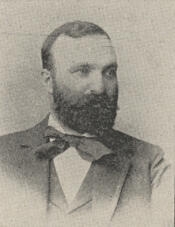
Here you will find contact information for Representative Julius Goldzier, including email address, phone number, and mailing address.
| Name | Julius Goldzier |
| Position | Representative |
| State | Illinois |
| District | 4 |
| Party | Democratic |
| Status | Former Representative |
| Term Start | August 7, 1893 |
| Term End | March 3, 1895 |
| Terms Served | 1 |
| Born | January 20, 1854 |
| Gender | Male |
| Bioguide ID | G000269 |
About Representative Julius Goldzier
Julius Goldzier (January 20, 1854 – January 20, 1925) was a U.S. Representative from Illinois and the first Jewish member of Congress from that state. A Democrat, he served one term in the United States House of Representatives from 1893 to 1895, representing an urban Chicago district during a period of rapid industrialization, heavy immigration, and significant labor unrest in the late nineteenth century.
Goldzier was born in Vienna, in the Austrian Empire, on January 20, 1854. He attended the public schools of Vienna, receiving a basic education in the city’s German-language system before emigrating to the United States in 1866, at the age of twelve. Upon arrival he settled in New York, joining a growing community of Central European immigrants who were reshaping the social and cultural life of American cities in the post–Civil War era.
After coming to the United States, Goldzier studied law and was admitted to the bar, beginning a legal career that would form the foundation of his later public service. In 1872 he moved west to Chicago, Illinois, a city rebuilding and expanding rapidly in the aftermath of the Great Chicago Fire of 1871. There he established himself as an attorney and took part in several notable cases, including the defense of the anarchist John Hroneck, which placed him at the intersection of Chicago’s contentious labor and radical politics of the period.
In addition to his legal practice, Goldzier became a prominent figure in Chicago’s German-speaking community. He served as a director of the Chicago German Society, an organization that assisted German immigrants and promoted their cultural and social interests. He also held the positions of director and secretary of the Abendpost, a German-language newspaper in Chicago, helping to shape public opinion and provide news and commentary to the city’s substantial German-American population.
Goldzier’s civic engagement led him into municipal politics. He served as a member of the Chicago city council as an alderman from the 22nd Ward from 1890 to 1892, representing a district with a significant immigrant population. In this role he participated in the governance of a rapidly growing metropolis, dealing with issues such as urban infrastructure, public services, and the integration of new residents into the civic life of Chicago. His work on the council helped establish his reputation as a representative of both his ward and the broader ethnic communities of the city.
Building on his local political experience, Goldzier was elected as a Democrat to the Fifty-third Congress, serving from March 4, 1893, to March 3, 1895. As a member of the House of Representatives, he participated in the legislative process during a significant period in American history marked by the Panic of 1893, debates over monetary policy, tariffs, and labor conditions, and the challenges of governing an increasingly industrial and diverse nation. During his single term in office, he represented the interests of his Illinois constituents and contributed to the work of the Democratic majority in the House. His election marked a milestone as he became Illinois’ first Jewish congressman, reflecting the gradual political incorporation of Jewish and immigrant communities into national public life.
Goldzier was an unsuccessful candidate for reelection in 1894 to the Fifty-fourth Congress, losing his bid to continue in federal office amid a broader national shift that saw significant Democratic losses in the midterm elections. After leaving Congress, he returned to Chicago and resumed his involvement in local affairs. He again served as a member of the Chicago city council in 1899, continuing his engagement with municipal governance and maintaining his role as a public figure within the city.
Julius Goldzier died in Chicago on January 20, 1925, his seventy-first birthday. His interment location is unknown. Through his work as a lawyer, civic leader, alderman, and member of Congress, he played a notable role in the political and communal life of Chicago and Illinois at the turn of the twentieth century, particularly as a representative of the city’s immigrant and Jewish communities.