Representative Julius Kahn
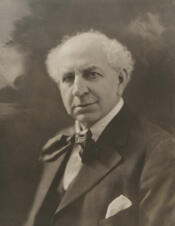
Here you will find contact information for Representative Julius Kahn, including email address, phone number, and mailing address.
| Name | Julius Kahn |
| Position | Representative |
| State | California |
| District | 4 |
| Party | Republican |
| Status | Former Representative |
| Term Start | December 4, 1899 |
| Term End | March 3, 1925 |
| Terms Served | 12 |
| Born | February 28, 1861 |
| Gender | Male |
| Bioguide ID | K000003 |
About Representative Julius Kahn
Julius Kahn was a United States Representative from California who served in the United States Congress from 1899 to 1925. A member of the Republican Party, he held his seat for 12 terms, contributing to the legislative process during a period of major political, social, and economic change in the United States. He is historically distinguished from Julius Kahn (1874–1942), an engineer of reinforced concrete, by being referred to as Julius Kahn (congressman) (1861–1924), underscoring his primary public identity as a legislator.
Born on February 28, 1861, in Kuppenheim, in what was then the Grand Duchy of Baden in Germany, Julius Kahn immigrated to the United States with his family as a child. The family settled in California, where he grew up amid the rapid development of the American West following the Civil War. His early life in a growing state that was still shaping its political and economic institutions helped form the background for his later public service and his understanding of the needs of his constituents.
Kahn received his education in the public schools of California, which provided him with the foundational training that would support his later legal and political career. After completing his schooling, he studied law and was admitted to the bar, beginning the practice of law in San Francisco. His legal work in that city, a major commercial and cultural center on the Pacific coast, brought him into contact with a broad range of civic and business interests and helped establish his reputation as a capable advocate and public figure.
Building on his legal and civic experience, Kahn entered politics as a member of the Republican Party, which was then dominant in many parts of California. He was elected as a Republican to the United States House of Representatives, beginning his congressional service in 1899. Over the course of 12 terms, extending until 1925, he represented his California district through the turn of the century, the Progressive Era, and World War I. As a member of the House of Representatives, Julius Kahn participated in the democratic process and represented the interests of his constituents, engaging in debates and votes on national policy during a significant period in American history.
Kahn’s long tenure in Congress coincided with major national developments, including the expansion of federal authority, the regulation of industry, and the United States’ emergence as a global power. Within this context, he contributed to the legislative process on issues that reflected both national priorities and the particular concerns of California, such as economic growth, infrastructure, and the status of the Pacific coast in American defense and commerce. His repeated reelections testified to the confidence his district placed in his judgment and advocacy.
Julius Kahn continued to serve in the House until the mid-1920s, remaining an active participant in congressional affairs until his final term. His career in public office ended with his death on December 18, 1924, while still in service, bringing to a close more than a quarter century of continuous representation in Congress. Although his official congressional service is recorded as extending to 1925, reflecting the term to which he had been elected, his active role in the House concluded with his passing. His life and career are distinguished in historical records from that of Julius Kahn (1874–1942), the engineer of reinforced concrete, underscoring the separate legacies of two contemporaries who shared the same name but pursued different paths in American public and professional life.