Representative Justin Leroy Johnson
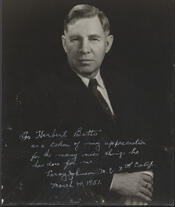
Here you will find contact information for Representative Justin Leroy Johnson, including email address, phone number, and mailing address.
| Name | Justin Leroy Johnson |
| Position | Representative |
| State | California |
| District | 11 |
| Party | Republican |
| Status | Former Representative |
| Term Start | January 6, 1943 |
| Term End | January 3, 1957 |
| Terms Served | 7 |
| Born | April 8, 1888 |
| Gender | Male |
| Bioguide ID | J000157 |
About Representative Justin Leroy Johnson
Justin Leroy Johnson (April 8, 1888 – March 26, 1961) was an American lawyer, World War I veteran, and Republican politician who served seven consecutive terms as a United States Representative from California from 1943 to 1957. Over the course of his congressional career, he participated actively in the legislative process during a period marked by World War II, the early Cold War, and significant domestic change, representing the interests of his constituents in the U.S. House of Representatives.
Johnson was born on April 8, 1888, in Wausau, Wisconsin. He was educated in the local public schools and graduated from Wausau High School. He went on to attend the University of Wisconsin–Madison, where he completed his undergraduate studies. His early life in Wisconsin, including his education in the state’s public institutions, provided the foundation for his later professional and political career.
Following his undergraduate education, Johnson served in the United States military during World War I, reflecting a commitment to national service that would later be echoed in his public life. After the war, he pursued legal studies in California, enrolling at the University of California, Berkeley School of Law. Upon earning his law degree, he was admitted to the bar and established a legal practice in Stockton, California. In addition to his private practice, he served as city attorney of Stockton, a role that gave him experience in municipal governance and public affairs and helped build his reputation in the community.
Johnson’s legal and civic experience in Stockton provided the platform for his entry into national politics. In 1942, he ran successfully for a seat in the U.S. House of Representatives as a member of the Republican Party. He took office on January 3, 1943, beginning the first of seven consecutive terms in Congress, and served continuously until January 3, 1957. During these fourteen years, he contributed to the legislative process in a period of major national and international developments, including the final years of World War II, the postwar reconstruction era, and the onset of the Cold War. As a Republican representative from California, he worked within the House to represent his district’s interests and to participate in the broader democratic process of federal lawmaking.
Johnson’s congressional service extended through the 78th to the 84th Congresses. His tenure coincided with significant debates over wartime mobilization, veterans’ affairs, economic adjustment after the war, and emerging foreign policy challenges. As a member of the House of Representatives, he was part of the California congressional delegation and contributed to shaping federal policy affecting both his state and the nation. In the 1956 election, after seven terms in office, he was defeated for re-election by Democrat John J. McFall, bringing his congressional career to a close on January 3, 1957.
After leaving Congress, Johnson returned to private life in California. He remained associated with Stockton, the city where he had built his legal career and from which he had launched his service in national office. He died in Stockton on March 26, 1961. His ashes were interred in the Casa Bonita Mausoleum, located outside the Stockton Rural Cemetery, marking the final resting place of a World War I veteran, attorney, and long-serving Republican congressman who played a role in the governance of the United States during a transformative era of the twentieth century.