Representative Justin Rice Whiting
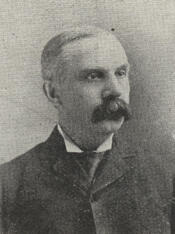
Here you will find contact information for Representative Justin Rice Whiting, including email address, phone number, and mailing address.
| Name | Justin Rice Whiting |
| Position | Representative |
| State | Michigan |
| District | 7 |
| Party | Democratic |
| Status | Former Representative |
| Term Start | December 5, 1887 |
| Term End | March 3, 1895 |
| Terms Served | 4 |
| Born | February 18, 1847 |
| Gender | Male |
| Bioguide ID | W000415 |
About Representative Justin Rice Whiting
Justin Rice Whiting (February 18, 1847 – January 31, 1903) was an American politician, businessman, and four-term Democratic Representative from Michigan who served in the United States House of Representatives from 1887 to 1895. He was born in Bath, Steuben County, New York, and in 1849 moved with his parents to Michigan, where the family settled in St. Clair. Growing up in St. Clair, he was educated in the local public schools, an experience that rooted him in the civic and commercial life of the community he would later represent in state and national office.
Whiting pursued higher education at the University of Michigan at Ann Arbor, which he attended from 1863 to 1865. Although he did not complete a degree, his time at the university coincided with the Civil War era and exposed him to the political and economic debates of the period. After leaving Ann Arbor, he returned to St. Clair and entered business, embarking on a career that would underpin his later public service. He worked as a merchant and manufacturer and became involved in several enterprises, including the operation of a power company, reflecting the growing industrial and infrastructural development of Michigan in the late nineteenth century.
Building on his success in business and his standing in the community, Whiting entered local politics in St. Clair. He was elected mayor of St. Clair in 1879, a position that gave him direct responsibility for municipal governance during a time of economic expansion and modernization in the region. His performance in local office helped establish his reputation as a capable Democratic leader and prepared him for higher office. In 1882, he was elected to the Michigan State Senate, representing the 17th District. As a state senator, he participated in shaping state legislation and gained experience in legislative procedure and party organization that would serve him in his subsequent national career.
Whiting’s rise in Democratic Party ranks continued as he became active in statewide party affairs, serving at one point as chairman of the Democratic State central committee. His prominence within the party and his established base in St. Clair led to his nomination for Congress from Michigan’s 7th congressional district. He was elected as a Democrat to the Fiftieth Congress and was subsequently reelected to the Fifty-first, Fifty-second, and Fifty-third Congresses, serving from March 4, 1887, until March 3, 1895. During these four consecutive terms in the U.S. House of Representatives, he participated in the legislative process at a time marked by debates over tariffs, monetary policy, and industrial regulation in the post-Reconstruction, Gilded Age era. As a member of the House, he represented the interests of his constituents in Michigan’s 7th District and contributed to the work of the Democratic Party in Congress.
Whiting’s congressional service coincided with significant national political realignments and economic challenges, including the lead-up to and aftermath of the Panic of 1893. Although specific committee assignments and legislative initiatives are less prominently recorded, his repeated reelection indicates sustained support from his district over eight years. His tenure ended on March 3, 1895, after which he did not return to Congress. Following his departure from the House of Representatives, he resumed his former business pursuits in St. Clair, returning to the commercial and industrial activities that had originally established his public profile.
Even after leaving Congress, Whiting remained engaged in politics. In 1898, he was nominated as a Fusion candidate for Governor of Michigan, reflecting a coalition effort among Democrats and other anti-Republican forces during a period of intense partisan competition. He was unsuccessful in that race, losing to the incumbent Republican governor, Hazen S. Pingree, a prominent reformer and one of Michigan’s most influential political figures of the era. Whiting continued his efforts to reenter national office and ran in 1900 for election to the Fifty-seventh Congress from Michigan, but he was again unsuccessful, losing to the incumbent Republican Representative Edgar Weeks.
In his personal life, Whiting married Emily F. Owen. The couple had ten children, and the family remained closely tied to Michigan’s business and civic life. Their son, also named Justin Rice Whiting (1886–1965), went on to become president of the Consumers Power Company, serving in that capacity from 1949 to 1959, thereby extending the Whiting family’s influence in the state’s economic development into the mid-twentieth century. The elder Whiting’s combination of business leadership and public service helped establish a family legacy in both commerce and public affairs.
Justin Rice Whiting spent his later years in St. Clair, where he continued to be identified with the city that had been his home since childhood and the base of both his business and political careers. He died in St. Clair, Michigan, on January 31, 1903. He was interred in Hillside Cemetery in St. Clair, closing a life that had spanned local, state, and national service during a transformative period in Michigan and United States history.