Representative K. Michael Conaway
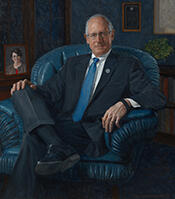
Here you will find contact information for Representative K. Michael Conaway, including email address, phone number, and mailing address.
| Name | K. Michael Conaway |
| Position | Representative |
| State | Texas |
| District | 11 |
| Party | Republican |
| Status | Former Representative |
| Term Start | January 4, 2005 |
| Term End | January 3, 2021 |
| Terms Served | 8 |
| Born | June 11, 1948 |
| Gender | Male |
| Bioguide ID | C001062 |
About Representative K. Michael Conaway
Kenneth Michael Conaway (born June 11, 1948) is an American politician and accountant who served as a Republican U.S. Representative from Texas from 2005 to 2021, representing Texas’s 11th congressional district for eight consecutive terms. The district, located in West Texas, includes Midland, Odessa, San Angelo, Brownwood, and Granbury, and is among the most strongly Republican areas in the state. During his tenure in the House of Representatives, Conaway participated in the legislative process through service on key committees, including the House Agriculture Committee, the House Armed Services Committee, and the House Permanent Select Committee on Intelligence, and held several chairmanships and leadership roles within the Republican caucus.
Conaway was born in Borger, in the Texas Panhandle northeast of Amarillo, the son of Helen Jean (McCormick) and Louis Denton Conaway. He grew up in Odessa in Ector County and graduated in 1966 from Permian High School, where he was a standout football player for the Permian Panthers and a member of the school’s first state championship team in 1965. After high school, he attended Ranger College on a football scholarship before transferring to Texas A&M University–Commerce (then East Texas State University). There he lettered in football for the Lions from 1966 to 1969 and was a member of two Lone Star Conference championship teams. Conaway majored in accounting and graduated in 1970, laying the foundation for his subsequent professional career in finance and public accountancy.
Following his graduation, Conaway served in the United States Army from 1970 to 1972. After completing his military service, he returned to Texas and entered the accounting profession. He became a Certified Public Accountant in 1974 and worked as an accountant and financial executive in the private sector. He served as chief financial officer at a bank and, from 1981 to 1986, was the chief financial officer of Arbusto Energy Inc., an oil and gas exploration firm operated by George W. Bush. His work in the energy sector and in banking gave him extensive experience in financial management, corporate governance, and the oil and gas industry that would later inform his legislative interests.
Conaway’s relationship with George W. Bush continued into Bush’s political career. After Bush was elected governor of Texas, he appointed Conaway to the Texas State Board of Public Accountancy, the body responsible for regulating the accounting profession in the state. Conaway served on the board as a volunteer for seven years, spending the last five years as its chairman. In addition to his state-level regulatory work, Conaway was active in local education governance, serving on the Midland Independent School District Board from 1985 to 1988. These roles enhanced his profile in West Texas and provided him with experience in public oversight, regulation, and community affairs prior to seeking federal office.
Conaway first ran for elective office in 2003, when he entered a special election for Texas’s 19th congressional district, which had become vacant after 18-year Republican incumbent Larry Combest resigned shortly after winning a tenth term. In that closely contested race, Conaway lost by 587 votes to fellow Republican Randy Neugebauer. Later that year, the Texas Legislature undertook a mid-decade redistricting effort engineered by House Majority Leader Tom DeLay. As part of that redistricting, three new congressional districts were created, including the 11th District based in Midland. Previously, Midland had been part of the Lubbock-based 19th District. DeLay and other Republican leaders were particularly interested in creating a district centered on Midland, Odessa, and the oil-rich Permian Basin, in part because Texas House Speaker Tom Craddick was from the area. The new 11th District was heavily Republican; Republicans had dominated every level of government there since the 1980s and often received 70 percent or more of the vote, with Glasscock County having voted 93 percent for George W. Bush in 2000, the highest percentage of any county in the nation. In this political environment, Conaway’s candidacy was widely viewed as the decisive factor in the race, and any Democratic opponent faced nearly insurmountable odds.
In the 2004 general election for the newly drawn 11th District, Conaway won with 77 percent of the vote, one of the largest margins for any candidate facing major-party opposition that year. He took office on January 3, 2005, and was subsequently reelected six times with little or no substantive opposition. He faced a Democratic challenger only three additional times—in 2010, 2012, and 2018—and in each of those races he won at least 75 percent of the vote, with none of the Democratic nominees clearing 20 percent. In 2006, a year in which Republicans suffered heavy losses nationally, he was reelected unopposed. In 2008, 2014, and 2016, he faced only minor-party opposition and won each time with roughly 90 percent of the vote. In the Republican primary held on March 4, 2014, he secured renomination to a sixth term with 53,107 votes (74 percent) against challenger Wade Brown, who received 18,979 votes (26 percent). In the November 4, 2014 general election, Conaway was reelected with 107,752 votes (90 percent) to Libertarian Ryan T. Lange’s 11,607 votes (10 percent). His service in Congress thus extended from January 3, 2005, to January 3, 2021, encompassing eight full terms during a significant period in American political history.
During his congressional career, Conaway held several influential committee positions. He served as chair of the House Ethics Committee and later as chair of the House Agriculture Committee, subsequently becoming its ranking member. In the 116th Congress, he was the ranking member of the Committee on Agriculture and also served on the Committee on Armed Services—where he sat on the Subcommittee on Intelligence, Emerging Threats and Capabilities and the Subcommittee on Seapower and Projection Forces—and on the House Permanent Select Committee on Intelligence. Conaway founded the Congressional CPA Caucus, reflecting his professional background, and was a member of several other caucuses, including the International Conservation Caucus, the Reliable Energy Caucus, the Sportsmen’s Caucus, the Congressional Constitution Caucus, the Congressional Western Caucus, and the United States Congressional International Conservation Caucus. He also served on committees of the National Republican Congressional Committee (NRCC), the campaign arm of the House Republican Conference, and in January 2007 became chair of the NRCC’s three-member audit committee. By January 28, 2008, he had uncovered a significant fraud at the NRCC, discovering that hundreds of thousands of dollars were missing from its bank accounts and that supposed annual audits of the committee’s books had not actually been performed since 2001.
Conaway played a prominent role in intelligence and election-related oversight. After House Intelligence Committee chairman Devin Nunes temporarily recused himself from the committee’s investigation into Russian interference in the 2016 United States elections, Speaker Paul Ryan announced in April 2017 that Conaway would lead the House Intelligence Committee’s investigation, with assistance from Representatives Trey Gowdy and Tom Rooney. In this capacity, Conaway oversaw the Republican-led inquiry into Russian activities and potential links to the 2016 Trump campaign. In February 2018, he opposed efforts by Democratic members of the committee to expand the investigation into financial links between Donald Trump, his businesses, his family, and Russian actors, and he prevented subpoenas for related bank records, Trump’s tax returns, and certain witnesses, including potential subpoenas to Deutsche Bank, from which the Trump Organization and Jared Kushner had borrowed extensively. In March 2018, Conaway presented the findings of a report by the Republican members of the House Intelligence Committee, stating that the committee had found no evidence of collusion between Russia and the Trump campaign in the 2016 election. Democrats on the committee disputed that conclusion, asserting that they had reached no such determination. Shortly thereafter, Conaway clarified that the committee had not been formally charged with resolving the question of “collusion,” explaining that the report’s statement that the committee had found no evidence of collusion was distinct from a definitive conclusion on the matter.
Throughout his time in Congress, Conaway was active on fiscal, energy, and regulatory issues, drawing on his background as a CPA and energy executive. He introduced legislation to extend and reform the federal tax credit to support wide-scale commercial deployment of carbon capture and storage technologies, reflecting his interest in both energy development and environmental policy tools. He also took positions on voting rights and national politics that drew attention. In 2006, he voted against extending the Voting Rights Act of 1965. In presidential politics, he endorsed former Massachusetts Governor Mitt Romney for president in 2008 and, on May 13, 2016, endorsed Donald Trump as the Republican presumptive nominee in the 2016 U.S. presidential election. His long service in the House coincided with major national debates over war and peace, financial regulation, agricultural policy, intelligence oversight, and partisan control of Congress, and he consistently represented the conservative preferences of his West Texas constituency.
Conaway announced in July 2019 that he would not seek reelection to Congress, signaling the end of his federal legislative career at the conclusion of the 116th Congress. He was succeeded in representing Texas’s 11th congressional district by fellow Republican August Pfluger, who took office on January 3, 2021. Outside of his public duties, Conaway has maintained close ties to his home community in Midland and the broader West Texas region. He is married to Suzanne Kidwell Conaway, and their family includes two sons, two daughters, and seven grandchildren.