Senator Kaneaster Hodges
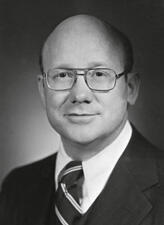
Here you will find contact information for Senator Kaneaster Hodges, including email address, phone number, and mailing address.
| Name | Kaneaster Hodges |
| Position | Senator |
| State | Arkansas |
| Party | Democratic |
| Status | Former Representative |
| Term Start | December 10, 1977 |
| Term End | January 3, 1979 |
| Terms Served | 1 |
| Born | August 20, 1938 |
| Gender | Male |
| Bioguide ID | H000675 |
About Senator Kaneaster Hodges
Kaneaster Hodges Jr. (kə-NEE-stur; August 20, 1938 – March 23, 2022) was an American politician, attorney, and Methodist minister who served as a United States senator from Arkansas from 1977 to 1979. A member of the Democratic Party, he was appointed to the Senate to serve the remainder of Senator John L. McClellan’s term after McClellan died in 1977, and during his single term he contributed to the legislative process at a significant period in American history, representing the interests of his Arkansas constituents.
Hodges was born in Newport, Jackson County, Arkansas, the second of six sons of Kaneaster Hodges Sr. and Harryette Morrison Hodges. He grew up in Newport and graduated from Newport High School in 1956. As a youth he was active in Scouting and achieved the rank of Eagle Scout, an accomplishment he later cited as one of the proudest of his life. His early years in a close-knit family and small Arkansas community helped shape the civic-mindedness and public service ethic that would characterize his later career.
After high school, Hodges attended Princeton University, where he studied religion and graduated cum laude in 1960 with an A.B. degree. His senior thesis, titled “George Bernanos: A Twentieth Century Prophet,” reflected his interest in theology, ethics, and modern religious thought. On June 26, 1960, shortly after his graduation, he married his high school classmate Ruth Lindley Williams. The couple would have two children, Kaneaster Hodges III and Harryette Lindley Hodges. Later in 1960 they moved to Dallas, Texas, where Hodges enrolled at the Perkins School of Theology at Southern Methodist University. He completed his theological studies magna cum laude in 1963 and was active in the Methodist Student Movement, serving as its national president and traveling the country in support of civil rights, an experience that deepened his commitment to social justice and public service.
Following his graduation from Perkins, Hodges and his wife moved to Massachusetts in 1963, where he entered the Methodist ministry. He pastored two congregations, the Acushnet Wesley Methodist Church and the Long Plain United Methodist Church, while commuting to Boston University to earn a second master’s degree in pastoral counseling. In 1964 the couple moved to New York City, where Hodges served as a chaplain intern at the Rikers Island Correctional Institution, ministering to incarcerated individuals and gaining firsthand insight into the criminal justice system. Seeking to combine his pastoral concerns with legal training, he returned to Arkansas to study law, enrolling at the University of Arkansas School of Law in Fayetteville. There he distinguished himself academically and was named editor-in-chief of the Arkansas Law Review. After receiving his law degree in 1967, he joined his family’s law firm, Hodges, Hodges, and Hodges, following in the professional footsteps of his father and brother.
In the years before his Senate appointment, Hodges pursued a multifaceted career in law, agriculture, and ministry. In addition to practicing law, he worked as a farmer and continued as a Methodist lay minister, as well as serving as a hospital and prison chaplain. From 1967 to 1974 he was city attorney for Newport and deputy prosecuting attorney for Jackson County, Arkansas, roles in which he gained substantial experience in municipal and criminal law. He became increasingly active in Democratic politics, working on Senator John L. McClellan’s 1972 re-election campaign, in which McClellan defeated David Pryor in the Democratic primary and went on to win the general election. In 1974, Hodges coordinated David Pryor’s successful gubernatorial campaign in eastern Arkansas. He then served as legislative secretary to Governor Pryor in 1975, advising on policy and legislative matters. From 1974 to 1976 he was chairman of the Arkansas Natural Heritage Commission, and from 1976 to 1977 he served as a member of the Arkansas Game and Fish Commission, reflecting his interest in conservation and natural resources policy.
Hodges’s service in Congress began in 1977, when Senator McClellan died in office and Governor Pryor appointed him to fill the vacancy. Hodges entered the United States Senate on an interim basis to serve the remainder of McClellan’s term, representing Arkansas from 1977 to 1979. His tenure coincided with a significant period in American history marked by debates over foreign policy, economic challenges, and domestic reform. In the Senate, Hodges participated fully in the democratic process and legislative deliberations, earning particular notice for his support of the Panama Canal treaties, which transferred control of the canal to Panama, and for his opposition to tuition tax credits for parents of private school students, a position reflecting his concerns about the impact such credits might have on public education. He chose not to seek a full term and stepped down at the end of his appointed service in 1979. He was succeeded by Governor David Pryor, who won the 1978 election to serve the next full Senate term.
After leaving the Senate, Hodges returned to Newport and resumed private life while remaining active in business, civic, and charitable endeavors. He engaged in several business ventures, including real estate development in Arkansas and adjoining states. He also devoted considerable time to cultural, environmental, and legal causes, serving with organizations such as the Arkansas Symphony Orchestra, the Arkansas Nature Conservation Foundation, Winrock International, and the Arkansas Justice Foundation. His and his wife’s longstanding commitment to education and public service was recognized at the University of Arkansas in Fayetteville, where the Lindley and Kaneaster Hodges Jr. Reading Room was named in their honor. In addition to his public and professional roles, Hodges was part of a politically active extended family; he was the uncle of Betsy Hodges, who later served as mayor of Minneapolis, Minnesota.
Kaneaster Hodges Jr. died from an aortic aneurysm in Little Rock, Arkansas, on March 23, 2022, at the age of 83. His life encompassed service as a minister, attorney, public official, and United States senator, and his career reflected a consistent engagement with law, faith, conservation, and civic responsibility in Arkansas and beyond.