Representative Karen Shepherd
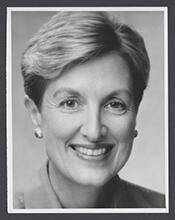
Here you will find contact information for Representative Karen Shepherd, including email address, phone number, and mailing address.
| Name | Karen Shepherd |
| Position | Representative |
| State | Utah |
| District | 2 |
| Party | Democratic |
| Status | Former Representative |
| Term Start | January 5, 1993 |
| Term End | January 3, 1995 |
| Terms Served | 1 |
| Born | July 5, 1940 |
| Gender | Female |
| Bioguide ID | S000332 |
About Representative Karen Shepherd
Karen Rae Shepherd (née Felker; born July 5, 1940) is an American politician and businesswoman who served as a Democratic Representative from Utah in the United States House of Representatives from January 3, 1993, to January 3, 1995. During her single term in Congress, she contributed to the legislative process at a time of significant national debate over budget policy, health care, and government reform, and became the second woman in Utah’s history to be elected to Congress.
Shepherd was born Karen Rae Felker in Silver City, New Mexico, where her father, Ralph Felker, worked for the U.S. Forest Service. Her family soon moved to southern Utah, and throughout her childhood the Department of Agriculture transferred them among various small towns before they eventually settled in Provo, Utah. There she attended high school and developed the academic interests that would lead her into higher education and teaching. Growing up in rural communities in the Intermountain West later informed her sensitivity to western land, resource, and community issues that would surface in her public service.
Shepherd earned a Bachelor of Arts degree in English from the University of Utah in 1962. She continued her studies at Brigham Young University, receiving a Master of Arts degree in British literature in 1963. That same year she married Vincent Shepherd, an Army officer, and moved with him to Fort Lewis, Washington. While living in Washington state, she taught English at Olympic Junior College, beginning a professional career that combined education, communication, and public engagement. After her husband’s discharge from the Army, the couple accepted positions at the American University in Cairo, Egypt, where they lived for two years, an experience that broadened her international outlook and familiarity with global issues.
Upon returning to the United States, the Shepherds resettled in Utah and started their family, having two children, Heather and Dylan. Vincent Shepherd owned and operated a wholesale oil distributing company, while Karen Shepherd taught freshman English at Brigham Young University. During this period she became increasingly active in Democratic Party politics in Utah, working on the U.S. Senate campaigns of Wayne Owens and Frank Moss. Her growing reputation as a capable administrator and advocate for social programs led to her appointment as Director of Social Services in Salt Lake County government, making her the first woman ever to serve at cabinet level in that county. In 1978 she became co-owner of Network Magazine, a publication focused on women’s workplace issues, and subsequently founded Webster Publishing. She sold both the magazine and the publishing business in 1988 and then became Director of Development at the University of Utah’s School of Business, further strengthening her ties to the state’s academic and business communities.
In 1990 Shepherd was elected to the Utah State Senate, succeeding Frances Farley, who at that time had been the only woman serving in the Utah Senate. Shepherd served in the Utah Legislature for two years, where she built a record on issues related to social services, education, and economic development. In 1992, after four-term Democratic U.S. Representative Wayne Owens announced that he would not seek re-election to the House and would instead run for the U.S. Senate, Shepherd declared her candidacy to succeed him. Her 1992 congressional campaign platform emphasized achieving a balanced federal budget and supported active government involvement in health care reform, education, abortion rights, and environmental protection. She advanced a ten-point plan aimed at improving children’s lives, including measures to track down delinquent fathers and to fully fund the Head Start program. In the general election she faced Enid Greene, a former aide to Utah Governor Norman Bangerter and a fiscal and social conservative who opposed Shepherd’s positions. Shepherd won the race by a narrow margin, receiving 50 percent of the vote to Greene’s 47 percent, and took office as a member of the 103rd Congress.
Once sworn into Congress in January 1993, Shepherd was assigned to the Committee on Natural Resources and the Committee on Public Works and Transportation, where she participated in deliberations affecting federal lands, infrastructure, and environmental policy—issues of particular importance to Utah and the West. She emerged as a leader in the House Freshman Caucus and served as co-chair, along with Representative Eric Fingerhut, of a freshman reform effort that drafted legislation to reform lobbying and campaign finance practices. Among their recommendations were proposals to ban gifts from lobbyists to lawmakers and to bar Members of Congress from chairing more than one committee. Shepherd supported President Bill Clinton’s 1993 budget package, which combined deficit reduction with tax increases on upper-income Americans; the measure passed the House by a single vote. Acknowledging its imperfections, she argued that failure to pass the budget would stall progress on health care, free trade, and other national priorities. She also voted for the Brady Handgun Violence Prevention Act and supported the federal Assault Weapons Ban, positions that would later become central issues in her re-election campaign.
In the 1994 election cycle, Shepherd again faced her 1992 opponent, who was now known as Enid Greene Waldholtz following marriage. The race became a three-way contest with the addition of Independent candidate Merrill Cook. The campaign focused heavily on Shepherd’s votes for the Clinton budget and her support for gun control measures. Shepherd continued to advocate for health and welfare reform and for what she termed reasonable gun control, while Waldholtz aligned her campaign with the “Contract With America” spearheaded by House Republican Whip Newt Gingrich. In the Republican wave election of 1994, Waldholtz won the three-way race with 46 percent of the vote, compared with Shepherd’s 36 percent and Cook’s 18 percent, ending Shepherd’s service in Congress on January 3, 1995. Her willingness to take politically difficult positions in her district while pressing for institutional reform in Washington drew notice from commentators, one of whom described her as exemplifying a tradition of progressive politics in the western states.
Immediately after leaving Congress, Shepherd was named a Fellow at the Institute of Politics at the John F. Kennedy School of Government at Harvard University, where she shared her experience in electoral politics, legislative service, and policy reform with students and practitioners. In 1995 she served as part of an international delegation monitoring the first Palestinian elections held in the West Bank and Gaza, reflecting her continuing interest in international affairs and democratic development. In 1996 President Clinton nominated her to serve as the United States executive director at the European Bank for Reconstruction and Development (EBRD) in London, United Kingdom, a position she held until 2002. In that role she represented U.S. interests at an international financial institution focused on supporting the transition of former communist countries in Central and Eastern Europe and the former Soviet Union toward market economies and democratic governance. While in London, she chaired the East West Trade and Investment Forum of the American Chamber of Commerce and became a member of the Council on Foreign Relations.
After returning to the United States in 2002, Shepherd remained active in politics, advocacy, and corporate governance. She worked as a regional advisor for EMILY’s List, a political action committee dedicated to electing pro-choice Democratic women to public office. She served on three corporate boards and on the national Planned Parenthood Action Council, contributing to policy and organizational strategy on reproductive health and women’s rights. In Utah she served on the boards of Wasatch Homeless Health Care Inc., the University of Utah’s Humanities Partnership, and the David Eccles School of Business, continuing her longstanding engagement with social services, higher education, and economic development. Her congressional papers are housed in the Special Collections of the J. Willard Marriott Library at the University of Utah, where they are open for research and provide documentation of her legislative work, campaigns, and public service.