Representative Karl Clarence King
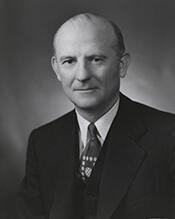
Here you will find contact information for Representative Karl Clarence King, including email address, phone number, and mailing address.
| Name | Karl Clarence King |
| Position | Representative |
| State | Pennsylvania |
| District | 8 |
| Party | Republican |
| Status | Former Representative |
| Term Start | January 3, 1951 |
| Term End | January 3, 1957 |
| Terms Served | 3 |
| Born | January 26, 1897 |
| Gender | Male |
| Bioguide ID | K000208 |
About Representative Karl Clarence King
Karl Clarence King (January 26, 1897 – April 16, 1974) was a Republican member of the U.S. House of Representatives from Pennsylvania who served three terms in Congress between 1951 and 1957. Over the course of his legislative career, he contributed to the work of the House during a significant period in American history, representing the interests of his constituents and participating in the broader democratic process at the federal level.
King was born on January 26, 1897, in Plevna, Reno County, Kansas. He grew up in the Great Plains at a time when the region was still largely rural and agricultural, an experience that would later inform his interest in farming and agricultural business. Details of his early family life are not extensively documented, but his later pursuits in education and public service reflected a steady progression from the rural Midwest to national office.
King pursued higher education at several institutions. He attended Kansas State Teachers College at Emporia, Kansas (now Emporia State University), where he received training that prepared him for professional and civic life. Seeking broader academic experience, he continued his studies at Columbia University in New York City, one of the nation’s leading universities, and later at the Wharton School of Business at the University of Pennsylvania in Philadelphia. This combination of teacher training, liberal education, and business studies provided him with a diverse educational background that supported his later work in journalism, business, and politics.
During the First World War, King served in the United States Navy, contributing to the nation’s military effort in a global conflict that shaped the early twentieth century. After the war, he embarked on a career in journalism, working as a newspaper reporter in Kansas City, New York, and Philadelphia. His experience as a reporter in major urban centers exposed him to political, economic, and social issues on both regional and national levels, and helped develop the communication skills and public awareness that would later serve him in elective office.
In 1922, King shifted his focus to agriculture and business, becoming engaged in farming and the farm supply business in Morrisville, Bucks County, Pennsylvania. This move marked his permanent establishment in Pennsylvania and connected him closely with the agricultural and small-business communities of the region. His work in farming and farm supplies gave him firsthand understanding of the concerns of rural and suburban constituents, particularly with respect to economic conditions, agricultural policy, and local commerce.
King entered national politics as a member of the Republican Party and was elected to the U.S. House of Representatives from Pennsylvania. He won a special election on November 6, 1951, to the Eighty-second Congress, filling the vacancy caused by the death of Representative Albert C. Vaughn. He was subsequently re-elected as a Republican to the Eighty-third and Eighty-fourth Congresses, serving continuously from 1951 to 1957. During his three terms in office, King participated in the legislative process at a time marked by the early Cold War, the Korean War’s aftermath, and domestic debates over economic policy and federal programs. As a member of the House of Representatives, he represented the interests of his Pennsylvania constituents and took part in the deliberations and votes that shaped national policy in this era.
After choosing not to be a candidate for renomination in 1956, King concluded his service in Congress at the end of his third term in 1957. In his later years, he remained identified with his earlier careers in journalism, agriculture, and public service. He authored an autobiography titled Prairie Dogs and Postulates, in which he reflected on his life experiences, from his Kansas upbringing and military service to his work in business and his tenure in Congress. Karl Clarence King died on April 16, 1974, leaving a record of service that spanned military duty, professional journalism, agricultural enterprise, and three terms in the United States House of Representatives.