Senator Karl Earl Mundt
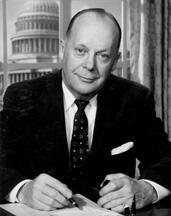
Here you will find contact information for Senator Karl Earl Mundt, including email address, phone number, and mailing address.
| Name | Karl Earl Mundt |
| Position | Senator |
| State | South Dakota |
| Party | Republican |
| Status | Former Representative |
| Term Start | January 3, 1939 |
| Term End | January 3, 1973 |
| Terms Served | 10 |
| Born | June 3, 1900 |
| Gender | Male |
| Bioguide ID | M001078 |
About Senator Karl Earl Mundt
Karl Earl Mundt (June 3, 1900 – August 16, 1974) was an American educator and Republican member of the United States Congress who represented South Dakota in the United States House of Representatives from 1939 to 1948 and in the United States Senate from 1948 to 1973. Over the course of 10 terms in Congress, he contributed to the legislative process during a significant period in American history, participating in the democratic process and representing the interests of his constituents during the New Deal era, World War II, the early Cold War, and the civil rights movement.
Mundt was born in Humboldt, South Dakota, the son of Ferdinand John Mundt (1875–1947) and Rose (Schneider) Mundt (1874–1965), both descendants of German immigrants. He attended public schools in Humboldt, Pierre, and Madison, graduating from Madison High School in 1919. As a high school student he excelled in oratory and debate, interests that became lifelong passions and later shaped his professional and political career. He went on to Carleton College in Northfield, Minnesota, where he majored in economics and received a Bachelor of Arts degree in 1923.
After college, Mundt embarked on a career in education. He became a teacher and principal at Bryant High School in Bryant, South Dakota, where as a first-year teacher he taught speech, psychology, sociology, and government, coached debate, oratory, and extemporaneous speaking teams, and founded a school newspaper. Following his first year he was promoted to superintendent of the Bryant schools, serving in that capacity from 1923 until 1927 while continuing to coach debate and oratory. In 1924 he married Mary Elizabeth Moses (1900–1985), a college classmate who also taught at Bryant High School. Both Karl and Mary pursued graduate study at Columbia University in New York City, each receiving a Master of Arts degree in 1927 after four years of summer study. Beginning in 1928, they joined the faculty of Eastern State Normal School in Madison, South Dakota (now Dakota State University), where Karl headed the speech department and taught psychology and economics, and Mary taught drama and French. They remained there until 1936, and during this period Mundt deepened his involvement in speech education and public affairs.
Mundt’s interest in debate and public speaking extended beyond the classroom. In 1925, Bruno E. Jacob founded the National Forensic League, a high school organization promoting speech and debate activities; Mundt became one of its leading figures and served as the organization’s national president from 1932 until 1971. His prominence in forensic education and his growing reputation as a public speaker helped launch his political career. In 1936 he was the Republican candidate for the United States House of Representatives from South Dakota’s 1st congressional district, but he lost in a Democratic year to incumbent Fred H. Hildebrandt. He ran again in 1938, a year more favorable to Republicans, and won the seat, entering the House in January 1939. He was subsequently re-elected four times, serving in the House from 1939 to 1948.
During his House service, Mundt became particularly active in foreign affairs and anti-communist legislation. From 1941 to 1948 he served on the House Committee on Foreign Affairs, where he sponsored and supported “Buy American” proposals and played a key role in encouraging U.S. participation in the United Nations Educational, Scientific and Cultural Organization (UNESCO) in 1945. He was a principal proponent of what became the Smith–Mundt Act, signed into law in 1948, which established the Voice of America and authorized U.S. government international information and educational exchange programs. Mundt also served on the House Un-American Activities Committee (HUAC) from 1943 to 1948, participating in high-profile investigations including the Alger Hiss case and inquiries into alleged communist influence in the motion picture industry. He unsuccessfully sought to have HUAC continue investigations of the Ku Klux Klan. In addition, he introduced a modification to Title 50 of the U.S. Code, criminalizing the passage of certain classified information to foreign nationals, reflecting his strong anti-espionage and national security concerns.
In 1948, Mundt advanced to the United States Senate. He was elected to the Senate seat previously held by Harlan J. Bushfield and, following the resignation of Senator Vera C. Bushfield—who had been appointed to succeed her husband after his death in September 1948—Mundt was appointed to fill the vacancy. He resigned his House seat on December 30, 1948, and took his place in the Senate, where he would serve until January 3, 1973. He won full Senate terms in the elections of 1954, 1960, and 1966. In the 1960 campaign he was challenged by then-Representative George McGovern and was nearly defeated, reflecting the increasingly competitive political climate in South Dakota. As a senator, Mundt held assignments on several key committees, including the Appropriations Committee, the Foreign Relations Committee, the Government Operations Committee, and its Permanent Investigations Subcommittee, and he represented the Senate on the Intergovernmental Relations Advisory Commission.
Mundt’s Senate career was marked by both his anti-communist stance and his support for major infrastructure and civil rights legislation. In 1954 he chaired the Senate Subcommittee on Investigations during the Army–McCarthy hearings, a pivotal moment in the decline of Senator Joseph McCarthy’s influence. He worked to secure federal support for Missouri River development projects, agriculture programs, and the construction of Interstate highways in South Dakota, and he was instrumental in the establishment of the Earth Resources Observation Systems (EROS) Data Center in Sioux Falls, South Dakota. On civil rights, Mundt voted in favor of the Civil Rights Acts of 1957, 1960, 1964, and 1968, supported the 24th Amendment to the U.S. Constitution abolishing the poll tax in federal elections, voted for the Voting Rights Act of 1965, and supported the confirmation of Thurgood Marshall to the U.S. Supreme Court, aligning himself with key federal civil rights measures of the era.
On November 23, 1969, Mundt suffered a severe stroke that left him largely unable to participate in Senate proceedings. Despite extensive speech and physical therapy, he did not return to active legislative work. His wife, Mary, led his Senate staff in managing his office, and she resisted calls for his resignation, enabling him to remain in office. In 1972 the Senate Republican Conference stripped Mundt of his committee assignments due to his incapacity, but he continued to hold his seat until the end of his term on January 3, 1973. He did not seek reelection in 1972 and was succeeded by Democrat James G. Abourezk.
In his later years and after his death, Mundt’s legacy was preserved through institutions and honors in South Dakota and beyond. Karl Mundt died of a heart ailment in Washington, D.C., on August 16, 1974, and was buried at Graceland Cemetery in Madison, South Dakota. The Karl Mundt Archives, including his personal papers, congressional correspondence, and memorabilia, are housed at Dakota State University in Madison. The university’s Karl Mundt Library was named in his honor and was dedicated by Richard Nixon in 1969. The Karl E. Mundt National Wildlife Refuge in South Dakota was established and named for him in 1974. The Karl E. Mundt Foundation, created in 1963, sponsored essay and oratorical contests, seminars, and public lectures, and supported the annual Karl E. Mundt Debate Tournament and Karl E. Mundt Dakota Invitational Oral Interpretation Contest in South Dakota; it maintained offices at the Karl Mundt Library until the foundation closed in July 2017, after which the Karl Mundt Archives were fully integrated with the library. Mundt’s influence on American political culture has even been noted in popular media; one of the principal characters in the Coen brothers’ 1991 film “Barton Fink” is a traveling salesman named Karl Mundt, played by John Goodman, a name widely regarded as an allusion to the South Dakota senator.