Representative Karl Stefan
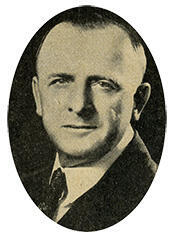
Here you will find contact information for Representative Karl Stefan, including email address, phone number, and mailing address.
| Name | Karl Stefan |
| Position | Representative |
| State | Nebraska |
| District | 3 |
| Party | Republican |
| Status | Former Representative |
| Term Start | January 3, 1935 |
| Term End | January 3, 1953 |
| Terms Served | 9 |
| Born | March 1, 1884 |
| Gender | Male |
| Bioguide ID | S000845 |
About Representative Karl Stefan
Karl Stefan (March 1, 1884 – October 2, 1951) was a Czech-American politician, newspaper editor, publisher, and radio commentator from Nebraska. A member of the Republican Party, he represented Nebraska’s 3rd congressional district in the United States House of Representatives from 1935 to 1951, serving nine terms in Congress. Over the course of his legislative career, he contributed to the work of the House during a period marked by the Great Depression, World War II, and the early Cold War, participating in the democratic process and representing the interests of his constituents.
Stefan was born on a farm in Žebrákov, in the Kingdom of Bohemia (then part of Austria-Hungary and now in the Czech Republic), on March 1, 1884. In 1885 he immigrated with his parents to the United States, settling in Omaha, Nebraska. He attended public schools and later furthered his education at a YMCA night school, reflecting the experience of many first-generation immigrants who combined work with evening study. As a young man, he entered military service, first as a private in the Illinois National Guard and later as a lieutenant in the Nebraska National Guard. From 1904 to 1906 he served overseas as an inspector of telegraphs in the Philippine Constabulary, gaining technical and administrative experience in communications during the period of American administration in the Philippines.
After returning from the Philippines, Stefan pursued a career in communications and journalism. In 1909 he moved to Norfolk, Nebraska, where he worked as a telegrapher, a position that drew on his earlier experience with telegraph systems. He soon joined the Norfolk Daily News and rose to become an editor of the paper, a post he held until 1924. In addition to his editorial work, he became a publisher and was president of the Stefan Company, serving as a publishers’ agent for magazines and newspapers. From the mid-1920s until 1934 he expanded his public profile as a radio commentator and as a contributor to newspapers and magazines, building a regional reputation as a communicator and public figure.
Stefan was closely associated with radio station WJAG in Norfolk, where he became one of its earliest and most influential announcers. He is credited with developing much of the station’s programming, including a popular noontime show. As WJAG’s first regular announcer, he opened his daily noon news report with a distinctive greeting: “Hello friends. Hello everybody! You are listening to WJAG, the Norfolk Daily News station, and we’re located at Norfolk, IN Nebraska. On the air with the regular noon-day program –– the lunch-hour session of WJAG’s radio family.” Colleagues, including early announcer Art Breyer, described Stefan as the “backbone” of WJAG, noting that his personality enabled him to become intimately acquainted with listeners. His broadcasts combined local affairs with news drawn from the Norfolk Daily News’ Associated Press wire, and he often personalized information, such as livestock prices, to speak directly to individual listeners. In 1922 he originated the concept of the “radio family,” a community of listeners symbolically gathered around a mythical dinner table each noon hour, with local residents designated as “father,” “mother,” and a wide variety of whimsical titles. This innovative, participatory format helped endear him to the public and demonstrated his skill in using emerging media to build civic connection.
Stefan’s prominence in journalism and broadcasting provided a platform for his entry into electoral politics. Running as a Republican, he was elected to the U.S. House of Representatives in 1934 to represent Nebraska’s 3rd congressional district and took office on January 3, 1935. He was reelected eight times, serving continuously until his death in 1951. His tenure in Congress thus extended over nine terms, during which he participated in the legislative response to the New Deal, wartime mobilization, and postwar reconstruction and foreign policy. As a member of the House of Representatives, he contributed to the legislative process and represented the interests of his largely rural Nebraska constituency during a transformative era in American political and economic life.
During his congressional service, Stefan undertook several notable assignments in international and diplomatic contexts. In 1935 he served as a member of a congressional committee that aided in the inauguration of the Philippine Commonwealth Government in Manila, returning to a region where he had earlier served in the Philippine Constabulary. In 1939 he was a delegate to the Interparliamentary Union meeting in Oslo, Norway, reflecting his engagement with international parliamentary dialogue on the eve of World War II. Near the end of the war, in 1945, he served as an official adviser at the United Nations Conference in San Francisco, California, which drafted the United Nations Charter and laid the foundations of the postwar international order.
Karl Stefan remained in office until his death. He died of acute cardiovascular collapse while serving in Congress on October 2, 1951, in Washington, D.C. He was buried in Prospect Hill Cemetery in Norfolk, Nebraska, the community that had been the center of his journalistic, broadcasting, and political career. In recognition of his service and local prominence, Norfolk’s Karl Stefan Memorial Airport was named in his honor, commemorating his contributions to Nebraska public life and to the United States Congress.