Representative Katharine Edgar Byron
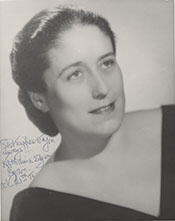
Here you will find contact information for Representative Katharine Edgar Byron, including email address, phone number, and mailing address.
| Name | Katharine Edgar Byron |
| Position | Representative |
| State | Maryland |
| District | 6 |
| Party | Democratic |
| Status | Former Representative |
| Term Start | January 3, 1941 |
| Term End | May 27, 1941 |
| Terms Served | 1 |
| Born | October 25, 1903 |
| Gender | Female |
| Bioguide ID | B001222 |
About Representative Katharine Edgar Byron
Katharine Edgar Byron (née Edgar; October 25, 1903 – December 28, 1976) was a Democratic member of the United States House of Representatives who represented Maryland’s 6th congressional district from May 27, 1941, to January 3, 1943. She was the first woman elected to Congress from Maryland and served one term in the House of Representatives during a critical period in American history, participating in the legislative process as the nation entered World War II.
Byron was born Katharine Edgar in Detroit, Michigan, to Mary (née McComas) and Brigadier General Clinton Goodloe Edgar. She was the granddaughter of U.S. Senator Louis E. McComas, who had also represented Maryland’s 6th congressional district, establishing a family tradition of public service that she would later continue. She attended independent schools, including the Liggett School in Detroit, the Westover School in Middlebury, Connecticut, and the Holton-Arms School in Bethesda, Maryland. In 1922 she moved to Williamsport, Maryland, where she became part of a prominent local family and a communicant of Saint John’s Church.
In 1922, Katharine Edgar married William D. Byron, a businessman and later a Democratic politician who would be elected to Congress from Maryland’s 6th district. The couple had five sons: William Devereux Byron III (1925–1990); James “Jamie” Edgar Byron (1927–2011); Goodloe Edgar Byron (1929–1978), who would later serve as a representative from the same 6th district; David Wilson Byron (1932–1964); and Louis McComas Byron (1938–2011). Her marriage placed her at the center of a family deeply engaged in public life and Democratic Party politics in western Maryland.
Katharine Edgar Byron’s entry into congressional service came under tragic circumstances. Her husband, Representative William D. Byron, died in an airplane crash near Atlanta, Georgia, on February 27, 1941. A special election was held on May 27, 1941, to fill the vacancy, and she was elected as a Democrat to represent Maryland’s 6th congressional district. Her term in Congress ran from May 27, 1941, to January 3, 1943. As a member of the House of Representatives, she represented the interests of her constituents during a time of global conflict and national mobilization, contributing to the legislative process as the United States moved from neutrality to active participation in World War II.
During her tenure in Congress, Byron took notable positions on foreign policy and national defense. She advocated amending the Neutrality Act during World War II, aligning herself with those who believed the United States should take a more active role in supporting the Allies prior to full entry into the war. On December 8, 1941, the day after the Japanese attack on Pearl Harbor, she was one of five members of the House who delivered speeches in favor of President Franklin D. Roosevelt’s declaration of war on Japan. Her support for the declaration underscored her engagement with the pressing international issues of the day and her willingness to back decisive action in defense of the nation.
Byron chose not to seek re-election in 1942 and concluded her congressional service at the end of her term on January 3, 1943. After leaving office, she retired from elective politics and resided in Washington, D.C. In 1947 she married Samuel Bynum Riddick, marking a new chapter in her personal life while maintaining her connections to the political and social circles of the capital and of Maryland. Although no longer in Congress, she remained part of a family that continued to play a role in public affairs, most notably through her son Goodloe Edgar Byron’s later service in the House of Representatives from the same district she and her grandfather had represented.
Katharine Edgar Byron died at Georgetown University Hospital in Washington, D.C., on December 28, 1976. She was interred in Riverview Cemetery in Williamsport, Maryland. Her life and career reflected both a continuation of a multigenerational Maryland political legacy and the expanding role of women in national politics, as she broke new ground as the first woman elected to Congress from her state while serving during one of the most consequential periods in American history.