Representative Kathy E. Manning
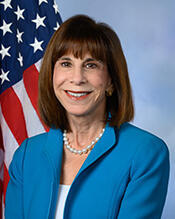
Here you will find contact information for Representative Kathy E. Manning, including email address, phone number, and mailing address.
| Name | Kathy E. Manning |
| Position | Representative |
| State | North Carolina |
| District | 6 |
| Party | Democratic |
| Status | Former Representative |
| Term Start | January 3, 2021 |
| Term End | January 3, 2025 |
| Terms Served | 2 |
| Born | December 3, 1956 |
| Gender | Female |
| Bioguide ID | M001135 |
About Representative Kathy E. Manning
Kathy Ellen Manning (born December 3, 1956) is an American lawyer, civic leader, and politician who served as a Representative from North Carolina in the United States Congress from January 3, 2021, to January 3, 2025. A member of the Democratic Party, she represented North Carolina’s 6th congressional district for two terms, during a significant period in American history marked by the COVID-19 pandemic, the January 6, 2021, attack on the U.S. Capitol, and intense national debates over voting rights, reproductive freedom, and foreign policy. Her district was in the heart of the Piedmont Triad area, including Greensboro and High Point, as well as parts of Forsyth, Rockingham, and Caswell Counties. Upon her swearing-in, she became the first woman to represent the 6th District, the first Democrat to represent that district since 1985, and the first Jewish person to represent North Carolina in Congress.
Manning was born to a Jewish family in Detroit, Michigan, on December 3, 1956. Her father worked for the Ford Motor Company for 40 years, and she grew up in an environment that emphasized hard work, education, and community involvement. As a young person, she attended the Interlochen Center for the Arts’s National Music Camp in northern Michigan, where she studied music and drama, an early experience that fostered a lifelong interest in the arts and cultural institutions. These formative years in the Midwest, in a family connected to the auto industry and engaged in Jewish communal life, helped shape her later commitments to civic leadership and public service.
Manning earned her bachelor’s degree from Harvard University. While at Harvard, she founded the Radcliffe Pitches, the first female a cappella group at the university, demonstrating early leadership and a commitment to expanding opportunities for women in campus life. She went on to attend the University of Michigan Law School, where she earned a Juris Doctor. Her legal education prepared her for a career that would span complex commercial practice, immigration law, and extensive nonprofit governance, and it provided the foundation for her later work on legislative issues such as immigration, health care, and civil rights.
After graduating from law school, Manning practiced law in Washington, D.C., for five and a half years. In 1987 she moved to Greensboro, North Carolina, her husband’s hometown, where she continued to practice law for the next two decades. She became a partner at a major North Carolina law firm, handling sophisticated legal matters, and in 2002 she founded her own immigration law firm in Greensboro. Her work in immigration law deepened her understanding of the U.S. immigration system and informed her later advocacy for comprehensive immigration reform in Congress. Beyond her legal practice, she emerged as a prominent civic leader in Greensboro and the broader Jewish community. From 2009 to 2012, she served as the first woman board chair of the Jewish Federations of North America, one of the largest Jewish philanthropic organizations in the world, and she served on the boards of the American Jewish Joint Distribution Committee and the Jewish Agency for Israel. She was also the founding board chair of Prizmah: Center for Jewish Day Schools, reflecting her commitment to Jewish education. Beginning in 2012, she led a ten‑year effort to build the Steven Tanger Center for the Performing Arts, a state‑of‑the‑art, 3,000‑seat performing arts venue in downtown Greensboro, underscoring her longstanding support for the arts and local economic development.
Manning first sought federal office in 2018, when she ran as the Democratic nominee against Republican incumbent Ted Budd in North Carolina’s 13th congressional district. At that time, the 13th District stretched from southwestern Greensboro to the northern exurbs of Charlotte and tilted Republican; Donald Trump had carried the district in 2016 with 53 percent of the vote. Manning lost the general election to Budd, 52 percent to 46 percent, but the campaign raised her profile as a Democratic leader in the state. After a court‑ordered redistricting in 2019, North Carolina’s 6th District was reconfigured to include the Triad, with all of Guilford County and part of Forsyth County, including most of Winston‑Salem. The previous 6th District, which had included only parts of Greensboro, had been represented by Republican Mark Walker for three terms. On December 2, 2019, hours before the new map was issued, Manning announced she would run in the newly drawn 6th District. The reconfigured district was significantly more compact and more favorable to Democrats; had it existed in 2016, Hillary Clinton would have won it with over 59 percent of the vote, a near‑mirror image of Donald Trump’s 56 percent in the old 6th. With most observers viewing the 6th as a likely Democratic pickup, Walker chose not to seek a fourth term. Manning won the Democratic primary and, in the November 2020 general election, defeated Republican nominee Lee Haywood with 62 percent of the vote.
Kathy E. Manning was first sworn into Congress on January 3, 2021, at the height of the COVID‑19 pandemic. Three days later, on January 6, 2021, she was among the members trapped in the House chamber gallery during the attack on the U.S. Capitol. She was one of the last people to be rescued from the gallery and remained with other members in a secure location for close to five hours before returning to the House floor to vote to certify the election of President Joe Biden. During the 117th Congress, she voted with President Biden’s stated positions 100 percent of the time, according to a FiveThirtyEight analysis, and in the 118th Congress she voted with his positions 84.9 percent of the time, according to an ABC News analysis. Health care was one of her driving issues, influenced in part by her family’s experience with the “labyrinthine process of getting insurance” to cover medication for her daughter’s chronic illness. She also focused on education, workforce development, reproductive rights, immigration reform, and combating antisemitism and hate.
Manning served on the House Committee on Foreign Affairs and the Committee on Education and the Workforce. In the 118th Congress she was the vice ranking member of the full Foreign Affairs Committee and served on the Subcommittee on Global Health, Global Human Rights, and International Organizations, as well as the Subcommittee on the Middle East, North Africa, and Central Asia, where she had been vice chair in the 117th Congress. She also served on the Subcommittee on Asia, the Pacific, Central Asia, and Nonproliferation in the 117th Congress. On the Committee on Education and the Workforce, she served on the Subcommittee on Health, Employment, Labor, and Pensions; the Subcommittee on Higher Education and Workforce Development; and, in the 117th Congress, the Subcommittee on Early Childhood, Elementary and Secondary Education. She introduced legislation to expand access to mental health services in schools and to address the high rate of maternal mortality, reflecting her concern with both student well‑being and public health. Within the New Democrat Coalition, she chaired the Workforce Development Task Force in the 118th Congress, and she served as Policy Co‑Chair of the Democratic Women’s Caucus. She was also a member of numerous caucuses, including the Pro‑Choice Caucus, Congressional Equality Caucus, Congressional Ukraine Caucus, Gun Violence Prevention Task Force, Black Maternal Health Caucus, Labor Caucus, Bipartisan Historically Black Colleges and Universities Caucus, and Rare Disease Caucus.
Manning played a prominent role in efforts to protect reproductive rights and to counter antisemitism. She authored the Right to Contraception Act, legislation to protect the right of individuals to use, and health care professionals to prescribe, the full range of FDA‑approved contraception. She first introduced this bill in the 117th Congress in response to Justice Clarence Thomas’s concurring opinion in Dobbs v. Jackson Women’s Health Organization, the Supreme Court decision that overturned the 50‑year‑old Roe v. Wade precedent protecting abortion rights. On July 21, 2022, the Right to Contraception Act passed the House of Representatives by a vote of 228–195. Manning reintroduced the bill while in the minority in the 118th Congress and, on June 4, 2024, filed a discharge petition in an effort to bring it to the House floor for a vote. In the 118th Congress, she also introduced the Countering Antisemitism Act with Republican Representative Chris Smith of New Jersey, bipartisan legislation to strengthen federal efforts to combat antisemitism. A companion bill was introduced in the Senate by Senators Jacky Rosen of Nevada and James Lankford of Oklahoma. Manning described it as the “most comprehensive bill” on antisemitism, incorporating guidance from the Biden administration’s first U.S. National Strategy to Counter Antisemitism. On September 9, 2024, the House passed by voice vote the Securing Global Telecommunications Act, legislation she co‑authored with Republican Representative Young Kim of California, requiring the Department of State to develop and submit to Congress a strategy to promote the use of secure telecommunications infrastructure in countries other than the United States; the pair had previously introduced and passed similar legislation in the 117th Congress. On November 20, 2024, the House agreed to her resolution condemning the rise of antisemitism around the world, encouraging increased international cooperation to counter antisemitism, and welcoming the Global Guidelines for Countering Antisemitism.
In addition to her legislative work, Manning was active in bipartisan and issue‑focused caucuses and task forces. In 2022 she became the lead Democrat and co‑chair of the House Bipartisan Task Force for Combating Antisemitism, succeeding former Representative Ted Deutch of Florida. In that role, she convened meetings with White House officials, U.S. Special Envoy for Monitoring and Combating Antisemitism Deborah Lipstadt, officials from European countries engaged in combating antisemitism, and representatives of major Jewish organizations. Following the October 7, 2023, Hamas attack on Israel, she was outspoken in support of efforts to secure the release of hostages and combat antisemitic incidents, and she hosted numerous meetings with families of hostages and members of Congress. She was also one of the original co‑sponsors of the Dignity Act, a bipartisan immigration bill introduced at the beginning of the 118th Congress that sought comprehensive immigration reform, including measures to secure the border and expedite asylum determinations, create a pathway to citizenship for Deferred Action for Childhood Arrivals (DACA) recipients, and increase visas for legal immigration to strengthen the workforce. Her work in these areas reflected both her professional background in immigration law and her long‑standing engagement in Jewish communal and human rights issues.
Kathy E. Manning was reelected to a second term on November 8, 2022, defeating Republican Christian Castelli by a margin of 54 percent to 45 percent. After the 2020 census, the North Carolina General Assembly redrew the state’s congressional maps for the 2022 election. Those maps were challenged in several lawsuits that reached the North Carolina Supreme Court. In a 4–3 decision split along party lines, the court struck down the maps as an example of extreme partisan gerrymandering in violation of the state constitution and ordered them redrawn. After rejecting the legislature’s revised maps, the court appointed a bipartisan panel of special masters—two Republicans and one Democrat—to draw fair districts. Under the approved maps, the 6th District lost most of Winston‑Salem but retained all of Guilford County, Greensboro, and High Point, and expanded to include Rockingham County and most of Caswell County. In December 2023, following another round of redistricting by the General Assembly that produced what she described as “egregiously gerrymandered congressional districts” in North Carolina, Manning announced that she would not run for reelection in 2024. In November 2024 it was announced that Representative Dan Goldman of New York would succeed her as co‑chair of the House Bipartisan Task Force for Combating Antisemitism following her departure from Congress.
Manning and her husband, Greensboro native Randall Kaplan, have three children and three grandchildren. Her career has combined legal practice, philanthropic leadership, and public service, and her tenure in Congress was marked by advocacy on health care, education, reproductive rights, immigration, foreign affairs, and the fight against antisemitism and hate, as well as sustained engagement with the arts and civic life in North Carolina’s Piedmont Triad.