Representative Kellian Van Rensalear Whaley
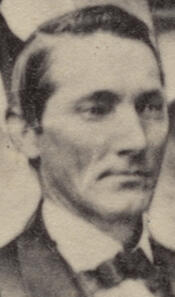
Here you will find contact information for Representative Kellian Van Rensalear Whaley, including email address, phone number, and mailing address.
| Name | Kellian Van Rensalear Whaley |
| Position | Representative |
| State | West Virginia |
| District | 3 |
| Party | Unconditional Unionist |
| Status | Former Representative |
| Term Start | July 4, 1861 |
| Term End | March 3, 1867 |
| Terms Served | 3 |
| Born | May 6, 1821 |
| Gender | Male |
| Bioguide ID | W000318 |
About Representative Kellian Van Rensalear Whaley
Kellian Van Rensalear Whaley (May 6, 1821 – May 20, 1876) was a nineteenth-century lumberman, Civil War officer, and congressman from Virginia before the American Civil War and from West Virginia after the state’s creation. He was born in Utica, New York, on May 6, 1821. Little is recorded about his early youth, but as a young man he left New York and settled in what was then western Virginia, where he would build his business and political career and later emerge as a prominent Unionist during the sectional crisis and the Civil War.
Before entering national politics, Whaley established himself in Point Pleasant, Virginia (now Point Pleasant, West Virginia), where he engaged in the lumber business. His work in this growing river town on the Ohio River placed him within the commercial life of the trans-Allegheny region and helped develop the local economy in the years leading up to the Civil War. During this period he also married Louisa Mary Perdue (1828–1908), who survived him by more than three decades. The couple had a large family, including sons Charles Monroe Whaley (1850–1918), Warren Clayton Whaley (1852–1931), Harlan L. Whaley (1854–1936), Fulton Morse Whaley (1856–1907), Carlisle Landers Whaley (1859–1944), and James Whaley (b. 1859), as well as daughters Mary J. Whaley Fry (1847–1925) and Ida Belle Whaley Allen (1861–1946).
Whaley entered national public life on the eve of the Civil War. A strong Unionist, he was elected as a Unionist (often identified with the Unconditional Unionist Party) to the United States House of Representatives in 1860 from Virginia’s 12th congressional district. He served in the Thirty-seventh Congress from 1861 to 1863, representing a region of northwestern Virginia that remained largely loyal to the Union despite the state government’s decision to secede. His initial service in Congress occurred during a significant period in American history, as the nation fractured and civil war began. He participated in the legislative process and represented the interests of his constituents in the House of Representatives, but he effectively lost his seat as a representative from Virginia due to that state’s secession from the Union and the subsequent reorganization of loyalist representation.
During the Civil War, Whaley also took an active role in the Union war effort. He recruited men for the Union Army and was commissioned as major of the 9th West Virginia Volunteer Infantry Regiment. On November 10, 1861, during a Confederate raid on the town of Guyandotte, Virginia (now a neighborhood of Huntington, West Virginia), he was captured by Confederate forces under General Albert Gallatin Jenkins. While being marched up the Guyandotte River as a prisoner, Major Whaley escaped his captors at Chapmanville in Logan County. He made his way to safety by traveling up Big Harts Creek in what are now Lincoln and Logan counties to Queens Ridge in Wayne County, West Virginia. His escape underscored both his personal resolve and his commitment to the Union cause at a time when loyalty in the border regions was often contested at great personal risk.
With the creation of the new state of West Virginia in 1863, Whaley resumed his congressional career as a representative from the loyalist counties that had broken away from Virginia. He was elected from West Virginia’s 3rd congressional district as a Unionist and served three consecutive terms in the United States Congress from 1863 to 1867, encompassing the remainder of the Civil War and the first phase of Reconstruction. From 1863 to 1865, during the Thirty-eighth Congress, he served as chairman of the Committee on Invalid Pensions, where he helped oversee legislation affecting disabled veterans and their families. He was a delegate to the Republican National Convention in 1864, reflecting his alignment with the national Republican and Unionist coalition that supported President Abraham Lincoln’s administration. In the Thirty-ninth Congress, from 1865 to 1867, he served as chairman of the Committee on Revolutionary Claims, dealing with long-standing claims arising from the Revolutionary War era. During his tenure, he also served on the congressional committee that accompanied the body of President Lincoln on the funeral train from Washington, D.C., to Springfield, Illinois, in April 1865, a solemn duty that linked his service directly to one of the defining moments of the era. A member of the Unconditional Unionist Party and closely associated with the Republican majority, Whaley contributed to the legislative process during his three terms in office and participated actively in the democratic governance of the reunited nation. He did not seek reelection in 1866 and was succeeded by fellow Republican Daniel Polsley.
After leaving Congress, Whaley continued in federal service for a time. In 1868, he was appointed collector of customs at Brazos de Santiago, Texas, a strategic customs district at the mouth of the Rio Grande that had been important during the war and remained significant in the postwar period for trade and revenue collection. This appointment extended his public career beyond his home region and reflected the continued confidence of national leaders in his abilities and loyalty.
Kellian Van Rensalear Whaley died in Point Pleasant, West Virginia, on May 20, 1876. His life spanned the transformation of the trans-Allegheny region from a western district of Virginia into the separate state of West Virginia, and his career as a lumberman, Union officer, and congressman from both Virginia and West Virginia placed him at the center of the political and military struggles that reshaped the nation during the Civil War and Reconstruction.