Representative Kendrick Brett Meek
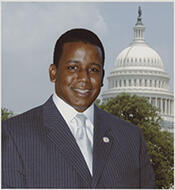
Here you will find contact information for Representative Kendrick Brett Meek, including email address, phone number, and mailing address.
| Name | Kendrick Brett Meek |
| Position | Representative |
| State | Florida |
| District | 17 |
| Party | Democratic |
| Status | Former Representative |
| Term Start | January 7, 2003 |
| Term End | January 3, 2011 |
| Terms Served | 4 |
| Born | September 6, 1966 |
| Gender | Male |
| Bioguide ID | M001148 |
About Representative Kendrick Brett Meek
Kendrick Brett Meek (born September 6, 1966) is an American politician and member of the Democratic Party who represented Florida’s 17th congressional district in the United States House of Representatives from January 3, 2003, to January 3, 2011. He was born in Miami, Florida, the son of Carrie P. Meek, who would later become one of the first African American members of Congress from Florida since Reconstruction. Growing up in a politically active family in Miami’s Liberty City neighborhood, Meek was exposed early to public service and civic engagement, experiences that shaped his later career in state and national politics.
Meek attended Miami-Dade public schools and went on to study at Florida A&M University in Tallahassee, a historically Black university, where he played football and became active in campus and community affairs. His early professional life included service as a Florida Highway Patrol officer, where he rose to the rank of captain and became a member of the governor’s security detail. This law enforcement background, combined with his family’s political legacy, provided him with both practical experience in public safety and a foundation for his later work on legislative issues affecting crime, justice, and community development.
Meek entered elective office in the Florida House of Representatives in the mid-1990s, representing a Miami-area district. He subsequently won election to the Florida Senate, thus serving in both houses of the Florida Legislature before seeking federal office. During his tenure in the state legislature, he became known for his advocacy on education, economic opportunity, and civil rights. His legislative work in Tallahassee helped build a political base in South Florida and positioned him as a successor to his mother, Carrie Meek, who had represented Florida’s 17th congressional district in Congress.
In the 2002 election, Meek ran for the U.S. House of Representatives to succeed his mother, who retired from Congress. He was elected to represent Florida’s 17th congressional district, a diverse, heavily Democratic district based in the Miami area, and took office on January 3, 2003. He would go on to serve four consecutive terms, remaining in office until January 3, 2011. His service in Congress occurred during a significant period in American history, encompassing the later years of the war in Iraq, debates over national security and civil liberties, and the onset of the Great Recession. As a member of the House of Representatives, Kendrick Brett Meek participated in the democratic process, contributed to the legislative work of the chamber, and represented the interests of his constituents in South Florida.
During his congressional tenure, Meek took positions on a range of domestic and foreign policy issues. He voted against H.J. Res. 88, a proposed amendment to the United States Constitution that would have banned same-sex marriage nationwide. In a statement entered into the Congressional Record explaining his vote, Meek argued that the amendment was not directed at any real problem but reflected, in his view, an effort by Republican leadership to “gin up political support for their candidates.” He criticized the measure as a distraction from what he described as pressing national concerns, including the war in Iraq, crises in Iran, North Korea, and Lebanon, a soaring federal deficit increasingly financed by foreign creditors such as China, rising energy costs, and the need to increase the federal minimum wage. Meek contended that the time spent debating the amendment was “wasting hours of debate on an unnecessary Constitutional amendment that had already been defeated in the Senate.” His record also included support for LGBT rights more broadly; during his later Senate campaign he publicly supported gay adoption, which had previously been banned in Florida, and he referred to Governor Charlie Crist as “the George Wallace of gay adoptions” in criticizing Crist’s stance on the issue.
On January 13, 2009, Meek announced that he would run for the United States Senate seat that would be vacated upon the retirement of Republican Senator Mel Martinez in 2010. Declaring his candidacy, he stated that he wanted “to be a fighter for Florida with a strong voice that won’t let the special interests stand in the way of what’s right.” He pursued an ambitious strategy to qualify for the ballot by petition rather than by paying a filing fee, announcing on April 2, 2009, that he intended to collect 112,476 completed petitions from Florida voters. On April 8, 2010, Meek made Florida political history by becoming the first statewide candidate ever to qualify for the ballot by petition, underscoring both the organizational strength of his campaign and his effort to demonstrate broad grassroots support.
Meek was the Democratic nominee in the 2010 United States Senate election in Florida, facing Republican former Florida House Speaker Marco Rubio and independent candidate Governor Charlie Crist in a high-profile three-way race. The campaign unfolded against the backdrop of national debates over the Obama administration’s policies, the economic downturn, and the rise of the Tea Party movement. On November 2, 2010, Meek finished third in the general election, receiving approximately 20 percent of the vote, behind Rubio, who won the seat, and Crist. His Senate bid marked the culmination of his federal electoral career and coincided with the end of his service in the House of Representatives in January 2011.
After leaving Congress, Meek remained active in public affairs, drawing on his experience in state and federal government. He has been associated with various civic and policy initiatives, including advisory and advocacy work related to Haiti and broader international development concerns, such as service on the Advisory Council of Haiti Innovation. In addition, his perspectives on legislative issues and electoral politics have been featured in media and public forums, including appearances on C-SPAN. Through his years in the Florida Legislature, his four terms in the U.S. House of Representatives, and his 2010 Senate campaign, Kendrick Brett Meek has played a notable role in Florida and national Democratic politics in the early twenty-first century.