Representative Kenneth James Gray
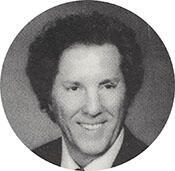
Here you will find contact information for Representative Kenneth James Gray, including email address, phone number, and mailing address.
| Name | Kenneth James Gray |
| Position | Representative |
| State | Illinois |
| District | 22 |
| Party | Democratic |
| Status | Former Representative |
| Term Start | January 5, 1955 |
| Term End | January 3, 1989 |
| Terms Served | 12 |
| Born | November 14, 1924 |
| Gender | Male |
| Bioguide ID | G000400 |
About Representative Kenneth James Gray
Kenneth James Gray (November 14, 1924 – July 12, 2014) was an American businessman, World War II veteran, and Democratic politician who represented Illinois in the United States House of Representatives for twelve terms between 1955 and 1989. Serving during a significant period in American history, he became known both for his effectiveness in securing federal projects for southern Illinois and for his flamboyant personal style, as well as for his skillful command of House procedure.
Gray was born in West Frankfort, Franklin County, Illinois, and attended elementary schools in West Frankfort and Pope County before graduating from Frankfort Community High School. Demonstrating an entrepreneurial bent from an early age, he started a business at age thirteen, Gray’s Roller Rink, where he performed nearly every job himself, from floor manager and concession cashier to janitor. By sixteen he had become an auctioneer, a vocation that later informed his public speaking style in Congress. At eighteen he purchased and operated Gray Motors, an automobile dealership that he owned until 1954. These early business ventures helped establish his local reputation and provided a foundation for his later political career.
In January 1943, during World War II, Gray enlisted in the United States Army Air Forces. He served with the Twelfth Air Force in North Africa, with the combat engineers of the Fifth Army in Italy, and again with the Twelfth Air Force in southern France and elsewhere in Europe. An aircraft crew chief, he attained the rank of first sergeant before his discharge in December 1945. According to the 2009 biography Pass the Plate, Gray was stationed at Greenham Common air base in England in June 1944 and was assigned as General Dwight D. Eisenhower’s driver when Eisenhower met with Company E, 502nd Infantry Regiment shortly before the unit departed for the Normandy invasion; the authors assert that Gray appears in the well-known photograph of Eisenhower addressing the paratroopers, including First Lieutenant Wallace C. Strobel. His wartime decorations included the European-African-Middle Eastern Campaign Medal and the World War II Victory Medal.
Following the war, Gray returned to southern Illinois and became active in veterans’ and civic organizations. He was a leader in the American Legion, serving as commander of the Southern Illinois region, and he served as vice president of the Illinois Jaycees. He credited these roles with giving him the contacts and name recognition necessary to launch a congressional campaign. Expanding his aviation interests, he completed training as an airplane and helicopter pilot and operated an air service at Benton, Illinois, from 1948 to 1952. In 1950 he sought the Democratic nomination for a seat in the U.S. House of Representatives, but lost the primary to Kent E. Keller, who in turn lost the general election to incumbent Republican C. W. Bishop; Gray chose not to run again in 1952. In 1953 he helped found the Walking Dog Foundation for the Blind, a charitable organization created to provide guide dogs to individuals who were blind or visually impaired.
Gray was elected to Congress in 1954 as the successful Democratic challenger to C. W. Bishop and took his seat in the 84th Congress on January 3, 1955. He was reelected nine times and served continuously until his resignation on December 31, 1974, representing Illinois in the United States House of Representatives from 1955 to 1974. During these twelve terms in office, he participated actively in the legislative process and represented the interests of his southern Illinois constituents during an era marked by the Cold War, the civil rights movement, and the Great Society. Over time he became known on Capitol Hill for his distinctive appearance, adopting permed hair dyed bright blond or red, white sport coats and shoes, brightly colored suits, and wide, patterned bow ties, a style that made him instantly recognizable to colleagues and visitors alike.
Within the House, Gray emerged as a powerful advocate of federal public works spending, particularly through his service on the Committee on Public Works. He used his seniority to secure funding for interstate highways, dams, housing, and federal facilities, including the United States Penitentiary at Marion, Illinois. His efforts brought more than $7 billion in federal projects to his district, earning him the nickname “Prince of Pork.” Gray defended his approach by pointing to projects such as the dam that created Rend Lake, which the Army Corps of Engineers estimated had saved hundreds of millions of dollars in property losses by limiting flood damage along the Big Muddy River; he famously remarked, “If that is pork, pass me the plate, because I’ll take another heaping serving.” Nationally, he was a primary backer of the plan to convert Washington, D.C.’s Union Station into the National Visitor Center for the United States Bicentennial. Although the center opened in time for the 1976 celebrations, it was plagued by design flaws, workmanship problems, and cost overruns, and it closed soon afterward before the station was later redeveloped as a modern rail and retail hub.
Gray’s showmanship extended beyond his attire to his work on the House floor. An amateur magician, he frequently performed for civic groups and youth organizations in his district and occasionally used magic to dramatize legislative points. In a 1956 speech supporting the creation of the Interstate Highway System, he carried a bouquet of red roses to the lectern to symbolize the “rosy” prospects of the program; as he described lobbyists and special interests “killing” the proposal, he snapped the blossoms off one by one, leaving bare stems. Concluding that the lobbyists would fail and that the outlook was again “rosy,” he caused white roses to bloom from the stems, earning an ovation from his colleagues. In another instance, during a private performance, he and Senator Estes Kefauver executed a levitation trick using Senator J. Allen Frear Jr. as the subject. His unusual combination of roles—congressman, auctioneer, and magician—led to national television appearances: in 1959 he appeared on the game show To Tell the Truth, where two of four panelists correctly identified him, and in 1966 he appeared as a guest challenger on I’ve Got a Secret, where the panel failed to guess that he was a member of Congress, having been introduced only as a magician and pilot. During his years in Washington he resided on a houseboat, another detail that contributed to his colorful public image.
Gray’s first congressional tenure ended amid controversy. In the mid-1970s, media accounts linked him to Elizabeth Ray and alleged that he had participated in a lifestyle of parties and sexual misconduct involving members of Congress and staff. Gray denied wrongdoing, but he chose not to seek reelection in 1974 to the 94th Congress and resigned effective December 31, 1974. He was succeeded by Democrat Paul Simon. After leaving Congress, Gray returned to business, including operating Ken Gray’s Antique Car Museum, and remained a prominent figure in southern Illinois civic life.
A decade later, when Paul Simon ran successfully for the United States Senate in 1984, Gray sought to return to the House. He won election to the 99th and 100th Congresses and served from January 3, 1985, to January 3, 1989, again representing Illinois in the United States House of Representatives. In this second tenure, colleagues from both parties commended his mastery of parliamentary procedure and House rules. Drawing on the public speaking skills and gavel technique he had honed as an auctioneer, he frequently presided over House sessions and was praised for his tact, fairness, and efficiency in managing debate. Gray announced that he would not seek reelection in 1988, citing a muscular disorder that he said resulted from a tick bite sustained during a congressional visit to Brazil.
In retirement, Gray resided in West Frankfort, Illinois, where he opened a museum to display his political memorabilia, campaign artifacts, and souvenirs from his long public career. In 1999 he suffered a stroke that left his speech slurred and his right side paralyzed, but he remained a well-known figure in the region. He was the subject of a full-length biography, Pass the Plate: The Legend & Legacy of United States Congressman Kenneth J. Gray, published in 2009 by Maxine Pyle and Marleis Trover. His legacy was recognized through several public honors: the United States courthouse and post office in Benton, Illinois, was designated the Kenneth Gray Federal Building; in 2008 the post office in West Frankfort was named in his honor; and that same year Governor Rod Blagojevich designated Interstate 57 between Mile Post 0 at the Illinois state line and Mile Post 106 at the Marion/Jefferson County line as the “Ken Gray Expressway.” Also in 2008, John A. Logan College established the Ken Gray Scholarship, awarded to second-year students from Franklin County who plan to attend Southern Illinois University.
Gray married Gwendolyn June Croslin during World War II. The couple had three children—Diann, Becky, and James—though their son James predeceased his father. Gwendolyn Gray died in 1995. Gray later married the Reverend Margaret “Toedy” Holley-Gray, who survived him. On July 12, 2014, Kenneth James Gray died in Herrin, Illinois, at the age of eighty-nine. He was buried at East Fork Cemetery in West Frankfort. In 2016 his widow closed the Ken Gray Museum and donated his collection of memorabilia and artifacts to Morthland College; after the college closed in 2018, the whereabouts of the collection became uncertain, and reports indicated that the building housing it had been robbed, prompting an FBI investigation.