Representative Kenneth William Hechler
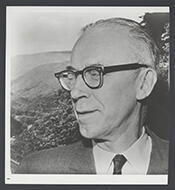
Here you will find contact information for Representative Kenneth William Hechler, including email address, phone number, and mailing address.
| Name | Kenneth William Hechler |
| Position | Representative |
| State | West Virginia |
| District | 4 |
| Party | Democratic |
| Status | Former Representative |
| Term Start | January 7, 1959 |
| Term End | January 3, 1977 |
| Terms Served | 9 |
| Born | September 20, 1914 |
| Gender | Male |
| Bioguide ID | H000438 |
About Representative Kenneth William Hechler
Kenneth William Hechler (September 20, 1914 – December 10, 2016) was an American politician, public servant, and academic who became one of West Virginia’s most enduring political figures. A member of the Democratic Party, he represented West Virginia’s 4th congressional district in the U.S. House of Representatives from 1959 to 1977, serving nine consecutive terms, and later held statewide office as West Virginia Secretary of State from 1985 to 2001. Over a career that spanned much of the twentieth century, he was known for his liberal views, his advocacy for civil rights and mine safety, and his independence from the state’s Democratic political machine.
Hechler was born on September 20, 1914, and came of age during a period marked by World War I, the Great Depression, and the lead-up to World War II, experiences that helped shape his interest in public affairs and government service. Before entering electoral politics, he developed a strong background in political science and public policy, which would later inform both his academic work and his legislative priorities. His early professional life included research, writing, and teaching, and he became recognized as a careful student of American government and the presidency.
By the late 1940s, Hechler had moved into the national political arena. From 1949 to 1953 he served as a White House assistant to President Harry S. Truman, working at the center of executive branch decision-making during the early Cold War years. After leaving the Truman administration, he remained active in Democratic politics and public policy. In 1956 he was Research Director for Adlai Stevenson’s presidential campaign, contributing to the development of policy positions and campaign materials. From 1953 to 1957 he served as associate director of the American Political Science Association in Washington, D.C., further solidifying his reputation as both a scholar and practitioner of politics. He then joined the faculty of Marshall University in Huntington, West Virginia, where his teaching and public engagement helped introduce him to the voters and issues of the state he would later represent in Congress.
Hechler entered electoral politics in 1958, running for the United States House of Representatives from West Virginia’s 4th congressional district, which then included Huntington and many unionized mill towns along the Ohio River north of that industrial city. In a closely contested race, he won election to the Eighty-sixth Congress by a margin of about 3,500 votes. Sworn into office in January 1959, he began what would become nine terms in the House, serving until January 1977. After his initial narrow victory, he never again faced a general election contest nearly as close, reflecting the strong support he built among his constituents even as he often stood apart from the dominant state party organization.
During his congressional service, Hechler earned a reputation as a liberal Democrat and an outspoken advocate for civil rights, labor, and mine safety. He participated actively in the legislative process during a significant period in American history marked by the civil rights movement, the Great Society, and the Vietnam War. In 1965 he was the only member of Congress to join Martin Luther King Jr. on the Selma to Montgomery marches in Alabama, underscoring his personal commitment to voting rights and racial equality. He voted in favor of the Civil Rights Acts of 1960, 1964, and 1968, as well as the Voting Rights Act of 1965. In 1971 he was the sole member of West Virginia’s congressional delegation to vote for the Equal Employment Opportunity Act, aligning himself with efforts to strengthen protections against workplace discrimination. Though an opponent of the state Democratic machine, he faced little opposition in Democratic primaries and was reelected eight times, reflecting his strong base among working-class and union voters.
Hechler’s most enduring legislative achievement was in the field of mine safety. Drawing on the concerns of his coalfield constituents and the long history of mining disasters in West Virginia, he became the principal architect of the Federal Coal Mine Health and Safety Act of 1969. This landmark law, later known as the Coal Mine Safety and Health Act of 1969, for the first time imposed a ceiling on the amount of respirable coal dust allowed in coal mines and established stringent federal safety regulations designed to reduce accidents and protect miners from black lung disease and other occupational hazards. His work on this legislation cemented his reputation as a leading congressional advocate for miners’ health and safety and had a lasting impact on federal regulatory policy in the coal industry.
After leaving Congress in 1977, Hechler remained active in West Virginia public life and returned to statewide office in the 1980s. In 1984 he was elected West Virginia Secretary of State, taking office in 1985. He served in that position until 2001, overseeing elections, business registrations, and various administrative functions of state government for four consecutive terms. In this role he continued to emphasize governmental transparency, voter participation, and ethical standards in public office. Even after his tenure as secretary of state ended, he remained a visible and vocal figure in state politics, frequently speaking out on environmental and electoral issues and mentoring younger political figures.
In his later years, Hechler became a prominent critic of mountaintop removal coal mining, which he viewed as environmentally destructive and harmful to the health and communities of the West Virginia coalfields. Beginning in 2004, he campaigned vigorously against the practice, appearing at rallies, writing, and giving interviews to draw attention to its impact. On June 23, 2009, at the age of 94, he participated in a protest near mountaintop removal mining sites in the Coal River Valley region of West Virginia. He was one of 29 protesters arrested for trespass, an episode that underscored his willingness, even in advanced age, to engage in civil disobedience for causes he believed in. On July 21, 2010, he filed to run in the special election to succeed the late Senator Robert C. Byrd, challenging Governor Joe Manchin in the Democratic primary. Hechler stated that his principal goal in entering the race was to focus public attention on the consequences of mountaintop removal mining. He lost the primary with less than 20 percent of the vote and subsequently endorsed Jesse Johnson of the Mountain Party in the general election for the Senate seat.
Hechler remained politically engaged into his centenarian years. One of his last public endorsements was for Charlotte Pritt in her 2016 campaign for governor of West Virginia as the nominee of the Mountain Party. He had previously supported Pritt in her Democratic gubernatorial campaigns in 1992 and 1996, the latter as the party’s nominee, and often referred to her publicly as one of his protégés. Pritt later delivered one of the eulogies at his memorial service. In his personal life, Hechler married his longtime companion, Carol Kitzmiller, on August 12, 2013, in Winchester, Virginia, when he was 98 years old. He celebrated his 100th birthday on September 20, 2014, attributing his longevity in part to regular exercise, particularly tennis, which he continued to play until health issues required him to stop. In July 2016 he entered hospice care in Romney, West Virginia, after suffering from a recurring lung infection. Kenneth William Hechler died at his home in Romney on December 10, 2016, from a stroke at the age of 102, closing a life that spanned more than a century of American political and social change.