Representative Kenny Marchant
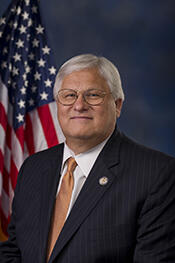
Here you will find contact information for Representative Kenny Marchant, including email address, phone number, and mailing address.
| Name | Kenny Marchant |
| Position | Representative |
| State | Texas |
| District | 24 |
| Party | Republican |
| Status | Former Representative |
| Term Start | January 4, 2005 |
| Term End | January 3, 2021 |
| Terms Served | 8 |
| Born | February 23, 1951 |
| Gender | Male |
| Bioguide ID | M001158 |
About Representative Kenny Marchant
Kenny Ewell Marchant (born February 23, 1951) is an American politician who served as a U.S. Representative from Texas in the United States Congress from 2005 to 2021. A member of the Republican Party, he represented Texas’s 24th congressional district, encompassing several suburban areas around Dallas and Fort Worth. Over eight consecutive terms in office, he participated in the legislative process during a significant period in American history, representing the interests of his constituents and contributing to national debates on fiscal policy, taxation, and government oversight.
Marchant was born in Bonham, Fannin County, Texas, and grew up in Carrollton, a suburb of Dallas. He graduated from R. L. Turner High School in Carrollton before attending Southern Nazarene University in Bethany, Oklahoma. At Southern Nazarene, he earned a degree in business administration, an academic background that would later inform his work on financial and economic issues in public office. Following college, Marchant entered the private sector as a real estate developer and owned a homebuilding company, gaining experience in business management, property development, and local economic growth prior to embarking on a political career.
Marchant’s public service began at the municipal level in Carrollton. He served on the Carrollton City Council from 1980 to 1984, holding a nonpartisan position in city government during a period of suburban expansion in the Dallas area. In 1984 he was elected mayor of Carrollton, also a nonpartisan office, and served until 1986. In these roles he dealt with issues typical of fast-growing communities, including infrastructure, zoning, and local services, and he established himself as a prominent figure in North Texas civic life.
In 1987, Marchant was elected to the Texas House of Representatives, where he served until 2004. Over nine terms in the Texas House, he developed a reputation as a fiscal conservative and an advocate for financial and banking reform. He served three terms as chairman of the Committee on Financial Institutions, where he pushed for legislation that reorganized and modernized the Texas Banking Code. His colleagues in the Republican Party elevated him to chairman of the Texas House Republican Caucus in 2002, reflecting his influence within the state legislature. His work earned him recognition in 2004, when Texas Monthly named him a “Top Ten Legislator” and the Texas Municipal League honored him as “Legislator of the Year” for his contributions to municipal and state policy.
Marchant entered national politics amid a major redistricting of Texas congressional boundaries. During the 2003 Texas redistricting, the 24th Congressional District, long represented by 13-term Democrat Martin Frost, was substantially reconfigured to be more favorable to Republican candidates. The district shed much of its territory in Arlington and Fort Worth, traditionally more Democratic areas, and gained more suburban, Republican-leaning communities around Dallas. Political analysts noted that, had the redrawn district existed in the 2000 presidential election, George W. Bush would have carried it with approximately 68 percent of the vote. Marchant ran for this reconfigured 24th District and was elected to Congress in 2004, taking office on January 3, 2005. He was reelected in 2006 with about 60 percent of the vote and in 2008 with approximately 56 percent, solidifying his position as a Republican representative from the Dallas–Fort Worth suburbs.
During his eight terms in the U.S. House of Representatives, Marchant served on several key committees and caucuses. He was a member of the powerful Committee on Ways and Means, where he served on the Subcommittee on Oversight and the Subcommittee on Select Revenue Measures, focusing on tax policy, revenue, and oversight of federal agencies. He also served on the Committee on Ethics, where he held the position of ranking member. In earlier Congresses, including the 110th Congress, he served on the House Committee on Financial Services, the Committee on Education and Labor, and the Committee on Oversight and Government Reform, reflecting his longstanding interest in financial regulation, education policy, and government accountability. Marchant was also active in several caucuses, including the Republican Study Committee, the Tea Party Caucus, the U.S.-Japan Caucus, and, beginning in 2014, the Friends of Wales Caucus.
Ideologically, Marchant billed himself as a staunch conservative and worked closely with George W. Bush during Bush’s tenure as governor of Texas. His legislative priorities in Congress emphasized reducing the federal deficit and limiting government spending through fiscal conservative policies. He supported major Republican tax and budget initiatives, including voting in 2017 for the Tax Cuts and Jobs Act, which significantly revised the federal tax code. While generally aligned with his party, he occasionally broke with Republican leadership, as when he supported an increase in the federal minimum wage. Marchant was a vocal critic of expansive environmental and climate proposals, expressing opposition in 2019 to the proposed “Green New Deal” resolution, which he argued would cost up to $93 trillion without, in his view, materially affecting the global climate.
Marchant’s congressional record also reflected his engagement with contentious national political issues. He cosponsored H.R. 1503, a bill to amend the Federal Election Campaign Act of 1971 to require presidential candidates to submit a copy of their birth certificate and supporting documentation with their campaign committee’s statement of organization. The measure drew national attention, with observers noting its connection to fringe efforts questioning President Barack Obama’s birthplace during the 2008 election. On December 18, 2019, Marchant voted against both articles of impeachment against President Donald J. Trump; all 195 Republicans voting in the House opposed the impeachment articles. In December 2020, he was among 126 Republican members of the House who signed an amicus brief in support of Texas v. Pennsylvania, a lawsuit filed at the United States Supreme Court contesting the results of the 2020 presidential election in which Joe Biden defeated President Trump. The Supreme Court declined to hear the case, ruling that Texas lacked standing under Article III of the Constitution to challenge how other states conducted their elections.
Over the course of his congressional career, Marchant’s electoral margins reflected both the Republican tilt of his district and the broader political shifts in the Dallas–Fort Worth suburbs. He won his seventh term in the general election of November 8, 2016, receiving 154,845 votes (56.2 percent) to Democrat Jan McDowell’s 108,389 votes (39.3 percent), with two other candidates sharing the remaining 4.5 percent. In the 2018 general election, he narrowly secured his eighth term, winning 133,317 votes (50.6 percent) to McDowell’s 125,231 votes (47.5 percent), with Libertarian candidate Mike Kolls receiving 4,870 votes (1.8 percent). The 3.1 percent margin in 2018 marked a significant decline from his 16.9 percent margin over the same Democratic opponent in 2016, signaling increasing competitiveness in the district.
On August 5, 2019, Marchant announced that he would not seek re-election to Congress in 2020, bringing his sixteen-year tenure in the U.S. House to a close at the end of the 116th Congress. He left office on January 3, 2021, and was succeeded by fellow Republican Beth Van Duyne, who won the election to represent Texas’s 24th congressional district. After his departure from Congress, Marchant remained identified with the conservative movement in Texas and with the legacy of the suburban Republican politics that had shaped his career.
Marchant is married to Donna Marchant, and the couple has four children and seven grandchildren. They reside in Coppell, a suburb of Dallas located within the region he long represented in public office. His family has remained active in local politics; his son Matthew Marchant served as mayor of Carrollton, Texas, continuing the family’s involvement in municipal governance in the Dallas–Fort Worth area.