Representative Kent Ronald Hance
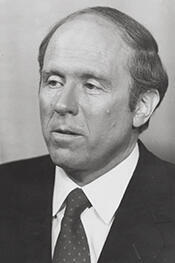
Here you will find contact information for Representative Kent Ronald Hance, including email address, phone number, and mailing address.
| Name | Kent Ronald Hance |
| Position | Representative |
| State | Texas |
| District | 19 |
| Party | Democratic |
| Status | Former Representative |
| Term Start | January 15, 1979 |
| Term End | January 3, 1985 |
| Terms Served | 3 |
| Born | November 14, 1942 |
| Gender | Male |
| Bioguide ID | H000144 |
About Representative Kent Ronald Hance
Kent Ronald Hance (born November 14, 1942) is an American politician, lawyer, lobbyist, and academic administrator who served as a Democratic Representative from Texas in the United States Congress from 1979 to 1985 and later became Chancellor of the Texas Tech University System. He is widely noted as the only person to defeat future President George W. Bush in an election, having done so in the 1978 U.S. House of Representatives race for Texas’s 19th Congressional District, which launched his three-term congressional career representing West Texas.
Hance was born in Dimmitt, Castro County, Texas, and was raised in the Texas Panhandle. He attended Texas Tech University in Lubbock, where he earned a Bachelor of Business Administration degree. He subsequently studied law at the University of Texas School of Law in Austin, receiving his Juris Doctor and gaining admission to the bar. His early legal career included private practice in Texas, where he developed a specialization in business and regulatory matters that would later inform his legislative and lobbying work.
Before his election to Congress, Hance became active in Texas politics and public service. He served in the Texas State Senate, representing a largely rural West Texas district, where he focused on issues important to agriculture, energy, and higher education. His work in the state legislature helped establish his reputation as a conservative Democrat attuned to the interests of his region, and it provided the political base from which he successfully sought federal office in the late 1970s.
In 1978, Hance ran as a Democrat for the U.S. House of Representatives from Texas’s 19th District. In that election he defeated Republican candidate George W. Bush, then a young businessman from Midland, marking the only electoral defeat of Bush’s political career. Hance took office on January 3, 1979, and served three consecutive terms in the House of Representatives until January 3, 1985. During his tenure in Congress, he participated in the legislative process at a time of significant national change, including the transition from the Carter to the Reagan administrations. Representing a predominantly agricultural and energy-producing region, he advocated for policies affecting farmers, ranchers, and the oil and gas industry, and he worked to secure federal support for West Texas infrastructure and higher education.
After leaving Congress in 1985, Hance changed his party affiliation from Democrat to Republican, reflecting the broader political realignment occurring in Texas and the South during the 1980s. He sought statewide office as a Republican candidate for governor of Texas, running in the Republican primary in both 1986 and 1990. In each of those campaigns he was unsuccessful in securing the party’s nomination, but his gubernatorial bids kept him active in state politics and maintained his prominence in Texas public life. Alongside his political activities, he continued to practice law and became a well-known lobbyist, representing business and institutional clients before state and federal bodies.
Hance later returned to his alma mater in a leadership capacity, becoming Chancellor of the Texas Tech University System. In that role he oversaw Texas Tech University in Lubbock, the Texas Tech University Health Sciences Center, and Angelo State University in San Angelo, Texas. As chancellor, he was responsible for system-wide administration, fundraising, legislative relations, and strategic planning, working to expand enrollment, research activity, and the physical footprint of the institutions under his authority. His tenure contributed to the growth and increased visibility of the Texas Tech University System within Texas and nationally.
In addition to his formal offices, Hance has remained engaged in public affairs through legal practice, lobbying, public speaking, and appearances on national media, including C‑SPAN. His congressional and political papers, covering the years 1953–1984 and undated materials, are preserved in the Southwest Collection/Special Collections Library at Texas Tech University, providing a documentary record of his legislative career and his role in Texas and national politics.