Representative Kevin Yoder
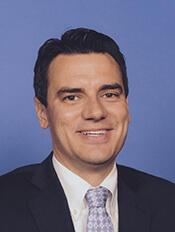
Here you will find contact information for Representative Kevin Yoder, including email address, phone number, and mailing address.
| Name | Kevin Yoder |
| Position | Representative |
| State | Kansas |
| District | 3 |
| Party | Republican |
| Status | Former Representative |
| Term Start | January 5, 2011 |
| Term End | January 3, 2019 |
| Terms Served | 4 |
| Born | January 8, 1976 |
| Gender | Male |
| Bioguide ID | Y000063 |
About Representative Kevin Yoder
Kevin Wayne Yoder (born January 8, 1976) is an American lawyer and Republican politician who represented Kansas’s 3rd congressional district in the United States House of Representatives from January 3, 2011, to January 3, 2019. Before his election to Congress, he served four terms in the Kansas House of Representatives, representing the 20th district from 2003 to 2011. Over the course of his public career, Yoder participated actively in the legislative process at both the state and federal levels, holding key appropriations and leadership roles and seeking to influence fiscal, budgetary, and homeland security policy.
Yoder was born and raised on a grain and livestock farm in Yoder, Kansas, a small farming community outside Hutchinson. He is the son of Susan Elizabeth Peck (née Alexander) and Wayne E. Yoder, and his ancestry includes Northern Irish, German, and English roots. Growing up in a rural setting, he was exposed early to the agricultural and small-business concerns that would later inform parts of his political agenda. He attended Hutchinson High School before enrolling at the University of Kansas, where he began to build a record of student leadership and political engagement.
At the University of Kansas, Yoder graduated in 1999 with a dual major in English and political science. During his undergraduate years he served as KU Student Body President, president of the Kansas Union Memorial Corporation Board of Directors, and as a board member of the KU Athletics Corporation. He was a member of the Lambda Chi Alpha fraternity, serving as chapter president; in 2012 he received the fraternity’s Order of Achievement award in recognition of his professional accomplishments. While at KU, he interned with the Kansas State Legislature, gaining early exposure to the legislative process. Yoder went on to earn a J.D. from the University of Kansas School of Law in 2002, where he served for two years as Student Bar Association President and later joined the KU Law School Board of Governors. He was also selected as a member of the statewide leadership development program Leadership Kansas, graduating in 2007.
Following law school, Yoder began his legal career as a law clerk with the firm Payne and Jones from 2000 to 2001, overlapping his final year of legal studies. In 2001 he served as a special assistant in the U.S. Department of Defense’s Office of Counternarcotics, gaining experience in federal policy and national security–related issues. He then joined the small Olathe law firm Speer and Holliday LLP as an associate and became a partner in 2005. Yoder has been a member of the Kansas Bar Association and the American Council of Young Political Leaders, and he has served on the board of directors of the Johnson County Bar Association, reflecting his continued engagement with the legal profession alongside his political work.
Yoder entered elective office when he was first elected to the Kansas House of Representatives from the 20th district on January 13, 2003, succeeding Gerry Ray. The district includes portions of Overland Park and Leawood in Johnson County, part of the Kansas City metropolitan area. He was subsequently re-elected three times and served in the state legislature until 2011. During his tenure, Yoder became chair of the powerful House Appropriations Committee and also served on the Judiciary Committee from 2003 through 2011. As Appropriations chair, he was responsible for balancing the state budget, cutting government spending, opposing tax increases, and allocating more than $13 billion in state revenue to public schools, universities, prisons, social services, and highways. In March 2010, the committee introduced a budget plan under his leadership, but the proposal was defeated in May 2010 by a bipartisan coalition of moderate Republicans and Democrats. He also held leadership roles on the Legislative Budget Committee, serving as chair, and participated in broader fiscal deliberations in the legislature.
On December 15, 2009, Yoder announced his candidacy for the open seat in Kansas’s 3rd congressional district in the U.S. House of Representatives, following the retirement of Democratic Representative Dennis Moore. In the Republican primary held on August 3, 2010, he won with 45 percent of the vote in a crowded field that included former State Representative Patricia Lightner, Dave King, Garry R. Klotz, Daniel Gilyeat, Jerry M. Malone, Craig McPherson, John Rysavy, and Jean Ann Uvodich. His campaign received the endorsement of The Kansas City Star, which cited his experience on the Kansas House Appropriations Committee and his emphasis on controlling government spending and using public funds to spur economic growth. He was also endorsed by the NRA Political Victory Fund. During the general election campaign, Yoder drew attention for creating the website stephenemoore.com in the name of his Democratic opponent, Stephene Moore, an obstetrics nurse and the wife of retiring Congressman Dennis Moore. The site was used to question her campaign and outline policy differences. Moore’s campaign filed a complaint with the Federal Election Commission, arguing that an “unauthorized committee” could not use a candidate’s name in a project that clearly opposed that candidate. The FEC dismissed the complaint on a 3–2 party-line vote, with Republican commissioners voting in Yoder’s favor and Democratic commissioners voting against. In the November 2010 general election, Yoder won with 59 percent of the vote, defeating Democratic nominee Stephene Moore and Libertarian nominee Jasmin Talbert, and took office on January 3, 2011.
During his four terms in Congress, from 2011 to 2019, Yoder represented Kansas’s 3rd district, which includes much of the Kansas City metropolitan area on the Kansas side. He served throughout the 112th, 113th, 114th, and 115th Congresses as a member of the House Committee on Appropriations, playing a central role in federal spending and budgetary matters. In the 112th Congress, he served on the Subcommittee on Commerce, Justice, Science, and Related Agencies; the Subcommittee on Financial Services and General Government; and the Subcommittee on Military Construction, Veterans Affairs, and Related Agencies. In the 113th Congress, he continued on Appropriations and served on the Subcommittee on Financial Services and General Government; the Subcommittee on Agriculture, Rural Development, Food and Drug Administration, and Related Agencies, where he was vice chair; and the Subcommittee on State, Foreign Operations, and Related Programs. In the 114th Congress, he remained on Appropriations, serving on the Subcommittee on Financial Services and General Government; the Subcommittee on Agriculture, Rural Development, Food and Drug Administration, and Related Agencies; and the Subcommittee on Transportation, Housing and Urban Development, and Related Agencies. In the 115th Congress, he continued his Appropriations work and became chairman of the Subcommittee on Homeland Security in May 2018, while also serving on the Subcommittee on Financial Services and General Government and the Subcommittee on Agriculture, Rural Development, Food and Drug Administration, and Related Agencies. He was a member of both the Republican Study Committee and the Republican Main Street Partnership, reflecting ties to conservative as well as more centrist Republican factions.
Yoder’s electoral record in Congress reflected both periods of strong support and increasing competitiveness in his district. In 2012, he ran for re-election without opposition in the Republican primary and was again endorsed by The Kansas City Star. In the general election he faced Libertarian nominee Joel Balam, a college professor, and won with 68 percent of the vote. In 2014, he again faced no primary opposition and defeated Democratic nominee Kelly Kultala, a former member of the Kansas Senate, with 60 percent of the vote. During the 2014 election cycle, “Securities and Investment” was the top contributing industry to his campaign committee and leadership PAC, and according to OpenSecrets he received $53,257 from the payday-loan industry. In 2016, Yoder endorsed Donald Trump for president in May and was challenged in the Republican primary by retired U.S. Army lieutenant colonel Greg Goode of Louisburg, who ran on a far-right platform. Yoder defeated Goode by a margin of 64 to 36 percent. In the November 2016 general election, he faced Democratic nominee Jay Sidie of Mission Woods; an October 19, 2016, poll commissioned by the Democratic Congressional Campaign Committee showed Sidie four points behind, but Yoder ultimately prevailed by 10 points, winning 51 percent of the vote to Sidie’s 41 percent. Through the first three quarters of 2017, Yoder had raised more money than any other congressional candidate in Kansas history at that point in an election cycle, underscoring his status as a major fundraiser.
Within Congress, Yoder cultivated a reputation for involvement in bipartisan and issue-focused caucuses as well as for his appropriations work. He served as co-chairman of the Bipartisan Congressional Civility Caucus, the Cancer Caucus, the Deaf Caucus, and the Beef Caucus. In 2012, he and Missouri Democratic Representative Emanuel Cleaver jointly received the Consensus Civility Award for their efforts to foster respectful, bipartisan cooperation across party lines. In 2017, the two co-authored a guest column for CNN calling for unity in the wake of the Congressional baseball shooting that left House Majority Whip Steve Scalise gravely injured. Yoder’s chairmanship of the Appropriations Subcommittee on Homeland Security in the 115th Congress placed him at the center of debates over border security, immigration enforcement, and funding for the Department of Homeland Security, further elevating his profile on national security and appropriations issues.
Yoder’s congressional service concluded after the 2018 election cycle, a period marked by heightened political polarization and shifting electoral dynamics in suburban districts. In the November 2018 general election, he was defeated in his bid for a fifth term by Democrat Sharice Davids, who raised nearly $1 million more than Yoder. Davids won 53.3 percent of the vote to Yoder’s 44.2 percent, with Libertarian candidate Chris Clemmons receiving the remaining 2.5 percent. Yoder’s defeat ended his tenure in the U.S. House of Representatives on January 3, 2019, after eight years of service during a significant period in American political history, in which he represented the interests of his Kansas constituents while playing an active role in federal budgetary and homeland security policymaking.