Senator Key Pittman
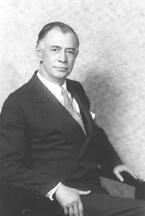
Here you will find contact information for Senator Key Pittman, including email address, phone number, and mailing address.
| Name | Key Pittman |
| Position | Senator |
| State | Nevada |
| Party | Democratic |
| Status | Former Representative |
| Term Start | April 7, 1913 |
| Term End | January 3, 1941 |
| Terms Served | 5 |
| Born | September 12, 1872 |
| Gender | Male |
| Bioguide ID | P000372 |
About Senator Key Pittman
Key Denson Pittman (September 19, 1872 – November 10, 1940) was a United States senator from Nevada and a member of the Democratic Party, serving from 1913 until his death in 1940. Over the course of five full terms in office, he became one of the Senate’s most influential figures, eventually serving as president pro tempore and chairman of the Committee on Foreign Relations. His long tenure in Congress coincided with a transformative period in American history, including World War I, the Great Depression, and the early years of World War II, during which he played a central role in shaping national and international policy.
Pittman was born in Vicksburg, Mississippi, on September 12, 1872, the son of William Buckner Pittman and Katherine Key Pittman. He grew up in the post–Civil War South and was educated by private tutors before attending Southwestern Presbyterian University in Clarksville, Tennessee. His family included a younger brother, Vail M. Pittman, who would later become governor of Nevada, underscoring the family’s lasting political influence in that state. After his formal studies, Pittman read law and was admitted to the bar, beginning a legal career that would later underpin his work as a legislator.
In 1897, drawn by the opportunities of the Klondike Gold Rush, Pittman went to the Yukon, where he worked as a miner until 1901. This experience in the mining camps of the North American frontier exposed him to the economic and social issues of resource development and labor that would later inform his political positions. In 1902 he moved to Tonopah, Nevada, then a booming mining town, where he resumed the practice of law. Pittman quickly became active in civic and promotional efforts for his adopted state, representing Nevada at the St. Louis Exposition, the Lewis and Clark Centennial Exposition, and the National Irrigation Congress. These roles helped establish his reputation as an advocate for Nevada’s economic development and its interests in mining, water, and the broader issues of the American West.
Pittman’s entry into electoral politics coincided with the national movement to reform the method of electing United States senators. At the time, senators were chosen by state legislatures, but a number of states, including Nevada, began holding popular advisory elections to pressure legislatures to ratify the people’s choice. In 1910 Nevada held such a popular vote for the Senate, in which Pittman was the Democratic nominee; he lost to the Republican incumbent, George S. Nixon. After Nixon’s death on June 5, 1912, a special election was called for November of that year. Pittman ran again, this time against Republican interim appointee William A. Massey, and won. As was customary in these pre–Seventeenth Amendment contests, the Nevada Legislature then formally elected him in accordance with the popular result. The Seventeenth Amendment, providing for direct election of senators, was ratified in 1913, and Pittman subsequently secured full terms in 1916, 1922, 1928, and 1934. He was re-elected again in 1940, extending a Senate career that spanned nearly three decades.
During his long service in Congress, Pittman participated actively in the legislative process and represented the interests of his Nevada constituents while also rising to positions of national prominence. He served on the Committee on Territories and the Committee on Industrial Expositions, reflecting his early involvement in western development and national promotional efforts. He became particularly associated with silver and mining issues, and one of the early major measures bearing his name was the Pittman Act of 1918, which dealt with silver coinage and reflected both Nevada’s mining interests and broader monetary policy debates of the era. Over time, Pittman emerged as a key Senate insider, deeply involved in the Democratic Party’s legislative strategy and in the shaping of domestic and foreign policy.
Pittman’s most influential years came during the presidency of Franklin D. Roosevelt. From 1933 until his death in 1940, he served as chairman of the powerful Senate Committee on Foreign Relations. In this capacity, and after extensive consultation with President Roosevelt, he played a central role in the evolution of American neutrality policy on the eve of World War II. He authored the Pittman Act that formed the basis of the Neutrality Act of November 1939, which allowed nations at war to purchase war materiel from the United States on a cash-and-carry basis. This legislation marked a significant shift from strict neutrality toward a policy that favored the Allies while keeping the United States formally out of the conflict. During these same years, Pittman also held the post of president pro tempore of the Senate, placing him high in the line of presidential succession and underscoring his stature among his colleagues.
In addition to his work on foreign policy and monetary issues, Pittman left a lasting legacy in conservation and wildlife management. He co-sponsored the Pittman–Robertson Federal Aid in Wildlife Restoration Act of 1937, which established a formula for the federal sharing of revenues from excise taxes on firearms and ammunition with the states for the purpose of wildlife restoration and habitat conservation. This program, still in effect, transformed wildlife management across the country by providing a stable funding source for state conservation efforts. In recognition of his contributions, the Key Pittman Wildlife Management Area near Hiko, Nevada, encompassing Frenchy and Nesbitt lakes, was named in his honor. Additional places bearing his name include the Pittman section of the Alaska Railroad, now associated with the community of Meadow Lakes west of Wasilla, Alaska, where Pittman Road runs north from the George Parks Highway, as well as an unofficially named Pittman area in Henderson, Nevada, and the Pittman Wash, a natural drainage with an accompanying walking and biking trail.
Pittman’s final campaign and death became the subject of enduring political lore. It was long rumored, falsely, that he had died before the 1940 election and that Democratic leaders kept his body in a bathtub full of ice at Tonopah’s Mizpah Hotel until after he was re-elected so that Governor Edward P. Carville, a fellow Democrat, could appoint a successor. Research by former Nevada State Archivist Guy Rocha clarified that while this story was untrue, the reality was “just as disreputable.” Pittman suffered a severe heart attack shortly before the election on November 5, 1940, and two physicians informed his aides that his death was imminent. To avoid influencing the election, party officials told the press that the senator was merely hospitalized for exhaustion and that his condition was not serious. Pittman died on November 10, 1940, at Washoe General Hospital in Reno, Nevada, after having been re-elected to another term. He was buried in Masonic Memorial Gardens in Reno. In 1941 his widow, the former Mimosa Gates, donated his papers to the Library of Congress; she withdrew them in 1942, but the Gates family returned them to the Library in 1954, ensuring that the documentary record of his long Senate career would be preserved for future study.