Representative King Swope
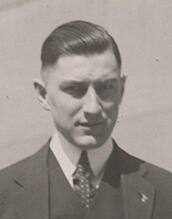
Here you will find contact information for Representative King Swope, including email address, phone number, and mailing address.
| Name | King Swope |
| Position | Representative |
| State | Kentucky |
| District | 8 |
| Party | Republican |
| Status | Former Representative |
| Term Start | May 19, 1919 |
| Term End | March 3, 1921 |
| Terms Served | 1 |
| Born | August 10, 1893 |
| Gender | Male |
| Bioguide ID | S001129 |
About Representative King Swope
King Swope (August 10, 1893 – April 23, 1961) was an American attorney, jurist, and Republican politician who served as a U.S. Representative from Kentucky from 1919 to 1921. Over the course of his public career he held a series of influential legal and political positions at the county, state, and national levels, and was a prominent figure in Kentucky Republican politics during the interwar period.
Swope was born in Danville, Boyle County, Kentucky, on August 10, 1893. He attended the common schools in his hometown before enrolling at Centre College in Danville, a leading liberal arts institution in the state. He graduated from Centre College in 1914. Pursuing a legal career, he went on to study at the law department of the University of Kentucky at Lexington, from which he graduated in 1916. He was admitted to the bar in 1915, prior to completing his formal legal education, and commenced the practice of law in Lexington, Kentucky, establishing the professional base from which he would enter public life.
With the United States’ entry into World War I, Swope joined the armed forces and served in the U.S. Army as a captain of infantry. His military service during the First World War coincided with the formative years of his legal career and helped to establish his public reputation in Kentucky. After the war, he returned to Lexington and resumed his legal practice, while increasingly engaging in Republican Party activities and state politics.
Swope’s congressional service began during a significant period in American history, in the aftermath of World War I and during the early years of the postwar adjustment. A member of the Republican Party, he was elected to the U.S. House of Representatives by special election to the Sixty-sixth Congress to fill the vacancy caused by the death of Representative Harvey Helm. He served from August 1, 1919, to March 3, 1921, representing his Kentucky district in the House of Representatives. During his single term in Congress, Swope participated in the legislative process and represented the interests of his constituents as the nation confronted issues of demobilization, economic transition, and evolving domestic policy. He was an unsuccessful candidate for reelection to the Sixty-seventh Congress in 1920, which ended his tenure in the national legislature after one term in office.
Following his service in Congress, Swope continued to play an active role in Kentucky public affairs. In 1919 he was appointed aide-de-camp, with the rank of colonel, on the staff of Governor Edwin P. Morrow, reflecting his standing within the state’s Republican leadership. He resumed the practice of law in Lexington and became increasingly involved in party organization. From 1928 to 1931 he served as chairman of the Republican executive committee of Fayette County, Kentucky, helping to direct local party strategy and campaigns during a period of shifting political alignments.
Swope’s legal and judicial career advanced significantly in the 1930s. He was appointed, and subsequently elected, a judge of the circuit court of the Twenty-second Judicial District of Kentucky, serving from 1931 to 1940. Concurrently, he was a member of the judicial council of Kentucky from 1931 to 1940, participating in efforts to oversee and improve the administration of justice in the state. His prominence on the bench and within the Republican Party led to his selection as the Republican nominee for Governor of Kentucky in both 1935 and 1939; he was unsuccessful in each of these statewide campaigns but remained a central figure in the party.
In addition to his judicial responsibilities and gubernatorial candidacies, Swope was active in national Republican politics. He served as a delegate to the Republican National Conventions in 1936, 1940, and 1944, participating in the selection of the party’s presidential nominees during the New Deal and World War II eras. He also chaired the Republican State convention in 1936, underscoring his influence within Kentucky’s Republican organization and his role in shaping party platforms and leadership at the state level.
King Swope spent his later years in Lexington, continuing his legal work and maintaining his connections to public life. He died in Lexington, Kentucky, on April 23, 1961. He was interred in Lexington Cemetery, a resting place for many of the city’s notable figures, closing a career that spanned military service, national legislative office, judicial leadership, and sustained engagement in Republican politics at both the state and national levels.