Senator Kinsley Scott Bingham
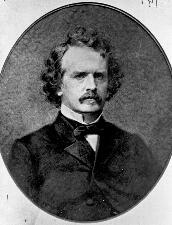
Here you will find contact information for Senator Kinsley Scott Bingham, including email address, phone number, and mailing address.
| Name | Kinsley Scott Bingham |
| Position | Senator |
| State | Michigan |
| Party | Republican |
| Status | Former Representative |
| Term Start | December 6, 1847 |
| Term End | December 31, 1861 |
| Terms Served | 3 |
| Born | December 16, 1808 |
| Gender | Male |
| Bioguide ID | B000473 |
About Senator Kinsley Scott Bingham
Kinsley Scott Bingham (December 16, 1808 – October 5, 1861) was a U.S. representative, a U.S. senator, and the 11th governor of Michigan, serving as the first Republican governor in state history. A prominent political figure in the mid-nineteenth century, he served in both houses of Congress and held the governorship during a formative period for Michigan and for the emerging Republican Party. His congressional service occurred during a significant period in American history, and as a member of the Senate he participated in the democratic process and represented the interests of his constituents during three terms in office.
Bingham, whose first name is sometimes spelled “Kingsley,” was born to the farmer family of Calvin and Betsy (Scott) Bingham in Camillus, Onondaga County, New York. He attended the common schools and studied law in Syracuse, New York. In 1833, while still in New York, he married Margaret Warden, who had recently emigrated from Scotland with her brother Robert Warden and his family. That same year, Bingham and his wife moved west to the Michigan Territory, settling in Green Oak Township, where he was admitted to the bar and began a private law practice.
In Michigan, Bingham combined legal work with agricultural pursuits and quickly became active in local public affairs. In 1834, his only child with Margaret, Kinsley W. Bingham (1838–1908), was born, and his wife died four days after the birth. He engaged in farming and held a number of local offices, including justice of the peace, postmaster, and first judge of the probate court of Livingston County. In 1839 he married Mary Warden, the younger sister of his first wife, and in 1840 their only child, James W. Bingham (1840–1862), was born. His growing prominence in the community led naturally to higher office.
Bingham entered state politics as a member of the Michigan State House of Representatives in 1837, only months after Michigan achieved statehood. He was reelected four times and became one of the leading figures in the legislature, serving as speaker of the house in 1838–1839 and again in 1842. His legislative experience and reputation as a capable organizer and advocate for agrarian interests laid the groundwork for his later national career.
In 1846, Bingham was elected as a Democratic Representative from Michigan’s 3rd congressional district to the Thirtieth and Thirty-first Congresses, serving in the U.S. House of Representatives from March 4, 1847, to March 3, 1851. During his House service he was chairman of the Committee on Expenditures in the Department of State in the Thirty-first Congress. He was instrumental in securing approval for the construction of the Beaver Island Head Lighthouse on the south end of Beaver Island in Lake Michigan, an important aid to navigation on the Great Lakes. Bingham was strongly opposed to the expansion of slavery and was one of the minority of Democrats who supported the Wilmot Proviso, which sought to prohibit slavery in territory acquired from Mexico. He was not a candidate for re-election in 1850 and, upon leaving Congress, resumed agricultural pursuits. His antislavery convictions led him to affiliate with the Free Soil Party and, as the political realignment of the 1850s progressed, he later became a Republican.
In 1854, Bingham was elected as the 11th governor of Michigan and the first Republican to hold that office, and he was re-elected in 1856. He is counted among the first Republicans to be elected governor of any state and became widely known as the “farmer-Governor” of Michigan. During his four years in office, he was instrumental in establishing the Agricultural College of the State of Michigan—today Michigan State University—as well as other educational institutions, including the State Reform School. His administration sanctioned a personal liberty law designed to protect the rights of alleged fugitive slaves within the state, authorized legislation regulating the lumber industry, and oversaw the creation of several new counties and villages. In 1856 he also served as a delegate from Michigan to the Republican National Convention that nominated John C. Frémont for President of the United States.
Bingham’s statewide prominence and firm antislavery stance carried him to higher national office. He was elected as a Republican to the United States Senate in 1858 and served in the Thirty-sixth and Thirty-seventh Congresses from March 4, 1859, until his death on October 5, 1861. During his Senate service, which spanned the secession crisis and the opening months of the Civil War, he was chairman of the Committee on Enrolled Bills in the Thirty-seventh Congress. He campaigned actively for the election of Abraham Lincoln to the presidency in 1860, aligning himself with the Republican Party’s national program against the expansion of slavery and in favor of Union preservation.
Bingham died in office at age fifty-two in Green Oak, Michigan, on October 5, 1861, while serving as a United States senator. He was originally interred in a private family graveyard in Livingston County and was later reinterred at Old Village Cemetery in Brighton, Michigan. His memory is reflected in the naming of three Michigan townships—Bingham Township in Clinton County, Bingham Township in Huron County, and Bingham Township in Leelanau County—and in a portrait of him that hangs in the Michigan State Capitol.