Representative Kit Francis Clardy
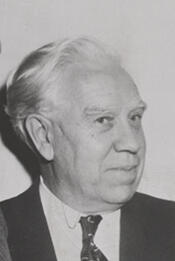
Here you will find contact information for Representative Kit Francis Clardy, including email address, phone number, and mailing address.
| Name | Kit Francis Clardy |
| Position | Representative |
| State | Michigan |
| District | 6 |
| Party | Republican |
| Status | Former Representative |
| Term Start | January 3, 1953 |
| Term End | January 3, 1955 |
| Terms Served | 1 |
| Born | June 17, 1892 |
| Gender | Male |
| Bioguide ID | C000416 |
About Representative Kit Francis Clardy
Kit Francis Clardy (June 17, 1892 – September 5, 1961) was an American politician and attorney from the state of Michigan who served one term as a Republican Representative in the United States House of Representatives from 1953 to 1955. A staunch anti-communist, he was widely known as “Michigan’s McCarthy,” a reference to his close affinity with the methods and views of U.S. Senator Joseph McCarthy during the early Cold War era.
Clardy was born in Butler, Bates County, Missouri, on June 17, 1892. During his childhood, he moved with his family from Butler to Kansas City, Missouri, and later, in 1907, to a farm near Liberty, Missouri. He attended public schools in Butler, Kansas City, and Liberty, reflecting a largely Midwestern upbringing. He pursued higher education at William Jewell College in Liberty, Missouri, before deciding on a legal career. Seeking advanced legal training, he enrolled at the University of Michigan Law School in Ann Arbor, from which he graduated in 1925.
In 1925, the same year he completed his legal studies, Clardy was admitted to the bar and began practicing law in Ionia, Michigan, where he worked from 1925 to 1927. His early legal career soon led him into public service at the state level. From 1927 to 1931, he served as assistant attorney general of Michigan, gaining experience in state legal affairs and public administration. He then became a member of the Michigan Public Utilities Commission, serving from 1931 to 1934 and acting as its chairman during part of that tenure. After leaving the commission in 1934, Clardy reentered the private practice of law, continuing to build his professional reputation in Michigan over the following years.
Clardy’s ambition for national office emerged in the post–World War II period. In 1950, he sought the Republican nomination for the U.S. House of Representatives from Michigan’s 6th congressional district but was defeated in the primary by the incumbent, William W. Blackney. Two years later, in 1952, Blackney retired, and Clardy again pursued the Republican nomination. This time he secured the party’s endorsement and went on to defeat Democrat Donald Hayworth in the general election, earning a seat in the 83rd Congress. He served from January 3, 1953, to January 3, 1955, representing his Michigan constituents and contributing to the legislative process during a significant period in American history marked by Cold War tensions and domestic anti-communist sentiment.
During his term in Congress, Clardy became particularly noted for his vigorous anti-communist activities. Sharing Senator Joseph McCarthy’s views and tactics, he was an active participant in the work of the House Committee on Un-American Activities (HUAC). In November 1953, he conducted HUAC hearings in Lansing, Michigan, where the committee subpoenaed several University of Michigan faculty members, including mathematics instructor Chandler Davis, pharmacology professor Mark Nickerson, and zoology professor Clement Markert, as part of investigations into alleged communist affiliations in academic institutions. In May 1954, Clardy presided over another highly controversial HUAC hearing in Flint, Michigan. Reports from the time stated that he not only harshly confronted witnesses but also used rhetoric that inflamed public hostility toward them. He recalled with approval an incident from 1937 in which college students had thrown union organizers for the UAW-CIO into the Red Cedar River, declaring, “I was proud of those kids. They should also have tossed into the river the then Governor, the late Frank Murphy.” Contemporary accounts asserted that Clardy’s conduct contributed to a “lynch spirit” in Flint, where some workers were dragged from automobile plants and beaten, hostile witnesses were evicted from their homes and forced into hiding, and the office of a lawyer representing witnesses was vandalized with red paint.
Clardy’s aggressive anti-communist stance and controversial conduct during HUAC hearings became central features of his public profile and political legacy. In the 1954 general election, he faced a rematch against Democrat Donald Hayworth. Amid growing public unease with the excesses of McCarthyism and criticism of HUAC’s methods, Clardy was defeated by Hayworth and thus failed to secure a second term in Congress. He attempted a political comeback in 1956, seeking the Republican nomination for his former House seat, but lost in the primary to Charles E. Chamberlain. Chamberlain went on to defeat Hayworth in the general election, effectively closing Clardy’s brief but contentious congressional career.
After his electoral defeats, Clardy left Michigan and relocated to California. In 1956 he moved to Palos Verdes Estates, in Los Angeles County, where he resided for the remainder of his life. He lived there quietly, away from the national political spotlight that had defined his years in Congress. Kit Francis Clardy died in Palos Verdes Estates on September 5, 1961. He was interred at Forest Lawn Memorial Park in Glendale, California, closing the life of a figure whose congressional service and participation in anti-communist investigations reflected one of the most charged and controversial periods in mid-twentieth-century American political history.