Representative Kittel Halvorson
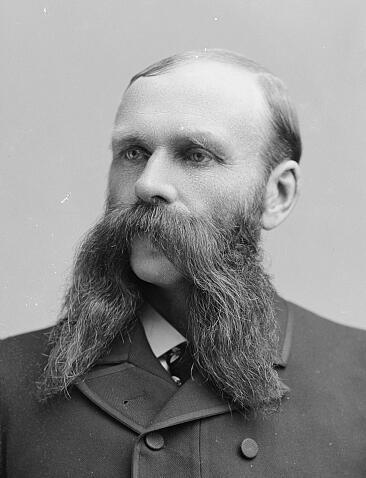
Here you will find contact information for Representative Kittel Halvorson, including email address, phone number, and mailing address.
| Name | Kittel Halvorson |
| Position | Representative |
| State | Minnesota |
| District | 5 |
| Party | Populist |
| Status | Former Representative |
| Term Start | December 7, 1891 |
| Term End | March 3, 1893 |
| Terms Served | 1 |
| Born | December 15, 1846 |
| Gender | Male |
| Bioguide ID | H000094 |
About Representative Kittel Halvorson
Kittel Halvorson (December 15, 1846 – July 12, 1936) was a U.S. Representative from Minnesota and a prominent agrarian politician associated first with the Populist Party and later with the Socialist Party of America. He was born near Tuddal in Hjartdal parish, Telemark, Norway, and in 1848 immigrated to the United States with his parents. The family initially settled near Whitewater in Walworth County, Wisconsin, and later moved within the state to Columbia County and then to Winnebago County. Growing up in rural Wisconsin, Halvorson attended the public schools in Winchester, Wisconsin, receiving a basic education that prepared him for both military service and later public life.
In 1863, during the American Civil War, Halvorson enlisted in Company C of the First Regiment, Wisconsin Heavy Artillery. He served in the Union Army until the close of the war, participating in significant engagements including the Battle of Missionary Ridge and the Battle of Chattanooga. His wartime experience, coming at a young age, exposed him to the broader national conflicts over union, democracy, and economic justice that would later inform his political commitments. After mustering out of service, he returned to civilian life in the Midwest at a time when many veterans were seeking land and new opportunities on the expanding American frontier.
Halvorson moved to Minnesota in November 1865 and homesteaded near Belgrade in Stearns County. There he engaged in agricultural pursuits and stock raising, establishing himself as a farmer in a region heavily dependent on agriculture and vulnerable to fluctuations in commodity prices and credit conditions. His standing in the local community led to a series of township and county offices. He served as justice of the peace from 1870 to 1875, and as chairman of the board of supervisors from 1870 to 1880, positions that placed him at the center of local governance and rural administration. In 1880 he served as township assessor and also began a long tenure as town clerk, holding that office from 1880 to 1891. His experience in these roles gave him practical familiarity with land issues, taxation, and the concerns of small farmers and rural residents.
Building on his local offices, Halvorson entered state-level politics as a member of the Minnesota House of Representatives, serving from 1886 to 1888. His legislative experience in St. Paul coincided with the rise of agrarian protest movements in the Upper Midwest, as farmers organized to challenge railroad rates, monopolistic practices, and tight credit. Aligned with these agrarian interests, Halvorson became associated with the Populist movement, which sought to represent the economic and political grievances of farmers and laborers against entrenched financial and industrial power. His background as a homesteader and local official made him a natural representative of these constituencies.
Halvorson was elected as a member of the Populist Party to the Fifty-second United States Congress, serving as a Representative from Minnesota from March 4, 1891, to March 3, 1893. His single term in the U.S. House of Representatives occurred during a significant period in American history marked by debates over monetary policy, railroad regulation, and the role of the federal government in addressing economic inequality. As a member of the House of Representatives, he participated in the legislative process and represented the interests of his largely rural constituents, contributing to the broader Populist effort to influence national policy. He was an unsuccessful candidate for reelection in 1892 to the Fifty-third Congress, reflecting both the volatility of third-party politics and the challenges faced by Populist candidates in maintaining electoral coalitions.
After leaving Congress, Halvorson resumed agricultural pursuits near Brooten in Stearns County, Minnesota, returning to the farming life that had long anchored his public service. He remained active in Populist politics and served as an alternate delegate to the Populist Party National Convention in 1896, a pivotal gathering in the history of the agrarian revolt and the broader realignment of reform politics at the end of the nineteenth century. His continued involvement underscored his enduring commitment to the economic and political reforms championed by the Populist movement.
In 1900, Halvorson moved westward again, this time to Tewaukon Township in Sargent County, North Dakota, where he engaged in agricultural pursuits. His political views evolved alongside the shifting landscape of American reform movements, and in 1906 he was an unsuccessful candidate for representative from North Dakota on the ticket of the Socialist Party of America. This candidacy reflected his ongoing identification with movements advocating for economic justice, public control of key industries, and expanded rights for working people and farmers. Despite his defeat, he remained part of the broader current of Midwestern radical and reform politics in the early twentieth century.
Halvorson returned to Minnesota in 1910, settling in North Fork and resuming farming there until his retirement in 1924. In his later years he lived quietly, having spent decades in public life at the local, state, and national levels and having participated in several of the major reform movements of his era. Kittel Halvorson died in Havana, North Dakota, on July 12, 1936, closing a life that spanned from the era of Norwegian immigration and the American Civil War through the rise and decline of the Populist and early Socialist movements in the Upper Midwest.