Representative Knud Wefald
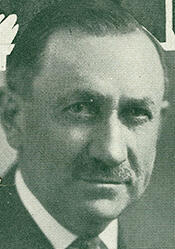
Here you will find contact information for Representative Knud Wefald, including email address, phone number, and mailing address.
| Name | Knud Wefald |
| Position | Representative |
| State | Minnesota |
| District | 9 |
| Party | Farmer-Labor |
| Status | Former Representative |
| Term Start | December 3, 1923 |
| Term End | March 4, 1927 |
| Terms Served | 2 |
| Born | November 3, 1869 |
| Gender | Male |
| Bioguide ID | W000251 |
About Representative Knud Wefald
Knud Magnus Wefald (November 3, 1869 – October 25, 1936) was an American Minnesota Farmer–Labor Party politician who served as a member of the United States House of Representatives from Minnesota’s 9th congressional district from 1923 to 1927. A member of the Farmer-Labor Party, he contributed to the legislative process during two terms in office, participating in the democratic process and representing the interests of his constituents during a significant period in American history.
Wefald was born in Ytre Vefall, Drangedal, in Kragerø, Telemark county, Norway. He attended the local schools and the high school of his native land, receiving the education that would underpin his later public and political work. In 1887 he immigrated to the United States, part of a broader wave of Norwegian migration to the Upper Midwest. After several years in the country, he settled in 1896 in Hawley, Clay County, Minnesota. There he engaged in agricultural pursuits, reflecting the agrarian character of the region, while also managing a partly owned lumber business, combining farming with commercial enterprise.
In Hawley, Wefald quickly became active in local affairs. He served on the village council and was elected council president for multiple terms, holding that office from 1907 to 1912 and again in 1917 and 1918. His leadership at the municipal level coincided with a period of growth and development in small Minnesota communities, and his experience in both agriculture and business informed his approach to local governance. His prominence in Hawley and his involvement in civic life provided a foundation for his entry into state politics.
Wefald advanced to state office as a member of the Minnesota House of Representatives, serving from 1913 to 1915. In the state legislature he aligned with progressive agrarian interests that later coalesced in the Farmer–Labor movement, advocating for the concerns of farmers, workers, and small-town residents. His legislative service at the state level helped establish his reputation as an effective representative of rural Minnesota and prepared him for national office.
In 1922 Wefald was elected on the Farmer-Labor ticket to the United States House of Representatives from Minnesota’s 9th congressional district. He served in the 68th and 69th Congresses from March 4, 1923, to March 3, 1927. During his two terms in Congress, he represented a largely agricultural district and took part in debates and legislation affecting farmers and rural communities at a time marked by post–World War I economic adjustment and growing farm distress. His tenure placed him among the early Farmer–Labor figures to achieve national office, and his work is documented in extracts from the Congressional Record preserved in archival collections. After an unsuccessful campaign for reelection in 1926, he left Congress and resumed his former business pursuits in Minnesota.
Following his congressional service, Wefald remained active in public life and in the Norwegian-American community. From 1929 to 1931 he edited a Norwegian-language newspaper in Fargo, North Dakota, using the press to address issues of interest to Scandinavian immigrants and their descendants in the Upper Midwest. In 1931 and 1932 he served as executive secretary of the Commission of Administration and Finance of Minnesota, a key administrative body concerned with the organization and oversight of state government finances, reflecting his continued engagement with public administration and fiscal policy.
In January 1933 Wefald assumed statewide regulatory office as railroad and warehouse commissioner of Minnesota, a position he held until his death. In that capacity he oversaw matters related to transportation and storage, areas of central importance to a predominantly agricultural state dependent on rail networks and grain handling facilities. He died in Saint Paul, Minnesota, on October 25, 1936, while still in office. His papers are preserved in the collections of the Norwegian-American Historical Association Archives, including an account from 1903 concerning a trip to Norway, poems that he wrote in both Norwegian and English, and materials from his public career, such as extracts from the Congressional Record during his tenure in the House of Representatives.