Representative Kurt Schrader
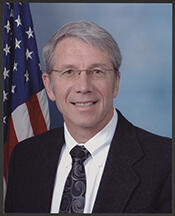
Here you will find contact information for Representative Kurt Schrader, including email address, phone number, and mailing address.
| Name | Kurt Schrader |
| Position | Representative |
| State | Oregon |
| District | 5 |
| Party | Democratic |
| Status | Former Representative |
| Term Start | January 6, 2009 |
| Term End | January 3, 2023 |
| Terms Served | 7 |
| Born | October 19, 1951 |
| Gender | Male |
| Bioguide ID | S001180 |
About Representative Kurt Schrader
Walter Kurt Schrader (born October 19, 1951) is an American politician and veterinarian who served as the U.S. representative for Oregon’s 5th congressional district from January 3, 2009, to January 3, 2023. A member of the Democratic Party, he represented a district that, for most of his tenure, covered much of Oregon’s central coast, the state capital of Salem, many of Portland’s southern suburbs, and a small portion of Portland itself. Over seven terms in the House of Representatives, Schrader participated in the legislative process during a significant period in American history and was known as a moderate to conservative Democrat who frequently broke with his party, earning him the nickname “Manchin of the House.”
Schrader was born in Connecticut and later attended Cornell University, where he received a Bachelor of Arts degree in 1973. While at Cornell, he met fellow student Martha Northam; the two married in 1975. Pursuing a career in animal health, Schrader enrolled at the University of Illinois, where he earned his Doctor of Veterinary Medicine degree in 1977. In 1978, he and his wife moved to Oregon, where he established the Clackamas County Veterinary Clinic in Oregon City. Alongside his professional work as a veterinarian, Schrader became active in local affairs and public service, laying the groundwork for his later political career.
Before entering state-level office, Schrader served for 16 years on the Canby Planning Commission in Clackamas County, Oregon. His first bid for elective office came in 1994, when he ran for the Oregon House of Representatives but lost by 38 votes to Republican Jerry Grisham. Undeterred, he ran again in 1996 and won, defeating Paul Kraxburger. Schrader was reelected to the Oregon House in 1998 and 2000, ultimately serving three terms. In 2002, he sought a seat in the Oregon State Senate, running for the 20th district in southwestern Clackamas County, which included the cities of Barlow, Canby, Gladstone, Johnson City, Oregon City, and parts of Milwaukie. He won a contentious Democratic primary against Oregon House member Kathy Lowe and then faced no Republican opposition in the general election. His wife, Martha Schrader, was the Democratic nominee to succeed him in his former House seat but lost the general election to Wayne Scott. She later served as a Clackamas County commissioner until 2009, when she was appointed by that commission—recusing herself from the vote—to replace her husband in the Oregon State Senate after he left for Congress.
During his tenure in the Oregon Senate, Schrader emerged as an influential budget and oversight legislator. He co-chaired the Joint Ways and Means Committee in the 2003 and 2005 legislative sessions, playing a central role in crafting the state budget, and chaired the Interim Joint Legislative Audit Committee in the 2005 session. These assignments gave him experience in fiscal policy and bipartisan negotiation that would later shape his work in Congress. To prepare for his transition to the U.S. House of Representatives, Schrader resigned from the Oregon Senate effective December 17, 2008, after more than a decade in the Oregon Legislative Assembly, where he had served in both houses from 1997 to 2008.
In May 2008, Schrader won the Democratic nomination for Oregon’s 5th congressional district for the seat being vacated by Representative Darlene Hooley. In the November general election, he defeated Republican nominee Mike Erickson with 54 percent of the vote to Erickson’s 38 percent, carrying all seven counties in the district. He took office on January 3, 2009, beginning a congressional career that would span seven consecutive terms. In the 2010 election cycle, Schrader faced a strong challenge from Republican state representative Scott Bruun and Pacific Green Party nominee Chris Lugo. Despite several polls showing Bruun ahead and projections by analyst Nate Silver of FiveThirtyEight that Schrader was likely to lose, he was reelected with 51 percent of the vote to Bruun’s 46 percent in what became the closest U.S. House race in Oregon that year, a cycle in which Republicans gained more than 60 House seats nationally but only one on the West Coast.
Schrader continued to secure reelection in subsequent cycles. He was reelected with 54.0 percent of the vote to 42.4 percent for his Republican opponent in one cycle, and again with 53.7 percent to 39.3 percent in another. In a later race, he prevailed with 53.5 percent of the vote to 43.0 percent for his challenger. At the start of the 115th Congress, he was notably absent from the congressional swearing-in on January 3, 2017, because he was on his honeymoon, making him the only member of Congress not sworn in that day; he was sworn in later. In the 2020 election, Schrader was reelected with 51.9 percent of the vote to 45.2 percent for Republican Amy Ryan Courser, while Libertarian candidate Matthew Rix received 2.8 percent. Throughout his House service, he was considered a moderate to conservative Democrat and was frequently cited as one of the more centrist members of his caucus.
Schrader’s voting record and public positions underscored his centrist reputation. During the 114th Congress, he was ranked the 50th-most bipartisan House member—and the most bipartisan House member from Oregon—by the Lugar Center and the McCourt School of Public Policy’s Bipartisan Index, which evaluates how often members attract co-sponsors from the opposite party and co-sponsor bills introduced by the other party. As of March 2022, he had voted in line with President Joe Biden’s stated position 96.4 percent of the time, even as he occasionally opposed key party priorities and drew criticism from progressives. In December 2016, he publicly criticized the reelection of Nancy Pelosi as House Minority Leader, saying, “I’m very worried we just signed the Democratic Party’s death certificate for the next decade and a half.” The Democratic Party subsequently won control of the House in 2018, and Pelosi served as Speaker from 2019 until 2023, when Republicans regained the majority. After the January 6, 2021, attack on the U.S. Capitol, Schrader initially described the prospect of impeaching President Donald Trump as a “lynching,” a remark that prompted one of Oregon’s top political consultants to announce he would no longer work with him. Schrader later apologized for the comment and ultimately supported Trump’s second impeachment.
In the 2022 election cycle, Schrader sought reelection in a substantially redrawn 5th district following Oregon’s gain of an additional U.S. House seat. The new configuration shifted the district away from the coast and east of Salem, adding a significant portion of Deschutes County, including areas he had not previously represented. Despite enjoying a financial advantage and receiving an endorsement from President Joe Biden, Schrader lost the Democratic primary on May 17, 2022, to progressive challenger Jamie McLeod-Skinner, who defeated him 56.9 percent to 42.7 percent. McLeod-Skinner’s margin was driven largely by strong support in Deschutes County. Schrader’s defeat marked the first time since 1980 that a sitting member of Oregon’s congressional delegation lost a primary challenge. Observers, including Politico, attributed his loss in part to progressive backlash against aspects of his voting record and his centrist positions. The Wall Street Journal’s editorial page, referring to him as “Oregon’s Joe Manchin,” cited his defeat as an example of the increasingly precarious position of conservative Democrats within the party. McLeod-Skinner went on to lose the general election to Republican Lori Chavez-DeRemer, who succeeded Schrader in representing the district.