Senator La Fayette Grover
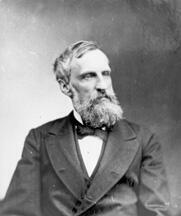
Here you will find contact information for Senator La Fayette Grover, including email address, phone number, and mailing address.
| Name | La Fayette Grover |
| Position | Senator |
| State | Oregon |
| Party | Democratic |
| Status | Former Representative |
| Term Start | December 7, 1857 |
| Term End | March 3, 1883 |
| Terms Served | 2 |
| Born | November 29, 1823 |
| Gender | Male |
| Bioguide ID | G000505 |
About Senator La Fayette Grover
La Fayette Grover (November 29, 1823 – May 10, 1911) was a Democratic politician and lawyer from the U.S. state of Oregon who served as the fourth Governor of Oregon, represented Oregon in the United States House of Representatives, and served one term in the United States Senate. He was born in Bethel, Oxford County, Maine, where he attended local schools and later studied at Gould Academy in Bethel. He continued his education at Bowdoin College in Brunswick, Maine, graduating before pursuing the study of law. After completing his legal training, he was admitted to the bar in Philadelphia in 1850.
In 1851, Grover moved west to the Oregon Territory and settled in Salem, where he began practicing law. His legal abilities and growing prominence in the territory led to several early public appointments. The Oregon Territorial Legislature elected him prosecuting attorney for Oregon’s second judicial district and auditor of public accounts for the Oregon Territory. From 1853 to 1855, he served as a member of the Territorial House of Representatives. During this period he was also involved in federal commissions related to regional conflicts: in 1854 he was appointed by the United States Department of the Interior as a member of a commission to audit claims arising from the Rogue River Indian War, and in 1856 he was appointed by the Secretary of War to a board of commissioners to audit the Indian war expenses of Oregon and Washington.
Grover played a significant role in the transition of Oregon from territory to statehood. In 1857, he was a delegate to the Oregon Constitutional Convention, representing Marion County, and participated in framing the state’s founding document. After Oregon was admitted to the Union, he was elected as Oregon’s at-large Representative to the 35th United States Congress. He served in the United States House of Representatives from February 15, 1859, to March 4, 1859. He did not run for reelection in 1858 and, following his brief congressional service, returned to private life in Oregon, resuming his law practice and engaging in the manufacture of woolens.
Grover’s prominence in state politics grew in the following decade. A member of the Democratic Party, he was elected Governor of Oregon in 1870 and was reelected in 1874. As the fourth Governor of Oregon, he served from 1870 until 1877. His tenure encompassed a period of ongoing conflict and negotiation with Native American tribes in the region, and he became involved in military and Indian affairs, including the Modoc War and questions concerning the Wallowa Valley. In 1874 he issued a formal report to General John M. Schofield on the Modoc War, accompanied by reports from Major General John F. Miller and General John E. Ross, and a letter to the Secretary of the Interior on the Wallowa Valley Indian question, reflecting his active role in these matters.
During the disputed presidential election of 1876, Grover, then serving as governor, became a central figure in a national constitutional controversy. Although Oregon’s statewide vote clearly favored Republican candidate Rutherford B. Hayes, Grover asserted that one of the Republican presidential electors, John Watts, was constitutionally ineligible to serve because he was an “elected or appointed official.” Acting on this claim, Grover attempted to substitute a Democratic elector, C. A. Cronin, in Watts’s place. The two undisputed Republican electors rejected Grover’s action and certified three electoral votes for Hayes, while Cronin submitted a separate return casting one vote for Democrat Samuel J. Tilden and two votes for Hayes. Because the exclusion of Watts’s vote would have produced a 184–184 tie in the Electoral College, the issue was referred to a 15-member Electoral Commission, which ultimately awarded all three of Oregon’s electoral votes to Hayes.
In 1877, Grover resigned the governorship after being elected to the United States Senate. His service in Congress occurred during a significant period in American history, in the years following Reconstruction and amid rapid industrial and economic change. Grover served as a Senator from Oregon in the United States Congress from March 4, 1877, to March 3, 1883. A member of the Democratic Party, he contributed to the legislative process during two terms in office as counted by the Congresses in which he served, and during the 46th United States Congress he was chairman of the Senate Committee on Manufactures. In the Senate he participated in the democratic process and represented the interests of his Oregon constituents. He did not run for reelection in 1883 and concluded his federal legislative career at the end of his term.
After leaving the Senate, Grover returned to Oregon and resumed the practice of law, effectively retiring from active public life. He lived quietly in Portland, Oregon, during his later years. La Fayette Grover died at his home in Portland on May 10, 1911. He was interred in River View Cemetery in Portland, closing a long career that had spanned territorial governance, state constitutional development, the governorship, and service in both houses of the United States Congress.