Representative La Fayette Lane
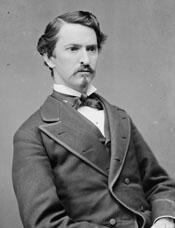
Here you will find contact information for Representative La Fayette Lane, including email address, phone number, and mailing address.
| Name | La Fayette Lane |
| Position | Representative |
| State | Oregon |
| District | 1 |
| Party | Democratic |
| Status | Former Representative |
| Term Start | December 6, 1875 |
| Term End | March 3, 1877 |
| Terms Served | 1 |
| Born | November 12, 1842 |
| Gender | Male |
| Bioguide ID | L000064 |
About Representative La Fayette Lane
Lafayette Lane (November 12, 1842 – November 23, 1896) was an American lawyer and Democratic politician who served one term as a U.S. Representative from the state of Oregon from 1875 to 1877. A member of a prominent political family, he was the son of Oregon Delegate, territorial governor, and later U.S. Senator Joseph Lane and his wife Polly Hart Lane, and he was an uncle of future Oregon U.S. Senator Harry Lane. During his single term in Congress, La Fayette Lane contributed to the legislative process and represented the interests of his Oregon constituents during a significant period in American history.
Lane was born near Evansville, Indiana, on November 12, 1842, one of ten children of Joseph and Polly Hart Lane. At the time of his birth, his father was serving as a member of the Indiana state senate. In 1848, Joseph Lane was appointed governor of the newly created Oregon Territory, and the family undertook the overland journey along the Oregon Trail, arriving in Oregon in March 1849. Growing up in a household deeply involved in public affairs, Lafayette was exposed early to politics and frontier governance during the formative years of Oregon’s territorial development.
As a young man, Lane received his education in the eastern United States, attending public schools in Washington, D.C., and Stamford, Connecticut. After completing his general education, he studied law and prepared for a legal career. Upon admission to the bar, he commenced the practice of law in Roseburg, Oregon, a growing community in the southern part of the state that would remain his principal home for much of his life. In 1867, he married Amanda Mann, further establishing his personal and professional ties in Oregon.
Lane entered public life in the midst of the Civil War era. In 1864, he was elected to the Oregon House of Representatives, representing Umatilla County. His service in the state legislature marked his first significant elective office and placed him among the Democratic leaders of Oregon at a time when the state was still relatively new to the Union. In 1866, he was the Democratic nominee for Oregon Secretary of State, but he was defeated by the incumbent, Samuel E. May. Despite this setback, Lane remained active in legal and political circles and continued to build his reputation as an attorney and party figure.
In 1874, Lane’s legal expertise was recognized with his appointment as a code commissioner for the state of Oregon. In this capacity, he worked alongside noted jurist Matthew Deady to compile and systematize the state’s statutes. Their work resulted in the publication of Deady and Lane’s General Laws of Oregon, formally titled The Organic and Other General Laws of Oregon, Together with the National Constitution and Other Public Acts and Statutes of the United States: 1843–1872, printed in Salem in 1874. This compilation became an important reference for the legal profession and public officials in Oregon, reflecting Lane’s significant contribution to the state’s legal framework.
Lane’s service in the United States Congress arose from an unexpected vacancy. In 1874, fellow Democrat George A. La Dow was elected to the U.S. House of Representatives from Oregon but died two months into his term. In the special election that followed, Lane was elected to fill La Dow’s vacancy, defeating Republican candidate Henry Warren. He took his seat as a Representative from Oregon on October 25, 1875, and served until March 3, 1877. During this single term in the House of Representatives, La Fayette Lane participated in the democratic process on behalf of his constituents and contributed to the legislative work of the Forty-fourth Congress. He sought re-election in 1876 but was defeated by Republican Richard Williams, thus concluding his federal legislative service after one term in office.
After leaving Congress, Lane returned to Roseburg and resumed the practice of law, continuing his professional career in the community where he had long resided. He remained a figure of local and state prominence, associated with both his own record of public service and the broader political legacy of the Lane family in Oregon. Lafayette Lane died in Roseburg, Oregon, on November 23, 1896. He was interred in St. Joseph Catholic Cemetery in Roseburg, closing a life that spanned the territorial era, statehood, and the post–Civil War development of Oregon and the broader American West.