Representative Laban Wheaton
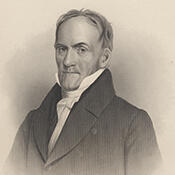
Here you will find contact information for Representative Laban Wheaton, including email address, phone number, and mailing address.
| Name | Laban Wheaton |
| Position | Representative |
| State | Massachusetts |
| District | 10 |
| Party | Federalist |
| Status | Former Representative |
| Term Start | May 22, 1809 |
| Term End | March 3, 1817 |
| Terms Served | 4 |
| Born | March 13, 1754 |
| Gender | Male |
| Bioguide ID | W000329 |
About Representative Laban Wheaton
Laban Wheaton (March 13, 1754 – March 23, 1846) was a U.S. Representative from Massachusetts and a member of the Federalist Party who served four consecutive terms in Congress from 1809 to 1817. His public career encompassed legislative service at both the state and national levels, as well as a long tenure on the bench in Bristol County, Massachusetts, during a formative period in the early republic.
Wheaton was born on March 13, 1754, in Mansfield, in the Province of Massachusetts Bay. He attended Wrentham Academy, a local institution that prepared young men for higher education and professional life. He subsequently entered Harvard College, from which he was graduated in 1774, on the eve of the American Revolution. After college, Wheaton pursued theological studies under a private instructor in Woodstock, Connecticut, reflecting an early interest in the ministry. He later turned to the study of law, broadening his professional training and preparing for a legal career.
After completing his legal studies, Wheaton was admitted to the bar in 1788 and commenced the practice of law in Milton, Massachusetts. His legal work established him in public life and led to increasing involvement in civic affairs. Over time he became closely associated with Bristol County, where he would later serve in both judicial and educational roles, and where he ultimately made his home.
Wheaton entered elective office as a member of the Massachusetts House of Representatives, serving from 1803 to 1808. In this capacity he participated in state legislative deliberations during the early years of the nineteenth century, a period marked by debates over federal-state relations, commerce, and the evolving party system. His service in the state legislature helped to build the political base and experience that would support his subsequent election to national office.
In national politics, Wheaton was elected as a Federalist to the Eleventh and to the three succeeding Congresses, serving in the U.S. House of Representatives from March 4, 1809, to March 3, 1817. Representing Massachusetts as a member of the Federalist Party, he contributed to the legislative process during four terms in office. His congressional service coincided with a significant period in American history that included the lead-up to and duration of the War of 1812, as well as contentious debates over trade restrictions, national defense, and the scope of federal power. As a member of the House of Representatives, Wheaton participated in the democratic process and represented the interests of his constituents in Massachusetts during these critical years.
Alongside his legislative career, Wheaton held important judicial positions in Bristol County. He served as a judge of the Bristol County Court and, on May 18, 1810, was appointed chief justice of the court of common pleas for Bristol County. He held this position throughout much of his time in Congress, reflecting the common early American practice of combining judicial and legislative responsibilities. On May 25, 1819, he was appointed chief justice of the court of sessions for Bristol County, a post he held until that court was abolished in 1820. After his congressional service, he returned again to state politics, serving once more as a member of the Massachusetts House of Representatives in 1825.
In his later years, Wheaton turned his attention to education, particularly the education of women. In 1834 he established the Wheaton Female Seminary in Norton, Massachusetts, as a memorial to his recently deceased daughter, Eliza Wheaton Strong. The seminary was founded to provide advanced educational opportunities for women at a time when such institutions were still relatively rare. Over time, Wheaton Female Seminary evolved into Wheaton College, a prominent institution of higher education in Norton, thereby extending his influence into subsequent generations.
Laban Wheaton died in Norton, Massachusetts, on March 23, 1846, at the age of 92. He was interred in Norton Cemetery. His long life spanned from the colonial era through the first half-century of the United States, and his career as lawyer, legislator, judge, and educational benefactor reflected the civic and institutional development of Massachusetts and the nation during that period.