Senator Lafayette Sabine Foster
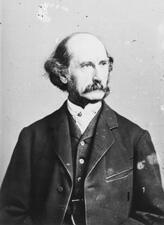
Here you will find contact information for Senator Lafayette Sabine Foster, including email address, phone number, and mailing address.
| Name | Lafayette Sabine Foster |
| Position | Senator |
| State | Connecticut |
| Party | Republican |
| Status | Former Representative |
| Term Start | December 3, 1855 |
| Term End | March 3, 1867 |
| Terms Served | 2 |
| Born | November 22, 1806 |
| Gender | Male |
| Bioguide ID | F000308 |
About Senator Lafayette Sabine Foster
La Fayette Sabine Foster (November 22, 1806 – September 19, 1880) was an American politician and jurist from Connecticut who served as a United States Senator from 1855 to 1867 and as a judge on the Connecticut Supreme Court from 1870 to 1876. A member of the Republican Party during his Senate career, he played a prominent role in national politics during the tumultuous years leading up to and through the Civil War. From 1865 to 1867 he was President pro tempore of the United States Senate and, following the assassination of President Abraham Lincoln, stood first in the presidential line of succession for most of his tenure.
Foster was born in Franklin, Connecticut, on November 22, 1806, the son of Daniel Foster and his second wife, Welthea Ladd. His father had served as a captain in the Continental Army during the American Revolution and fought in several engagements, including the battles of White Plains, Stillwater, and Saratoga. During the Battle of Saratoga, Daniel Foster served as a lieutenant in Latimer’s Regiment of Militia and, while on the field of battle, received a warrant of promotion to the post of adjutant. Raised in this environment of public service and patriotic tradition, Lafayette Sabine Foster began his education in the common schools of Franklin before pursuing more advanced studies.
Foster’s formal education progressed under the guidance of several noted clergymen-educators. He undertook college preparatory studies with the Rev. Abel Flint of Hartford, Connecticut, for five months, and then taught school in Franklin for two winters. In 1824 he resumed his preparation for college under the Rev. Cornelius B. Everest of Windham, Connecticut. In February 1825 he enrolled at Brown University in Providence, Rhode Island, and graduated in 1828. Following his graduation, he served as an assistant in the school of Roswell C. Smith in Providence during the ensuing winter. In the spring he returned to Connecticut and began the study of law in Norwich in the office of Calvin Goddard. Seeking both experience and opportunity, he took charge of an academy in Centerville, Maryland, and was admitted to the Maryland bar in 1830. The following year he returned to Connecticut, was admitted to the bar of New London County in 1831, and opened a law office in Hampton in 1833. In 1834 he moved back to Norwich, which remained his home for the rest of his life.
On October 2, 1837, Foster married Joanna Boylston Lanman, daughter of James Lanman, a former United States Senator from Connecticut, judge, and mayor of Norwich. At the time of his marriage, Foster was editor of the Norwich Republican, a Whig newspaper, but he relinquished that position as his legal practice expanded. His public career began in state politics: he was first elected as one of the representatives of the town of Norwich to the Connecticut House of Representatives in 1839 and was re-elected in 1840, 1846, 1847, 1848, 1854, and later in 1870. By 1847 he had become one of the most prominent Whigs in Connecticut and was chosen Speaker of the Connecticut House of Representatives in 1847 and again in 1848. In 1848 he was considered as a candidate for the United States Senate and received several votes for the nomination, though he was not ultimately selected. That same year he was appointed State Director of the Merchants’ Bank of Norwich. Foster also broadened his horizons with a journey to Europe in 1846, sailing from New York to Liverpool on the packet ship Henry Clay on October 7, 1846. He visited the law courts in London and traveled to Paris, recording his observations and impressions in a journal.
Foster emerged as a leading Whig candidate for statewide office at midcentury. He was the Whig nominee for Governor of Connecticut in 1850, losing narrowly to Democrat Thomas H. Seymour by a vote of 48 percent to 47 percent; because Seymour received only a plurality, the election was decided by the Connecticut General Assembly, which chose Seymour. In 1851 Foster again ran for governor and again lost by a close margin, 49 percent to 47 percent, with the contest once more thrown into the General Assembly. Although the Whigs held a slight majority, internal divisions led to Seymour’s re-election by a single vote, 122 to 121. Foster was instead reappointed to the Merchants’ Bank. In the United States Senate election that followed, the Whigs failed to elect Roger S. Baldwin, and Foster also received a scattering of votes; after 22 inconclusive ballots, the election was postponed indefinitely and the seat left vacant. Brown University recognized Foster’s growing distinction by awarding him the honorary degree of Doctor of Laws (LL.D.) in 1851. He also served as mayor of Norwich from 1851 to 1852. In 1854 he was again elected Speaker of the Connecticut House of Representatives.
On May 19, 1854, a coalition of Whigs and Free Soilers in the Connecticut General Assembly elected Foster to the United States Senate for the full six-year term beginning in 1855. He resigned his seat in the Connecticut House on June 8, 1854, to assume his new duties. Initially identified with the Oppositionist faction, he soon aligned with the emerging Republican Party and served two terms in the Senate from 1855 to 1867. His service in Congress coincided with a critical period in American history, encompassing the sectional crisis, the Civil War, and the beginning of Reconstruction. An outspoken opponent of the expansion of slavery, he reacted strongly to the Kansas–Nebraska Act; just two days after its passage by the House in May 1854, he addressed a public meeting in New Haven, declaring that the time for mere speechmaking had passed and that the time for action against slavery had come. His first notable Senate speech, delivered on June 25, 1856, defended a New Haven public meeting organized to aid Free-State emigrants to Kansas and offered a detailed rebuttal to Senator Stephen A. Douglas, principal author of the Kansas–Nebraska Act. During the 1858 debates over the admission of Kansas under the pro-slavery Lecompton Constitution, Foster condemned the repeal of the Missouri Compromise as “a violation of plighted faith” and “an outrage upon the moral sense of the nation,” and he pledged never to vote for the admission of a slave state carved from territory north of the 36°30′ parallel. His personal life was marked by loss during this period: his first wife, Joanna Boylston Lanman Foster, died on April 11, 1859.
Foster continued to play an active role in national debates on foreign and domestic policy. On January 4, 1860, he spoke in the Senate on a resolution to print the annual message of President James Buchanan, which recommended authorizing the President to employ a sufficient military force to enter Mexico to secure indemnity and future security for American claims. Foster denounced the proposal as unconstitutional, contrary to international law, and tantamount to a war of conquest against Mexico, which he opposed on moral and practical grounds. In the course of his speech, he questioned whether “the life, liberty, or property of an American citizen, within the slaveholding States of this confederacy today, who entertains opinions obnoxious to those communities on the subject of slavery, [is] any more safe than the liberty or property of our citizens within the Republic of Mexico?” He cited advertisements in Southern newspapers offering rewards for Northern abolitionists, condemned outrages committed by polygamist Mormons in the Utah Territory, and criticized the federal government’s bad faith toward Native Americans. In May 1860 he was re-elected to the Senate, defeating Democrat William W. Eaton. On October 2, 1860, he married his second wife, Martha Prince Lyman. During the 37th through the 39th Congresses (1861–1867), he served as chairman of the Senate Committee on Pensions, overseeing legislation affecting veterans and their families during and after the Civil War. In 1864 he delivered a notable speech in the Senate on the bill to repeal the Fugitive Slave Law, later published as “Speech of the Hon. L. F. S. Foster, of Connecticut, in the Senate of the United States, on the bill to repeal the Fugitive slave law: first session, thirty-eighth Congress, Wednesday, April 20, 1864.”
On March 6, 1865, Foster was elected President pro tempore of the United States Senate, a position he held until March 2, 1867. Six weeks into his tenure, on April 14, 1865, President Abraham Lincoln was assassinated, and Vice President Andrew Johnson succeeded to the presidency. Under the succession laws then in force, the President pro tempore of the Senate stood next in line, and Foster thus became first in the presidential line of succession. From 1865 to 1867 he was often described in contemporary accounts as an “acting vice president,” although no such constitutional office existed. In 1866 he was elected a Companion of the Third Class (honorary member) of the Pennsylvania Commandery of the Military Order of the Loyal Legion of the United States, a hereditary society composed of Union officers of the Civil War and their descendants. Seeking a third term in the Senate in 1866, Foster was defeated by Orris S. Ferry, and his Senate service concluded on March 3, 1867. Over the course of his two terms, he contributed significantly to the legislative process and represented the interests of his Connecticut constituents during one of the most consequential eras in American political history.
After leaving the Senate, Foster turned to teaching and the judiciary. In 1869 he became a professor of law at Yale College, where he began to shape a new generation of lawyers. He returned to the Connecticut House of Representatives in 1870 and was again elected Speaker, but he resigned that same year upon his appointment as a judge of the Connecticut Supreme Court. He served on the state’s highest court from 1870 until 1876, when he reached the mandatory retirement age of seventy. During his retirement he continued to influence the legal profession by tutoring young lawyers, including Charles W. Comstock, and by delivering a course of lectures on “Parliamentary Law and the Science of Legislation” at Yale from 1875 to 1880. In 1875 he ran as the Democratic candidate for United States Representative in Connecticut’s 3rd congressional district, but was defeated by the incumbent Republican, Henry H. Starkweather, reflecting the complex partisan realignments of the postwar period and his own evolution from Whig to Republican and, later, Democratic nominee.
Foster died in Norwich, Connecticut, on September 19, 1880, and was interred in Yantic Cemetery. In his will he bequeathed his personal library to the town of Norwich and left his residence for the use of the Norwich Free Academy. He also endowed two academic initiatives: the Lafayette Sabine Foster Prize in Greek at Brown University and the Lafayette S. Foster Professorship of English Common Law at Yale University, thereby extending his influence on classical and legal education. His memory was further commemorated in art: American sculptor Charles Calverley created a marble bust of Foster that was presented to the United States Senate in 1885 by his widow, Martha Prince Lyman Foster, and in 1895 she donated to Brown University a portrait of him painted by Robert Cutler Hinckley. Portraits and vignettes of Lafayette S. Foster are preserved in various institutional collections, including the Smithsonian Institution Archives and Mississippi State University Libraries, reflecting his enduring place in the historical record of nineteenth-century American public life.